The Cretan Legacy: A Synthesis of Byzantine Iconography and Venetian Color
 El Greco
A Life Forged in Faith and Fire Doménikos Theotokópoulos, known to the world as El Greco – “the Greek” – was a painter whose life and work defied easy categorization. Born in 1541 on the island of Crete, then under Venetian rule, his artistic journey...
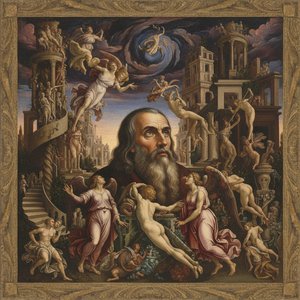
To understand the transcendent power of El Greco, one must first trace the restless journey of his soul from the sun-drenched shores of Crete to the spiritual heart of Spain. Born Doménikos Theotokópoulos in 1541, his artistic DNA was fundamentally shaped by the Byzantine tradition. This early immersion in the art of iconography instilled within him a profound reverence for symbolic precision and a meticulous attention to detail that would remain a cornerstone of his practice throughout his life. In these formative years, the artist learned to treat the canvas not merely as a surface for representation, but as a sacred window into the divine.
However, the rigid boundaries of Byzantine formality were soon expanded by the vibrant, sensory world of Venice. Arriving in the Venetian Republic around 1567, El Greco encountered the breathtaking mastery of Titian and Tintoretto. Here, the disciplined lines of his Greek roots met the lush, atmospheric textures of the Venetian Renaissance. He absorbed the secrets of colorito—the art of using color to define form and mood—and learned to embrace the sensuality of oil paint. This confluence of styles created a unique artistic tension: a foundation of iconographic stability infused with a newfound, fluid dynamism that allowed his later works to vibrate with an almost supernatural energy.
Mannerist Distortions: The Architecture of El Greco’s Elongated Forms
 Mannerism
Mannerism is a style in European art that emerged in the later years of the Italian High Renaissance around 1520, spreading by about 1530 and lasting until about the end of the 16th century in Italy, when the Baroque style largely replaced it. Northe...
As the artist moved through Rome and eventually settled in Toledo, his style underwent a profound metamorphosis, embracing the sophisticated complexities of Mannerism. Unlike the High Renaissance, which sought perfection in proportion and balance, Mannerism thrived on the intentional exaggeration of reality to evoke emotional intensity. El Greco became the ultimate architect of this distortion. He began to stretch and contort the human figure, creating elongated, ethereal forms that seemed to defy gravity and the physical constraints of anatomy.
These sinuous, upward-reaching silhouettes were never mere aesthetic whims; they served a higher theological purpose. By elongating the limbs and tapering the torsos of his saints and apostles, El Greco physically manifested the yearning of the soul for the heavens. The figures appear to be in a state of perpetual ascent, pulled upward by an invisible spiritual tide. This use of distorted perspective and anatomical elongation transformed his canvases into psychological landscapes, where the very shape of the body reflects the intensity of the spirit within.
Spiritual Landscapes: Decoding the Psychological Depth of 'A View of Toledo'
 A View of Toledo
The Soul of a City – Unveiling El Greco’s “A View of Toledo” El Greco’s “A View of Toledo,” painted in 1597 and now residing within the hallowed halls of the Metropolitan Museum of Art, isn't merely a depiction of a Spanish city; it’s an immersion in...
Perhaps no single work encapsulates El Greco’s ability to merge the earthly with the divine as powerfully as his 1597 masterpiece, A View of of Toledo. While at first glance it may appear to be a topographical study of the Spanish city, the painting is, in truth, an immersion into a profound psychological state. The landscape does not merely depict a place; it evokes an atmosphere of spiritual tension and impending drama. The heavy, brooding clouds and the turbulent, surging rivers suggest a world on the precipice of transformation.
The composition is anchored by a formidable castle atop a colossal hill, yet even this solid structure feels subject to the atmospheric unrest. El Greco masterfully juxtaposes the routine activities of the figures in the foreground with the overwhelming drama of the sky above, suggesting that beneath the surface of everyday existence, a deeper, more unsettling reality lies in wait. Through his use of fantastical pigmentation and dramatic movement, he turned a cityscape into a visceral expression of the human condition—a landscape where the boundaries between the physical world and the spiritual realm begin to dissolve.
Celestial Illumination: The Role of Chiaroscuro in Conveying Divine Presence
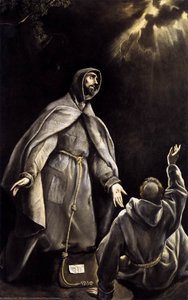 St Francis's Vision of the Flaming Torch
St Francis’s Vision of the Flaming Torch – A Journey into Spiritual Intensity Within the hallowed halls of the Hospital de Nuestra Señora del Carmen in Cádiz, Spain, resides a painting that transcends mere representation; it is an immersion into prof...
Light in the hands of El Greco is far more than a tool for visibility; it is a character in its own right, acting as a conduit for divine revelation. He utilized chiaroscuro—the dramatic interplay of light and shadow—not to create realistic depth, but to suggest a presence that transcends the canvas. In works such as St. Francis’s Vision of the Flaming Torch, light does not simply fall upon the subject; it erupts from within, illuminating the saint with a flickering, flame-like brilliance that mirrors his internal ecstasy.
His palette often features sudden, brilliant highlights set against deep, shadowy recesses, creating a rhythmic pulse of luminosity across the composition. This technique forces the viewer’s eye to dance between moments of intense clarity and profound mystery. By manipulating light to highlight expressive gestures and intense gazative, El Greco ensures that every flicker of brightness serves to underscore the spiritual awakening occurring within his subjects. The light becomes a metaphor for grace itself—unpredictable, overwhelming, and transformative.
The Counter-Reformation Canvas: Faith and Drama in the Spanish Golden Age
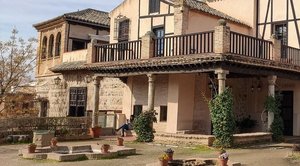 Museo de El Greco
A Sanctuary of Spirit: The Soul of Toledo To step into the Museo de El Greco is to leave the bustling streets of modern Toledo behind and enter a realm where the boundaries between the earthly and the divine begin to dissolve. Nestled within the laby...
To view El Greco’s mature works is to witness the visual heartbeat of the Spanish Counter-Reformation. During this era of intense religious fervor, the Catholic Church sought art that could stir the emotions and reinforce the mysteries of faith. El Greco’s style, with its dramatic compositions and emotive intensity, was perfectly aligned with this mission. His paintings served as powerful instruments of devotion, designed to pull the observer into a state of quiet contemplation and profound religious yearning.
In his monumental series, such as the Apostolado, we see the zenith of this approach. Each apostle is rendered with an arresting psychological depth, their expressive hands and piercing gazes creating a dynamic visual rhythm. The artist’s ability to fuse Byzantine formality with the theatricality of the Spanish Golden Age allowed him to create works that were both deeply rooted in tradition and radically innovative. These canvases are not static images; they are living, breathing encounters with the sacred, capturing the eternal struggle between earthly sorrow and celestial hope.
Preserving the Vision: Bringing El Greco’s Ethereal Mastery into Modern Interiors
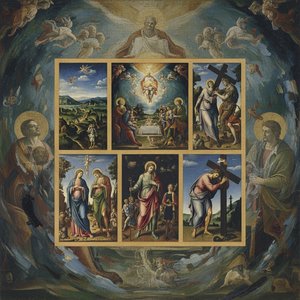 El Greco's Masterpieces: Explore 25 Iconic Paintings & Spiritual Visions | OriginalUniqueArt
Introduction To embark on a journey through the top 25 artworks of El Greco is to enter a realm where earthly boundaries dissolve and the spiritual takes breathtaking form. These paintings are not merely canvases adorned with pigment; they are window...
The enduring legacy of El Greco lies in his ability to speak a universal language of ecstasy, sorrow, and transcendence. Centuries after his death, his works continue to resonate with modern audiences who find beauty in his restless brushwork and his refusal to adhere to the mundane rules of reality. For the discerning collector or interior designer, integrating the spirit of El Greco into a contemporary space offers an opportunity to introduce profound emotional depth and historical gravity.
Whether through a large-scale museum-quality reproduction or a bespoke commission that reimagines his style for a modern setting, El Greco’s influence can transform a room into a sanctuary of thought. At OriginalUniqueArt.com, we specialize in preserving this extraordinary heritage. Our master artists meticulously recreate the texture, the light, and the very soul of these masterpieces on 100% cotton canvas. Through our professional digital mockup services and our commitment to academic excellence, we allow you to bring the divine light of the Spanish Renaissance into your own architectural landscape, ensuring that the flame of El Greco’s vision continues to burn brightly for generations to come.