Dutch Golden Age painting is the painting of the Dutch Golden Age, a period in Dutch history roughly spanning the 17th century, during and after the later part of the Eighty Years' War (1568–1648) for Dutch independence. The new Dutch Republic was th...
The seventeenth-century Netherlands underwent a profound change in how its people viewed the world around them. As the Republic moved away from the monarchical and Catholic traditions of the south, the demand for grand religious iconography waned significantly. In the churches of the north, Calvinism discouraged the use of religious imagery, which meant that artists could no longer rely on the production of massive altarpieces to sustain their livelihoods. This shift forced a reinvention of the artistic purpose. Instead of looking toward celestial interventions, painters began to find importance in the quietude of human interaction and the dignity of the mundane.
This transition finds its most intimate expression in genre paintings, where the sacred was replaced by the observation of daily life. In Gerard ter Borch’s Le Duo: chanteuse et joueur de luth théorbé, there is no divine drama unfolding; rather, we see a man and a woman captured in a moment of musical performance within a modest interior. The focus is on psychological depth and the texture of reality. This movement sought to elevate the ordinary through disciplined observation, turning a simple domestic scene into something worthy of careful study.
Before this era, landscapes were often relegated to mere background details in larger religious narratives. By the Golden Age, the landscape itself became the protagonist. The art of the period moved away from the heavy splendor of the Flemish Baroque to embrace a detailed realism that mirrored the growing prosperity and self-identity of the Dutch people.
Atmospheric Mastery: The Science of Light and Dutch Skies
Landscape with Dunes – A Window into Dutch Golden Age Tranquility Jan van Goyen’s “Landscape with Dunes” isn't merely a depiction of a coastal scene; it’s a carefully constructed meditation on light, atmosphere, and the quiet dignity of everyday life...
The true distinction of Dutch landscape painting lies in its ability to manipulate light, creating an orchestrated sense of luminosity. This was not merely about brightness, but about the way light interacts with moisture, air, and earth. Artists like Jan van Goyen achieved a remarkable atmospheric effect in works such as Landscape with Dunes. Through the painstaking layering of thin, translucent glazes, he built up color gradually, allowing light to be absorbed into the layers of pigment. This technique creates a soft, diffused glow that suggests the dampness clinging to the sand and the heavy, cloudy skies typical of the region.
This mastery of atmosphere finds an echo in the way light is used in portraiture and genre scenes. In Johannes Vermeer’s The Girl with a Pearl Earring, the use of chiaroscuro—the tension between shadow and illumination—directs the eye toward the singular highlight on the pearl. The light does not just sit on the surface; it seems to breathe life into the subject. Whether in a vast coastal scene or a dark room, the Dutch masters used light as a psychological tool to sculpt form and suggest depths of character that words could not reach.
The weather in the Dutch countryside is famously unpredictable, often wet and prone to summer storms. This environmental reality dictated the palette of the era: earthy browns, muted greens, and hazy blues. The goal was to capture the precise moment when a sunbeam might break through a cloud, illuminating a field or a distant windmill, momentarily transforming a common view into something extraordinary.
The Italianate Influence: Reimagining Classical Beauty in the North
A Golden Light on the Italianate Landscape: The Life and Art of Jan Dirksz Both Jan Dirksz Both, a name perhaps less immediately recognizable than some of his Dutch Golden Age contemporaries, nevertheless occupies a pivotal position in the developmen...
While many artists focused on the local topography of the Netherlands, a significant strand of painters sought inspiration from the south. This movement, known as Italianate landscape painting, was not a simple imitation of Italian scenery but a reimagining of it through Northern sensibilities. Artists such as Nicolaes Berchem and Jan Dirksz Both traveled to or studied the Roman landscape, bringing back an idealized vision of classical beauty characterized by golden Mediterranean light and ancient ruins.
This fascination with the south provided a powerful counterpoint to the more restrained, realistic Dutch traditions. For painters like Both, the goal was to construct expansive, often imaginary landscapes from memories of rolling hills and dramatic skies. This style allowed for a sense of romantic allure, populating scenes with mythological figures or pastoral life, offering viewers a refuge in a harmonious, legendary world.
This trend mirrors the broader history of art where movement and migration drive innovation. Just as the influx of Protestant craftsmen from Antwerp helped transform Amsterdam into a commercial powerhouse, the physical movement of artists to Italy allowed for a cross-pollination of styles. The resulting "Italianate" works blended Northern precision with Southern warmth, creating a unique hybrid that expanded the boundaries of what a Dutch landscape could represent.
Precision and Texture: Technical Innovations in Oil and Wood
A Vision of Tranquility: Exploring Landscape with Tall Rocks To gaze upon Herman van Swanevelt's Landscape with Tall Rocks is to step across the threshold of time and into a moment suspended in perfect, sunlit repose. This masterpiece, painted in 164...
The level of detail found in Golden Age paintings required specialized technical approaches. To achieve extreme precision, many painters continued to use wooden panels long after other parts of Europe had moved toward canvas. This hard surface allowed for the meticulous rendering of textures, from the rough bark of a tree to the delicate fabric of a silk gown. Some artists even utilized copper plates, often recycled from printmaking, to allow for an even finer level of detail.
In works like Herman van Swanevelt’s Landscape with Tall Rocks, the command over oil on canvas is evident in the way the artist creates an illusion of physical presence. One can almost sense the cool dampness rising from a pond or the rough texture of stone formations. This dedication to tactile realism was a hallmark of the era, where the artist’s ability to mimic the natural world was a primary measure of their skill.
This technical rigor finds its roots in the Early Netherlandish tradition. The foundations laid by artists like Jan van Eyck in the 15th century established a standard for natural representation and illusionism that the Golden Age painters would later refine. The evolution from the heavy, iconographic panels of the past to the light-drenched, atmospheric canvases of the 17th century was a continuous refinement of the same fundamental goal: the pursuit of truth through paint.
The Pastoral Ideal: Finding Solace in the Rural Landscape
A Country Road: Serenity Captured in Dutch Golden Age Landscape Painting Salomon van Ruysdael’s “A Country Road,” completed in 1648, stands as an exemplar of the Dutch Golden Age's artistic zenith—a period defined by unparalleled realism and a profou...
Beyond the technical and the stylistic, Dutch landscapes often spoke to a deep human yearning for tranquility. The countryside, with its winding roads, windmills, and quiet farms, provided a sense of stability and peace. Salomon van Ruysdael’s A Country Road exemplifies this pastoral ideal. By using a winding dirt road as a central axis, the artist guides the viewer's gaze into an expansive landscape of rolling hills and scattered trees, creating a composition that feels both grounded and infinite.
This sense of peace was often achieved by populating the landscape with subtle human elements—figures on horseback or a distant farmhouse—that suggest life continues in a steady, rhythmic fashion without disrupting the overarching mood of serenity. It is a vision of a world where humanity exists in harmony with the natural order, a sentiment that resonated deeply in a period of significant political and economic change.
This pastoral focus has an echo in the way we perceive nature today. Just as the 17th-century viewer found a sense of national identity in the depiction of their own fertile lands, modern visitors to places like the Zaanse Schans or Kinderdijk find a connection to history through the preserved windmills and traditional houses. The landscape remains a site of both memory and reflection, a place where the passage of time is visible in the very structure of the earth.
Enduring Legacies: From 17th-Century Canvases to Modern Perspectives
A Window into Haarlem’s Golden Age: The Frans Hals Museum Nestled within two meticulously preserved historic buildings in the heart of Haarlem, Netherlands, the Frans Hals Museum is more than simply a repository of paintings; it's an immersive journe...
The impact of the Dutch Golden Age extends far beyond the borders of the 17th century. The specialization of genres—seascapes, cityscapes, and still lifes—established a framework for Western painting that would persist for generations. The techniques developed by these masters, from the use of glazing to the psychological application of light, remain fundamental studies for any student of art.
Today, we see the legacy of this era in our continued fascination with the "everyday." The way we document and value the beauty of a simple landscape or a quiet domestic moment is a direct descendant of the Dutch revolution of the mundane. Whether through the preservation of historic villages like Giethoorn or the study of classical techniques in modern academies, the spirit of the Golden Age persists.
As we look upon these works, whether in the halls of the Frans Halsmuseum or through high-quality reproductions, we are reminded of the power of observation. These paintings teach us that there is no subject too small to be worthy of greatness, provided it is viewed with enough care and light. For those seeking to bring this sense of history and atmosphere into their own lives, OriginalUniqueArt.com offers a curated selection of these enduring visions.
Explore the breathtaking mastery of Dutch Golden Age landscapes. Discover how 17th-century masters revolutionized light, atmosphere, and realism to create the foundation of modern visual impact. Dive into a journey of timeless beauty and artistic innovation.
Journey through the Golden Age with our guide to the Top 10 Dutch Baroque masterpieces! Explore iconic paintings by Rembrandt, Vermeer & Frans Hals. Find museum-quality art reproductions and elevate your home decor at OriginalUniqueArt.com.

 Dutch Golden Age painting
 Landscape with Dunes
 Jan Dirksz Both
 Landscape with Tall Rocks
 A Country Road
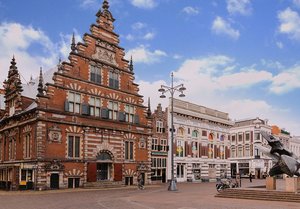 Frans Halsmuseum


