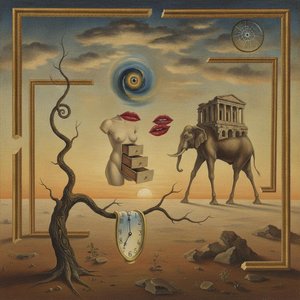
Introduction To step into the world of Surrealism is to abandon the safety of the waking mind and descend into the boundless, often unsettling landscape of the subconscious. It is an invitation to witness the impossible made tangible—where clocks mel...
The early twentieth century arrived with a profound sense of fracture, as the rigid certainties of the previous era dissolved under the weight of global conflict. Out of this disillusionment emerged a movement that did not merely seek to represent the world, but to dismantle its perceived logic entirely. While Dadaism provided the initial, nihilistic spark—a rejection of the very structures that had led to war—Surrealism sought something more constructive: a way to build a new reality from the fragments of the psyche. This was not an abandonment of meaning, but a redirection toward it, finding truth in the irrational and the unexpected.
The movement found its intellectual anchor in the psychoanalytic theories of Sigmund Freud, which suggested that beneath our waking consciousness lies a vast, uncharted territory of desires and fears. Artists began to view the canvas as a laboratory for exploring this hidden landscape. They moved away from academic precision toward techniques like automatism, allowing the hand to move without the interference of rational thought. This shift changed the fundamental purpose of art; it was no longer about capturing a likeness, but about documenting the movement of the soul through its own internal shadows.
In the decades that followed, this rebellion against reason became a cornerstone of modern visual language. The tension between what we see and what we feel remains the heartbeat of Surrealist inquiry. It is a pursuit that continues to resonate in our contemporary era, where the boundaries of reality are constantly being renegotiable through new technologies and shifting cultural landscapes.
Tactile Subconscious: Ernst’s Frottage and the Texture of Memory
Composition surréaliste bleue – A Window into Ernst’s Dreamscape Max Ernst’s “Composition surréaliste bleue” isn't merely a painting; it’s an invitation to delve into the subconscious, a testament to the burgeoning Surrealist movement’s fascination w...
To understand the physical presence of Surrealism, one must look toward the textures that define its most profound works. Max Ernst, a central figure in this exploration, sought ways to bypass the conscious mind through tactile experimentation. He pioneered the technique of frottage, a process of rubbing charcoal or crayon over textured surfaces to transfer organic patterns onto paper. This method allowed for the emergence of unexpected imagery—shapes that felt geological or botanical yet remained fundamentally elusive.
In his work Composition surréaliste bleue, Ernst utilizes a palette dominated by deep indigos and cerulean, punctuated by strategic white accents. The painting presents an amorphous expanse where irregular shapes suggest fragmented plant stems or ancient formations. There is no attempt at representational clarity here; instead, the artist uses texture to evoke a sense of cosmic mystery and melancholy. Through frottage, Ernst achieved a way to capture the essence of psychological states, making the intangible weight of a dream feel physically present on the canvas.
This fascination with the textured surface finds a historical echo in the early experiments of the movement, where the physical act of creation was as important as the final image. Just as Ernst used the friction of paper and charcoal to reveal hidden forms, later artists would continue to use material manipulation to challenge the viewer's perception of depth and reality. The texture becomes a bridge between the seen and the unseen.
Anatomical Distortions: Dalí’s Precision and the Fluidity of Time
Introduction Step into a world where the boundaries between reality and dreams dissolve into a feverish, technicolor haze. To encounter the works of Salvador Dalí is not merely to view art, but to undergo a psychological expedition through the corrid...
If Ernst provided the texture, Salvador Dalí provided the hyper-realistic nightmare. Dalí possessed an uncanny ability to render the most irrational anxieties with the sharp, academic precision of a Renaissance master. His paranoiac-critical method allowed him to take fluid, melting forms and fix them in space with such clarity that they felt disturbingly real. He did not merely paint dreams; he constructed them with a terrifying level of anatomical and environmental detail.
In works such as The Disintegration of the Persistence of Memory, we see the evolution of his most famous motif. The melting clocks, which once suggested the fluidity of time, are here shown in a state of profound dissolution, shattering into complex fragments. This technique creates a sense of both infinite vastness and claustrophobic intimacy. Dalí’s mastery lies in this paradox: using meticulous brushwork to depict the impossible, thereby forcing the viewer to accept the logic of the dream as a valid form of truth.
This precision finds its historical counterpart in the classical traditions that Dalí so deeply studied. By applying the rigorous standards of the old masters to subjects of decay and distortion, he created a tension between tradition and subversion. The familiar becomes unsettling when the rules of physics are quietly discarded, leaving only the emotional truth of the image behind.
Ethereal Landscapes: Papazoff, Jardine, and the Psychological Terrain
A Bulgarian Surrealist Pioneer: Georges Papazoff’s Journey Through Dreamlike Landscapes Georges Papazoff (Papasoff, Georges) (Bulgarian: Георги Папазов) (February 2nd, 1894 – April 23rd, 1972) emerged from the fertile artistic soil of Bulgaria to bec...
Beyond the more famous distortions of Dalí, a different strain of Surrealism focused on the creation of ethereal, psychological landscapes. Artists like Georges Papazoff and George Wallace Jardine utilized landscape as a metaphor for the inner self. Their works often featured muted tones—blues, greens, and ochres—to create atmospheres of profound melancholy and stillness. These were not depictions of specific places, but portals into much deeper, more personal visions.
Papazoff, moving from Bulgaria to the heart of Paris, brought a unique sensibility to the movement, blending figurative elements with abstract, dreamlike light. His landscapes often felt suspended in time, populated by enigmatic symbols that mirrored the anxieties of his era. Similarly, Jardine utilized the dramatic vistas of the Scottish Highlands and the Lake District, infusing them with a sense of the sublime. In his work, a winter landscape is not merely frost and stone; it is a meditation on serenity and the whispers of the subconscious.
This approach echoes the way classical landscape painters once sought to capture the divine in nature. While the subject matter shifted from the religious to the psychological, the intent remained similar: to find a sense of transcendence within the natural world. These artists proved that the landscape could serve as an expansive stage for the most intimate human emotions.
Far-reaching Echoes: The Cinematic Dreamscape and Modern Visual Narratives
Surrealism was a cultural movement which began in the early 1920s. Well known for artwork and writing produced by group members, it also influenced the medium of film. Surrealist films include Un chien andalou and L'Âge d'Or by Luis Buñuel and Dalí; ...
The influence of Surrealism has never been confined to the canvas; it has flowed seamlessly into the medium of film, shaping how we perceive narrative and time on screen. From the early collaborations of Luis Buñuel and Dalí in Un Chien Andalou to the psychological depth of modern directors like David Lynch, the movement's DNA is unmistakable. These filmmakers utilize the same principles of juxtaposition and irrational logic to evoke the feeling of a dream, where characters transform and spaces shift without explanation.
In contemporary animation, we see these echoes in works such as Angel's Egg, where the visual language of surrealism is used to create a haunting, atmospheric world. The movement’s ability to use symbolic imagery—bubbles, eggshells, or distorted shadows—to communicate complex emotional states continues to inspire creators across all mediums. Even in digital realms, the concept of "dream-logic" remains a powerful tool for storytelling, allowing for a level of emotional resonance that purely rational narratives cannot achieve.
This cinematic evolution mirrors the way Impressionism once transformed the depiction of light and movement. Just as the early filmmakers adopted the surrealist toolkit to expand the boundaries of the moving image, modern visual storytellers continue to draw from this well of irrationality to explore the depths of human experience.
Curating the Uncanny: Provenance and Preservation in Surrealist Collecting
About the Collection of Daniel Filipacchi The Collection of Daniel Filipacchi is a renowned private art collection located in Paris, France. It stands out for its exceptional focus on modern and surrealist artworks, offering visitors a unique glimpse...
For the serious collector, acquiring Surrealist works requires a discerning eye for both historical significance and physical integrity. The market for these pieces is driven by an appreciation for rarity and the complex histories attached to them. Understanding provenance—the documented history of ownership—is essential, particularly when dealing with collections that have passed through influential hands, such as the Collection of Daniel Filipacchi in Paris.
Preserving these works presents unique challenges. Because many Surrealist artists experimented with unconventional materials and layering techniques, such as Ernst’s frottage or Dalí’s heavy glazes, the stability of the pigments and supports must be carefully monitored. Collectors must prioritize environmental controls to prevent the degradation of these delicate textures. The goal is to ensure that the very elements that make the work profound—the soft edges, the luminous depths, and the tactile surfaces—remain intact for future generations.
This commitment to preservation finds its historical parallel in the way great institutions have long protected the treasures of the past. Whether it is a museum dedicated to Magritte or a private estate, the stewardship of Surrealism is an act of maintaining a connection to the collective subconscious. To collect these works is to become a guardian of the world's most enduring mysteries.
Step into the dreamscapes of Max Ernst. Explore 25 iconic Surrealist masterpieces, from pioneering collage to haunting Frottage techniques. Find inspiration for your collection with museum-quality art reproductions and curated decor ideas. Discover all masterpieces on OriginalUniqueArt.com.
Step into the dreamscape of Salvador Dalí. Explore 25 iconic surrealist masterpieces, from melting clocks to bizarre visions. Discover the stories behind these timeless works and find museum-quality art reproductions for your decor. Explore the full collection online at OriginalUniqueArt.com.
Explore how Surrealist compositions redefine modern space. Discover the visionary power of Dalí and Ernst through premium, hand-painted oil reproductions and custom surrealist portraits designed for the sophisticated art collector.
Step into the dreamscape of Salvador Dalí. Explore our curated guide to 25 iconic Surrealist masterpieces, from melting clocks to surreal landscapes. Find inspiration and museum-quality art reproductions for your space. Discover all masterpieces on OriginalUniqueArt.com.
Explore the profound depths of Surrealism with our expert guide. From Dalí’s paranoiac-critical method to iconic dreamscapes, discover the history and mastery behind the movement's greatest works and learn how to bring these museum-quality visions into your own collection.

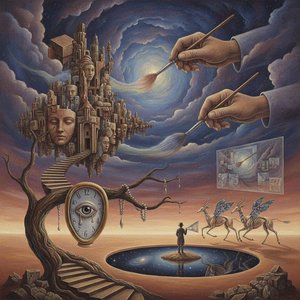 10 Surrealist Masterpieces That Changed Art Forever
 Composition surréaliste bleue
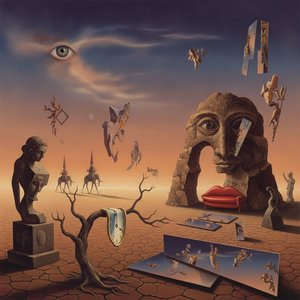 Mastering the Subconscious: The 25 Most Iconic Salvador Dalí Artworks
 Georges Papazoff
 Collection of Daniel Filipacchi