The Digital Renaissance: Understanding the Evolution from Canvas to Pixel The Digital Renaissance: How Modern Illustration Reimagines the Soul of Impressionist Light and Texture The Eternal Light: Tracing the Lineage from Monet’s Brush to the Digital...
The history of art has often been measured by the physical weight of a gilded frame and the intoxicating scent of linseed oil. To collect art was to possess something tethered to the earth—a singular, unrepeatable stroke of a master’s brush that captured a fleeting moment in time. We remember the nineteenth-century Impressionists, like Claude Monet, who taught us to witness a conversation between the sun and the eye, using rhythmic, broken brushstrokes to translate the very vibration of light onto canvas. However, as we navigate the dawn of a new era, we find ourselves at a fascinating crossroads where the heritage of the Old Masters meets the luminous glow of the twenty-first century.
The transition from organic pigment to the digital pixel does not represent a break in the lineage of light, but rather its evolution. The soul of art—the pursuit of capturing emotion and atmosphere—remains unchanged even as the medium shifts. Where Renoir once utilized layers of translucent glaze to evoke the warmth of skin, modern digital illustrators now employ sophisticated layering techniques and luminosity settings to achieve a similar emotional resonance. This DigitalRenaissance is not about replacing the canvas, but about expanding it, allowing for a new kind of light that can exist both in the physical realm of oil on cotton and within the infinite glow of the digital screen.
From Sketchpad to Stylus: The Technological Lineage of the Digital Canvas
Digital painting is either a physical painting made with the use of digital electronics and spray paint robotics within the digital art fine art context or pictorial art imagery made with pixels on a computer screen that mimics artworks from the trad...
The technical foundations of our current visual landscape were laid decades ago, far from the polished interfaces we use today. The earliest graphical manipulation began with programs like Sketchpad in 1963, created by Ivan Sutherland at MIT, which allowed for the manipulation of objects on a cathode-ray tube. This era of experimentation eventually led to the development of the first tablets and digitizers, tools that would fundamentally alter the artist's relationship with the surface. As the decades progressed, the introduction of MacPaint in 1984 brought graphical possibilities to the broader public, making the digital canvas accessible beyond the laboratory.
The evolution continued through the refinement of image manipulation software, most notably Adobe Photoshop, which emerged from the work of Thomas and John Knoll. These tools introduced the precision of Bezier curves and complex layering, allowing for a level of detail that was previously unattainable. This technological progression has moved us from the heavy, cumbersome hardware of early computer-aided design to the fluid, pressure-sensitive styluses used by contemporary masters today. The medium has matured from simple bitmapped graphics into a sophisticated ecosystem capable of mimicking the most intricate textures of traditional media.
Decoding New Aesthetics: The Rise of Glitch Pop and Algorithmic Precision
A Vision of Digital Transcendence Chromatic Fragments in a Void of Infinite Digital Stardust and Geometric Chaos is a breathtaking exploration of the Glitch Pop aesthetic, offering a fresh and modern reimagining of digital entropy. This masterpiece c...
As technology became more deeply embedded in our creative DNA, entirely new visual languages emerged, challenging our traditional perceptions of beauty. One of the most significant movements to arise from this intersection is the Glitch Pop aesthetic. This style finds profound beauty in what was once considered error or digital interference. In works such as Chromatic Fragments in a Void of Infinite Digital Stardust and Geometric Chaos by Amélie Caron, we see a high-tension moment where organic chaos meets mathematical precision. A dense field of multi-colored micro-dots swirls within a deep indigo void, interrupted by the sharp, authoritative presence of cyan, magenta, and lime green geometric blocks.
This aesthetic is not limited to intentional disruption; it extends into the realm of algorithmic precision and generative art. Artists like Jakub Jernajczyk, hailing from Poland, represent a fascinating intersection of traditional principles and the boundless possibilities of digital media. His work, such as Integer Squares, utilizes the precision of digital means to depict the relationship between integer numbers and their square values. It is a visual representation of mathematical harmony, where the composition evokes a sense of order within chaos. Similarly, the work of Cédric Dubois in Fragmented Transit: The Digital Erosion of Permanence uses algorithmic chaos to disrupt the organic permanence of a stone viaduct, creating a hybrid abstract-computer aesthetic that explores the tension between historical weight and modern ephemerality.
Reclaiming the Tactile: Translating Digital Complexity into Hand-Painted Oil
The Digital Alchemist: The Artistic Journey of Jan Folwarczyn In the contemporary intersection where classical heritage meets the limitless frontier of digital innovation, Jan Folwarczyn emerges as a profound voice of transition. Born in the Czech Re...
For the discerning collector, there is an undeniable allure in the physical manifestation of digital innovation. While a high-resolution digital image offers clarity, it lacks the tactile depth found in traditional media. This has led to a resurgence in the translation of digital complexity back onto canvas through meticulous hand-painted oil reproductions. At OriginalUniqueArt.com, our master painters approach works like those by Amélie Caron with a commitment to bringing physical weight to digital grit. Using traditional techniques and heavy impasto-like brushstrokes, they breathe soul and dimension into the simulated glitches of the digital era.
These reproductions are 100% hand-painted on cotton canvas, ensuring that the visible brushstrokes and deeper tonal range provide a much richer experience than a standard print. This process allows for a unique synergy where the precision of the digital original meets the textured, organic nature of oil paint. For collectors seeking to bridge these two worlds, we even offer the ability to "remix" art history, such as requesting a photo be painted in the impasto style of Van Gogh or transforming a modern subject into a seventeenth-century masterpiece. This reclamation of the tactile ensures that the energy of the digital age can be preserved in a format that possesses the physical presence required for high-end interiors and museum-quality collections.
The Challenge of Permanence: Navigating Digital Preservation and Legacy
In library and archival science, digital preservation is a formal process to ensure that digital information of continuing value remains accessible and usable in the long term. It involves planning, resource allocation, and application of preservatio...
As we embrace the digital, we must also confront the inherent fragility of the medium. Unlike an oil painting that can endure for centuries if properly varnished, digital information is subject to the rapid obsolescence of hardware and software. The lifespan of digital media is notoriously short; hard drives can fail within years, and file formats may become unreadable as technology advances. This necessity for digital preservation—the process of ensuring that digitally stored information remains accessible—is a critical concern for both institutions and private collectors.
Institutions like the Balamand Centre for Digital Humanities Morphe in Lebanon exemplify the proactive approach to this challenge, acting as a digital sanctuary to protect cultural heritage through advanced digital humanities. Yet, the risk remains high; studies suggest that a vast majority of early video games and digital assets are at risk of being lost forever due to the decay of physical storage or the disappearance of proprietary software. For the collector, this underscores the importance of acquiring works that are not only aesthetically significant but also supported by robust digital provenance and archival-quality formats, ensuring that the visual legacy of our era survives the transition into the next.
The Enduring Pulse: Why the Soul of Art Remains Unchanged
The Genesis of Visibility: The Algorithmic Justice League The Algorithmic Justice League (AJL) isn’t a single artist in the traditional sense, but rather a collective born from the urgent need to expose and dismantle bias embedded within artificial i...
Ultimately, the evolution from pigment to pixel is a story of expansion rather than replacement. Whether an artist uses a sable brush or a pressure-sensitive stylus, the fundamental objective remains the same: to communicate emotion, to capture light, and to leave a permanent mark on our visual memory. The digital revolution has not stripped art of its humanity; instead, it has provided new tools to explore the very essence of human experience—from the algorithmic justice explored by the Algorithmic Justice League to the mathematical beauty found in the works of Jernajczyk.
As we look toward the future, the boundaries between the physical and the virtual will continue to blur. We are entering a period where the digital and the analog exist in a state of constant symbiosis. The true value of an artwork lies not in the medium through which it was conceived, but in its ability to resonate with the viewer across time and technology. As long as there is a human desire to find meaning in chaos and beauty in structure, the pulse of art will continue to beat, driving us toward new frontiers of expression that honor our past while embracing our digital future.
By the OriginalUniqueArt.com Editorial Team
Exclusive ArtistAmélie Caron
b. 1978 · Lyon, France
Discover the exclusive collection of Amélie Caron on WahooArt.com. Explore her prestigious Glitch Pop digital art, featuring rare fine art prints and unique digital originals.
Exclusive ArtistLaurent Caron
b. 1967 · Lyon, France
Discover the exclusive collection of Laurent Caron on WahooArt.com. Explore his definitive Basquiat Raw Pop digital images, fine art prints, and original works.
Explore the profound evolution from the tactile mastery of classical oil painting to the luminous frontier of digital art. Discover how tradition meets technology through an expert lens of art history and craftsmanship.
Explore the fascinating world of AI art! Discover how algorithms create stunning visuals & its impact on artistic expression. Expert insights, copyright guidance, and personalized art solutions at OriginalUniqueArt.
Discover the magic of digital alchemy. Learn how AI transforms modern photos into breathtaking Impressionist masterpieces, blending cutting-edge technology with the timeless soul of hand-painted oil artistry to preserve your most cherished memories on canvas.
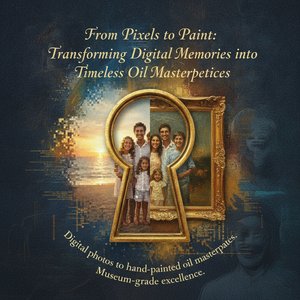
Discover the art of transforming digital photos into bespoke oil masterpieces. From custom portraits to historical 'period shifts,' our academy-trained artists breathe life into your memories with hand-painted impasto textures and museum-grade excellence.


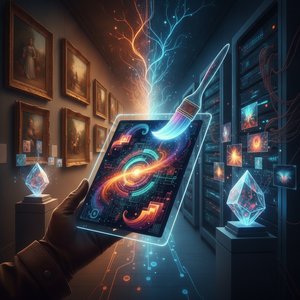 Digital Painting 101: A Collector's Guide to the New Era of Digital Mastery and Algorithmic Art
 Chromatic Fragments in a Void of Infinite Digital Stardust and Geometric Chaos
 Jan Folwarczyn
 The Algorithmic Justice League