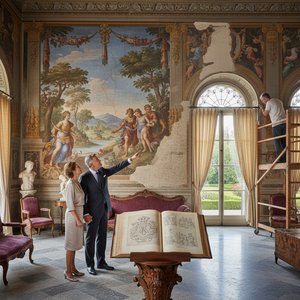
The Architectural Skin: Moving Beyond Surface Decoration Beyond Decor: How Custom Murals Turn Your Walls Into Personal Masterpieces The Architectural Skin: Moving Beyond Decoration to Immersive Art Beyond Decor: How Custom Murals Infuse Your Home wit...
The selection of wall treatments in hospitality design functions as a primary driver for brand recognition and guest perception. A well-executed mural or decorative finish does more than cover a surface; it establishes the architectural skin of the property, providing a sense of permanence that wallpaper cannot achieve. When designing for high-end hotels or corporate lobbies, the choice between an abstract geometric relief and a narrative fresco dictates the emotional temperature of the room. For instance, the use of Elegant Abstract Relief Wall Art, featuring MDF substrates and acrylic resin pigments, introduces a modern, tactile dimension that appeals to contemporary sensibilities through structured geometry.
Historically, this integration of art into architecture has been used to anchor identity. The Detroit Industry Murals by Diego Rivera demonstrate how large-scale works can embody the industrial spirit of a location, turning a museum courtyard into a site of cultural documentation. In similar ways, the U.S. Department of the Interior Museum utilizes its collection to reflect American heritage within its very walls. For the procurement professional, the objective is to move beyond mere decoration toward a strategy where every surface reinforces the intended brand narrative.
Takeaway: Use bespoke wall treatments to transform architectural boundaries into active components of your brand identity.
Assessing Durability: Selecting Mediums for High-Traffic Environments
Fresco (pl. frescos or frescoes) is a technique of mural painting executed upon freshly laid ("wet") lime plaster. Water is used as the vehicle for the dry-powder pigment to merge with the plaster, and with the setting of the plaster, the painting be...
In large-scale hospitality projects, the longevity of an installation is as critical as its aesthetic impact. Decision-makers must evaluate the chemical and physical properties of various painting techniques to ensure they withstand the rigors of guest interaction and environmental factors. The buon fresco technique, where pigments are applied to wet lime plaster, creates a bond so deep that the color becomes an integral part of the wall itself through carbonatation. This method offers exceptional durability for permanent installations, though it requires precise management of the giornata, or the amount of plaster applied in a single day's work.
Conversely, for surfaces prone to moisture, such as luxury bathrooms or spa areas, mineral or silicate paints provide necessary resistance. These inorganic pigments are particularly effective in addressing humidity-related issues. For more flexible applications, fresco-secco or lime secco techniques allow for painting on dry plaster using organic binders like casein or tempera. While these methods offer greater retouchability and a longer working window for artists, they may lack the extreme permanence of true fresco. When selecting materials for furniture or high-impact zones, synthetic enamel paints or durable acrylic resins are preferred to resist friction and cleaning agents.
Take away: Match the painting technique—from permanent buon fresco to flexible secco—to the specific moisture and impact requirements of the room.
Determining Scale: Anchoring Large Architectural Volumes
The Architectural Skin: Moving Beyond Decoration to Immersive Art Beyond Decor: How Custom Murals Infuse Your Home with Soul and Story The Architectural Skin: Moving Beyond Decoration to Immersive Art Beyond Decor: How Custom Murals and Frescoes Infu...
The management of scale is the silent conductor of atmosphere in grand architectural volumes, such as atriums, galleries, or sweeping staircases. Small, disconnected artworks often appear lost within vast spaces, failing to provide the necessary visual weight to ground a room. A large-format mural possesses the ability to anchor a space, providing a focal point that can visually expand smaller rooms through trompe l'oeil illusions or stabilize larger ones by filling significant vertical planes.
Consider the impact of scale in works like the Age of Mammals mural at the Yale Peabody Museum, which spans sixty feet to command its environment. In modern interiors, this can be replicated using multi-panel configurations. Our ability to split a single composition across three, four, or five panels allows designers to cover wide walls or staircases with a cohesive, modern architectural look. This approach ensures that the artwork expands to meet the proportions of the architecture, preventing the "window" effect of small frames and instead creating an immersive environment.
Takeaway: Utilize large-format murals and multi-panel layouts to provide visual weight and prevent artwork from being overwhelmed by large architectural volumes.
Coordinating Customization: Aligning Artwork with Design Specifications
A Discreet Master of Dutch Interiors: Gerrit de Haen Gerrit de Haen remains a somewhat enigmatic figure in the pantheon of 17th-century Dutch painters, yet his work speaks volumes about the era’s burgeoning prosperity and refined domestic sensibiliti...
Customization allows for the precise alignment of art with a designer's specific color palette and spatial constraints. This goes beyond selecting from a catalog; it involves the ability to "remix" history to suit modern requirements. Through professional digital mockup services, designers can visualize how a composition will interact with existing lighting and textures before production begins. This is essential for complex commissions where color matching or the integration of specific motifs—such as the geometric precision found in Elegant Stainless Steel Geometric Wall Art—is required.
The flexibility of modern reproduction allows for significant stylistic shifts. A designer can request a portrait to be executed in an impasto style or transform a contemporary photograph into a work reminiscent of the 17th-century Dutch master Gerrit De Haen. For projects requiring specific architectural integration, such as creating a continuous flow across structural elements, custom-engineered canvas wraps and specialized framing options like MirrorWrap ensure that the artwork respects the boundaries of the design concept.
Takeaway: Leverage digital mockups and stylistic customization to ensure artwork integrates seamlessly with your established color palette and design motifs.
Managing Implementation: Sourcing, Installation, and Long-Term Maintenance
The final stage of implementation involves managing the logistics of sourcing, professional installation, and long-term preservation. For large-scale murals on canvas rolls, the process is similar to installing high-end wallpaper, allowing for efficient deployment across multiple rooms in a hotel or corporate office. When dealing with framed pieces, ensuring that stretcher bars are properly braced prevents warping over time, while 3mm industrial tubes ensure safe global transit via partners like DHL or FedEx.
Maintenance protocols must be established at the point of procurement. For example, works featuring acrylic resin pigments or gold finishes require specific care, such as gentle dusting with a microfiber cloth, to avoid the use of abrasive cleaners that could degrade the surface. For high-value investments, applying a coat of Damar varnish can protect against dust and atmospheric pollutants. For procurement managers, the reliability of the supply chain—including VAT-compliant documentation and clear shipping timelines—is the foundation of a successful project rollout.
Takeaway: Establish clear maintenance protocols and verify logistics capabilities to ensure the long-term preservation and operational efficiency of your art acquisitions.
Elevate hospitality interiors with professional art procurement solutions. Discover how to use statement oil paintings, large-scale murals, and multi-panel sets to transform hotel spaces. Expert guidance on bulk orders, custom sizing, and durable, museum-quality reproductions.
Elevate hospitality design with bespoke, large-scale art. Discover how custom hand-painted murals, ceiling frescoes, and multi-panel masterpieces transform hotel interiors into immersive brand experiences through architectural artistry and technical excellence.
Master the complexities of global art logistics with our expert guide for designers. Learn professional protocols for securing museum-grade reproductions, managing international customs, and ensuring flawless transit for large-scale hospitality art installations.
Explore the rich history & enduring legacy of fresco painting. Discover how to preserve family heritage through stunning wall art. Expert insights & restoration guidance.

 Architectural Permanence: The Strategic Use of Murals and Frescoes in Hospitality Interiors
 Fresco
 Beyond Decor: How Custom Murals Turn Your Walls Into Personal Masterpieces
 Gerrit De Haen