
The Primacy of the Idea: Redefining Art Beyond Aesthetics
 Conceptual art
Conceptual art, also referred to as conceptualism, is art in which the concept(s) or idea(s) involved in the work are prioritized equally to or more than traditional aesthetic, technical, and material concerns. Some works of conceptual art may be con...
To enter the realm of conceptual art is to undergo a profound shift in perception, moving away from the sensory indulgence of the eye toward the rigorous demands of the intellect. For the student of art history, this movement represents one of the most radical departures from the classical tradition. Where the Renaissance masters sought to perfect the mimetic representation of reality—capturing the precise translucency of skin or the dramatic interplay of light and shadow—the conceptualist seeks something far more elusive: the pure, unadelineated essence of a thought. In this paradigm, the traditional aesthetic concerns of beauty, technical virtuosity, and material splendor are not discarded out of ignorance, but are intentionally subordinated to the primacy of the concept.
This intellectual pivot fundamentally altered the definition of what constitutes an artwork. It suggested that the true merit of a piece lies not in the exquisite application of oil pigments on a cotton canvas, but in the strength and depth of the underlying proposition. When we examine the works of this era, we see a move toward art as information, where the artist functions less as a skilled craftsman and more as a philosophical provocateur. This shift invites the viewer to engage in a dialogue that transcends mere observation; it requires an active, cognitive participation to decode the layers of meaning embedded within the idea itself. It is an era where the "intellectual flex" becomes the new visual currency, challenging us to find value in the intangible.
The Dematerialization of the Object: From Tangible Form to Pure Concept
 Beyond Representation: Conceptual Art & the Enduring Legacy of Ideas
The Dematerialization of the Art Object: A Radical Shift Dematerialization Dematerialization may refer to: Dematerialization (art), an idea in conceptual art where the art object is no longer material Dematerialization (economics), the reduction in t...
One of the most seismic shifts in mid-20th-century artistic thinking was the phenomenon known as the dematerialization of the art object. This concept, which continues to haunt and inspire contemporary practice, describes a process where the physical artwork begins to recede, leaving behind only the traces of its existence or the instructions for its creation. As the boundaries of art expanded, the heavy, permanent presence of the sculpted form or the oil painting began to lose its absolute authority. The focus drifted from the making to the thinking, leading to a period where the artwork could exist as a set of written instructions, a photographic document, or even a fleeting performance.
This reduction of materiality was not merely an aesthetic choice but a profound questioning of art's purpose and its relationship to the burgeoning market. By creating works that were ephemeral or impossible to possess in a traditional sense, artists sought to resist the commodification of the art object. This era introduced the radical notion that art could exist primarily as a mental construct. While we at Most-Famous- Paintings.com celebrate the enduring tactile beauty of hand-painted oil reproductions—where every visible brushstroke and deep tonal range honors the physical tradition—it is impossible to ignore how this period of dematerialization paved the way for the installation and digital art of today. It taught us that while the object may fade, the impact of a well-conceived idea remains indelible.
Foundations and Pioneers: From Duchamp’s Readymades to Sol LeWitt
 Beyond the Canvas: Why Conceptual Art is the Ultimate Power Move for Your Space
The Death of the Object: Why Ideas are the New Visual Currency Beyond Representation: Conceptual Art & the Enduring Legacy of Ideas The Dematerialization of the Art Object: A Radical Shift Dematerialization Dematerialization may refer to: Demateriali...
The lineage of conceptualism is deeply rooted in the subversive spirit of the early 20th century, most notably in the provocations of Marcel Duchamp. His introduction of the "Readymade"—ordinary, mass-produced objects such as a urinal or a bicycle wheel, stripped of their utility and repositioned within a gallery context—shattered the long-held assumption that art required manual creation. Duchamp’s genius lay in his ability to demonstrate that the artist's choice, rather than their technical dexterity, was the true catalyst for meaning. This paved the way for a movement that would eventually formalize the idea that the concept is the machine that makes the art.
As the movement matured in the 1960s, artists like Sol LeWitt provided the theoretical framework that would define an entire generation. LeWitt famously asserted that in conceptual art, the idea or concept is the most important aspect of the work. He proposed a method where all planning and decisions are made beforehand, rendering the physical execution a perfunctory affair. This approach allowed for works to be constructed by anyone, provided they followed a specific set of written instructions. This democratization of the creative process challenged the cult of the "artist-genius" and forced a re-evaluation of authorship, forever changing the landscape of art education and practice.
Post-Conceptualism and Neo-Conceptualism: The Evolution of the Intellectual Flex
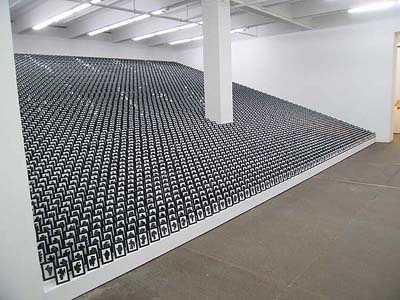 Neo-conceptual art
Neo-conceptual art describes art practices in the 1980s and 1990s that emerged from the conceptual art movement of the 1960s and 1970s. These subsequent initiatives included the Moscow Conceptualists, the United States Neo-Conceptual artists, such as...
As we moved into the 1980s and 1990s, the radical energy of the original movement evolved into what is known as Neo-conceptualism. This era did not seek to destroy the object, but rather to re-examine it through a lens of critique and simulation. Artists such as Sherrie Levine and the Young British Artists (YBAs) utilized conceptual strategies to interrogate themes of appropriation, identity, and the nature of the image itself. The "intellectual flex" became more complex, often blending high-concept theory with a provocative, sometimes even sensationalist, visual impact that captured the public imagination.
Post-conceptualism, a term famously refined in art school parlance by figures like John Baldessari, built upon this legacy by integrating conceptual strategies into almost every facet of contemporary practice. It is no longer a distinct, isolated movement but a pervasive methodology. Whether through the use of digital manipulation, the deconstruction of pop culture imagery, or the creation of large-scale installations, the influence of post-conceptualism is visible in how modern artists navigate the saturated landscape of hyper-saturated imagery. The tension between the material and the conceptual remains the heartbeat of contemporary art, driving a continuous evolution of form and thought.
The Enduring Legacy: How Conceptualism Reshaped Contemporary Visual Culture
Post-conceptual, postconceptual, post-conceptualism or postconceptualism is an art theory that builds upon the legacy of conceptual art in contemporary art, where the concept(s) or idea(s) involved in the work take some precedence over traditional ae...
Today, we live in the enduring wake of the conceptual revolution. Its influence is woven into the very fabric of our visual culture, from the way we consume digital media to the way museums curate their permanent collections. The movement's emphasis on social and political critique, anti-commodification, and the use of information as a medium has provided the tools for artists to address the complexities of a globalized, technological world. We see its fingerprints in everything from generative digital art to the large-scale architectural murals that transform urban spaces.
Ultimately, the legacy of conceptual art is one of expansion. It expanded the definition of what an artist can be, what an artwork can look like, and how a viewer can experience beauty. While we continue to find profound joy in the mastery of traditional techniques—the way a hand-painted reproduction of a Rembrandt or a Monet can bring a sense of historical weight and textured depth to a modern home—we do so with an awareness of the intellectual foundations that allow these works to resonate. Conceptualism taught us that while the canvas provides the stage, it is the idea that provides the soul.
For those seeking to explore the physical beauty of art history through museum-grade reproductions or custom commissions, visit OriginalUniqueArt.com.


