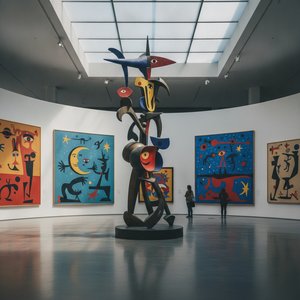
The Modernisme Movement: Forging a Visual Rebellion
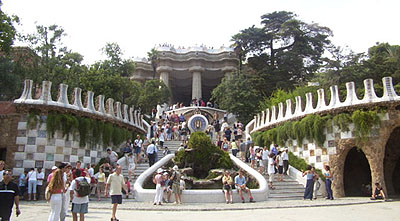 Modernisme
Modernisme (Catalan pronunciation: [muðərˈnizmə], Catalan for "modernism"), also known as Catalan modernism and Catalan art nouveau, is the historiographic denomination given to an art and literature movement associated with the search for a new enti...
To understand the pulse of Catalonia, one must look beyond the mere borders of a map and into the very pigments used to define its spirit. At the turn of the 20th century, a movement known as Modernisme emerged not just as an aesthetic choice, but as a profound cultural reclamation. This was art with an agenda—a vibrant, rebellious search for a new identity that sought to elevate Catalan culture on the global stage. It was far more than a local version of Art Nouveau; it was a deliberate, soulful engagement with natural beauty and regional pride, blending the organic curves of nature with a fierce intellectual independence.
This era was characterized by an intense desire for revindication, where every brushstroke served to assert a unique cultural existence. While much of Europe was preoccupied with industrial rigidity, the Catalan masters were looking inward at their landscapes and outward toward a future of artistic freedom. This movement breathed life into everything from architecture to decorative arts, creating a cohesive visual language that felt both ancient in its roots and radically modern in its execution. It was a period where art became the primary vehicle for a nation's heartbeat.
Masters of Light and Emotion: Rusiñol and the Art of Intimacy
 The girl with carnation (Teresa Mirabent Planas)
Santiago Rusiñol’s ‘The Girl with Carnation’: A Portrait of Catalan Modernisme The girl with carnation , painted in 1893 by Santiago Rusiñol Prats, offers a poignant glimpse into the heart of Catalan Modernisme – a movement that sought to redefine Sp...
Within this whirlwind of change, certain figures emerged as poets of the canvas, most notably Santiago Rusiñol. His work offers us a poignant, quiet window into the heart of the movement. In masterpieces like The Girl with Carnation, we see a departure from the loud, academic grandiosity of the past. Instead, Rusiñol invites us into moments of profound stillness. He possessed a masterful ability to handle light and color, using subtle gradations to capture the delicate emotion of a young girl lost in contemplation amidst potted plants.
Rusiñol’s technique was never about mere imitation; it was about capturing the feeling of the Catalan landscape. His brushwork, often loose yet incredibly controlled, allowed for a textured surface that breathes with life. Whether he was painting the serene melancholy of Granada or the intimate details of a domestic scene, his work anchored the Modernisme movement in a deeply personal reality. For the modern collector, these works represent more than just beautiful imagery; they are studies in emotional depth and the power of quiet observation.
Ramon Casas: Capturing the Pulse of a Transforming Barcelona
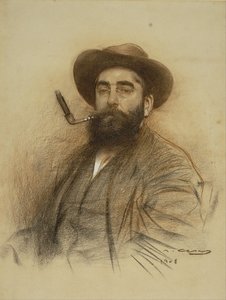 Ramon Casas Carbó
A Chronicler of Catalan Modernisme: The Life and Art of Ramon Casas Ramon Casas i Carbó, born in Barcelona on January 4th, 1866, was more than just a painter; he was a visual poet of his time, an artist who captured the spirit of a Catalonia undergoi...
If Rusiñol was the poet of intimacy, then Ramon Casas was the visual chronicler of Barcelona’s metamorphosis. A true titan of Catalan Modernisme, Casas lived through an era of intense social and political upheaval, and his art reflects the dynamic energy of a city on the cusp of modernity. He was a fixture in the legendary intellectual circles of Barcelona, particularly within the bohemian atmosphere of Els Quatre Gats, where the boundaries between art, literature, and life were perpetually blurred.
Casas’s style drew inspiration from the Impressionist currents of Paris, yet he quickly forged a voice that was unmistakably his own. His portraits are legendary for their ability to capture the spirit of the time—the anxieties, the aspirations, and the burgeoning freedom of a society in flux. In works such as his Foreshortened Female Nude, we see an exploration of form and light that transcends simple depiction, offering instead a glimpse into the very soul of a changing era. His ability to blend bold brushwork with a keen eye for fleeting moments makes his oeuvre a vital record of Catalan history.
Beyond the Canvas: Architecture and Identity in Catalonia
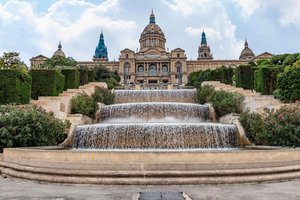 Museu Nacional d'Art de Catalunya
A Citadel of Catalan Soul: Exploring the Museu Nacional d'Art de Catalunya Perched majestically on Montjuïc hill overlooking Barcelona, the Museu Nacional d’Art de Catalunya – MNAC – is far more than a repository of artistic treasures; it’s a profoun...
The visual identity of Catalonia was never confined to the frame of a painting; it spilled out into the very streets of its cities. The movement found its most monumental expression in architecture, where stone and light were used to build a lasting legacy. A prime example is the Museu Nacional d'Art de Catalunya (MNAC), perched majestically on Montjuïlent Hill. Originally conceived as a grand stage for the 1929 International Exposition, the building itself—the Palau Nacional—is a masterpiece of Beaux-Arts grandeur designed by architects like Josep Puig i Cadafalch.
This architectural splendor was intended to showcase Catalonia’s sophistication to the world. The intricate mosaics, sculptures, and sweeping vistas of the palace serve as a physical manifestation of cultural pride. When we walk through these halls, we are not just visiting a museum; we are navigating a chronicle etched in stone. This seamless integration of art and structure ensured that the Modernisme aesthetic was not just something to be viewed, but something to be lived within, creating an immersive environment of beauty and identity.
From Medieval Frescoes to Abstract Visions: A Timeline of Catalan Soul
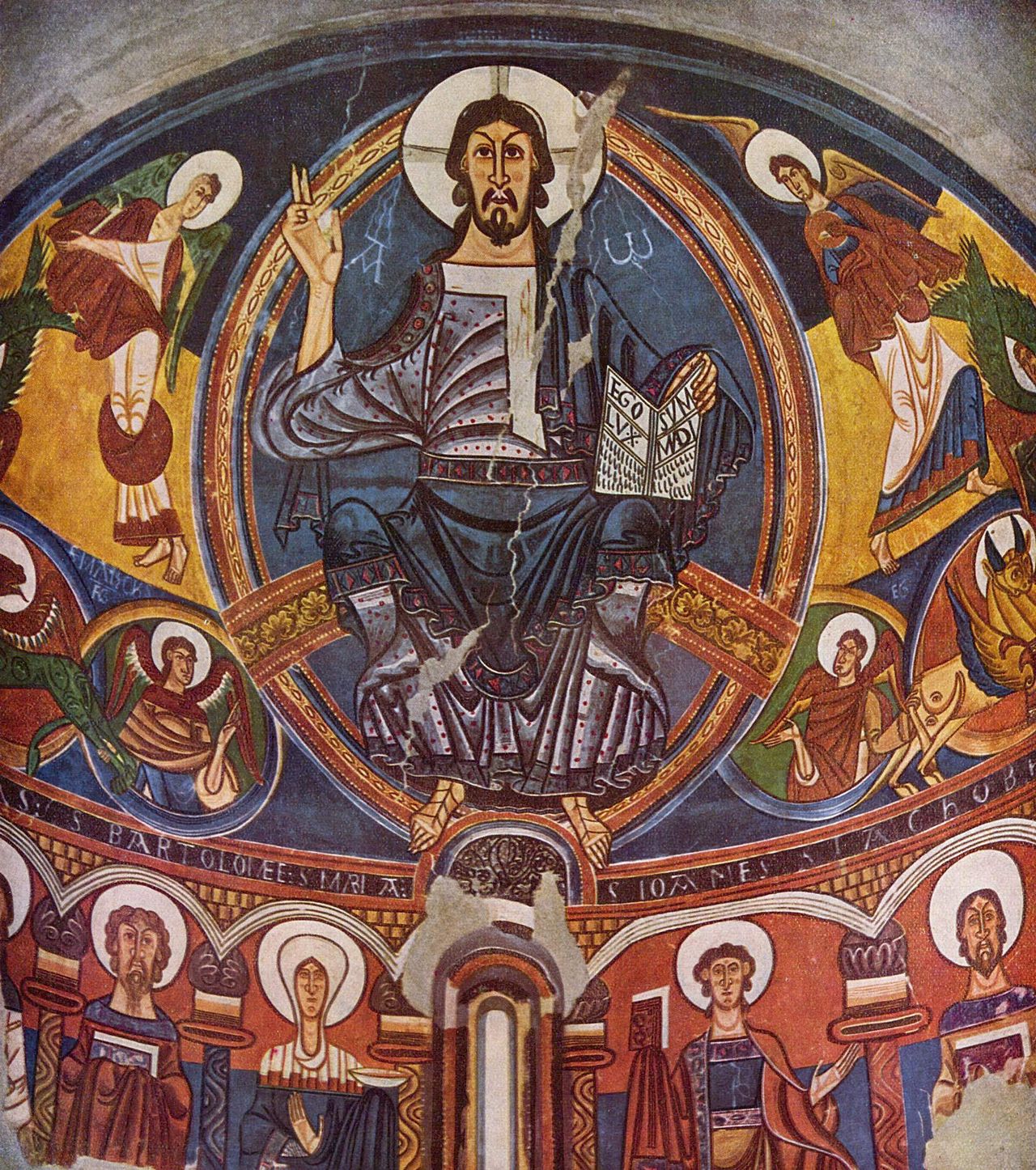 Catalan art
The Catalan art is the artistic production made in what is now Catalonia along the time. It has a parallel evolution to the rest of European art, following in a diverse way the multiple tendencies that have taken place in the context of the history o...
The brilliance of Catalan art lies in its incredible continuity. The movement did not emerge from a vacuum; it was the culmination of centuries of diverse cultural influences. From the ancient Roman foundations to the exquisite Romanesque and Gothic periods, Catalonia has always been a crossroads of civilizations. The Museu Nacional d'Art de Catalunya holds some of the world’s finest Romanesque frescoes—fragments of devotion rescued from scattered churches that whisper tales of faith and artistry from the 12th century.
As time progressed, this tradition evolved through the Renaissance and Baroque into the more experimental territories of the 20th century. We see a fascinating trajectory from the rigid, symbolic power of the Pantocrator figures to the more subjective, minimalist expressions of artists like Josep Mompou, and even the bold, abstract energy found in the later works of Joan Miró. This evolution shows a culture that is never static, but always refining its ability to express the human condition through ever-changing visual languages.
Bringing the Spirit Home: Reimagining Catalan Classics for Modern Spaces
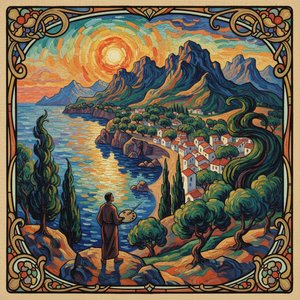 Joaquim Mir: A Catalan Visionary – Exploring Symbolism, Landscape & Modernist Aesthetic
Early Life & Influences: Forging a Catalan Identity Joaquim Mir Joaquim Mir (1873-1940) was a Catalan Modernisme painter renowned for his vibrant color & evocative landscapes. Explore his unique vision, blending abstraction and mystic nature scenes b...
For the contemporary art enthusiast, the legacy of Catalonia offers an unparalleled opportunity to infuse modern interiors with character and depth. The bold colors, emotional intensity, and rich textures of the Modernisme era are perfectly suited for high-impact, design-conscious spaces. Whether it is a large-scale reproduction of a vibrant landscape by Joaquim Mir or a custom portrait reimagined in a classical style, these works bring a sense of historical weight and cultural sophistication to any room.
At OriginalUniqueArt.com, we specialize in bridging this gap between history and the modern home. We offer the unique ability to "remix" art history, allowing you to transform personal milestones into hand-painted oil masterpieces that echo the techniques of the greats. Our professional artists use 100% cotton canvas and traditional oils to ensure that every brushstroke carries the tactile depth and soul of the original movement. Whether you are looking for a multi-panel set to anchor a wide wall or a custom commission that captures your own story through a Catalan lens, we help you curate a collection that is as bold and enduring as the culture that inspired it.