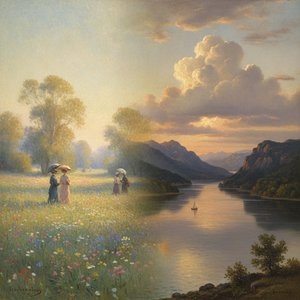
The Dawn of Direct Observation: From Studio Tradition to En Plein Air
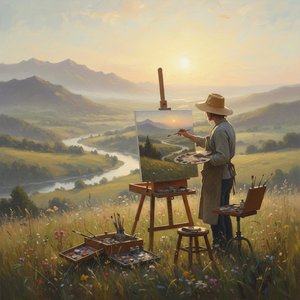 Capturing Ephemeral Light: A Comprehensive Exploration of Plein Air Painting's History & Enduring Legacy
The Dawn of Direct Observation: From Studio Tradition to En Plein Air Wikipedia: En plein air En plein air (pronounced [ɑ̃ plɛ.n‿ɛʁ]; French for 'outdoors'), or plein-air painting, is the act of painting outdoors. This method contrasts with studio pa...
For centuries, the sanctity of the artist’s studio served as the primary locus of creation, a controlled environment where light was not experienced but meticulously recreated. Within these hallowed walls, landscapes were often constructed from memory, sketches, and a prevailing academic ideal that prioritized intellectual interpretation over sensory immediacy. The natural world, while serving as an essential source of inspiration, was invariably filtered through the lens of convention—characterized by idealized forms, carefully balanced compositions, and a palette dictated by established rules. This era of studio tradition favored the meticulous execution of a predetermined look, where the artist labored to create illusions of reality that were often more conceptual than observational.
However, a profound shift began to take 19th-century consciousness, fueled by a burgeoning Romantic sensibility and an unyielding desire for authenticity. The emergence of en plein air—a French term meaning "in the open air"—represented a radical departure from these academic constraints. This movement was not merely about relocating the easel from the studio to the meadow; it was a fundamental revolution in artistic philosophy. It prioritized direct observation as the essential key to unlocking truth, seeking to capture not just what was seen, but how it was perceived in its most fleeting and ephemeral glory. This transition required immense logistical courage, as artists moved away from the comfort of prepared pigments toward the challenge of managing unwieldy materials under the unpredictable whims of the sky.
The American Lens: Adapting European Impressionism for a New World
 American Impressionism
American Impressionism was a style of painting related to European Impressionism and practiced by American artists in the United States from the mid-19th century through the beginning of the 20th. The style is characterized by loose brushwork and viv...
While the seeds of Impressionism were sown in the studios of France during the 1860s, their arrival on American shores in the late 19th century sparked a unique cultural metamorphosis. Major exhibitions in Boston and New York during the 1880s introduced the American public to the radical works of French masters, yet the American response was initially marked by hesitation. At the first significant exhibit in 1886, many American patrons found themselves captivated by the luminous landscapes but deeply unsettled by the realist figures and nudity depicted in other Impressionist works. The American artistic community, still deeply rooted in traditional academy studies, viewed this new style as a provocative rejection of established values.
Despite this initial friction, the movement took root through the influence of artists who had traveled to France and encountered the works of Claude Monet and Edgar Degas firsthand. Figures such as Mary Cassatt played a pivotal role in bridging this gap, forming close relationships with the French avant-garde and helping American patrons embrace the abstract forms of the style. As the 19th century gave way to the 20th, American Impressionism began to develop its own distinct character, moving beyond mere imitation of European trends to find a voice that resonated with the vastness and diversity of the American landscape and the nuances of upper-class domestic life.
Luminous Landscapes: Masters of Light and the Texas and Pennsylvania Schools
 Pennsylvania Impressionism
Pennsylvania Impressionism was an American Impressionist movement of the first half of the 20th century that was centered in and around Bucks County, Pennsylvania, particularly the town of New Hope. The movement is sometimes referred to as the "New H...
As the movement matured, it branched into localized schools that captured the specific soul of different American regions. In the northeast, the Pennsylvania Impressionism movement—often referred to as the New Hope School—emerged around the picturesque Delaware River. Led by visionaries like William Langson Lathrop, this colony of artists utilized the rolling hills and river tributaries of Bucks County to explore the interplay of light and atmosphere. Artists such as Edward Redfield became pioneers in capturing the stark, vibrant beauty of American winters, while Daniel Garber brought a lighter, more delicate touch through his celebrated rain paintings, proving that the movement could encompass both bold realism and ethereal softness.
Simultaneously, a different kind of light was being explored in the South. Robert Julian Onderdonk, affectionately known as "the father of Texas painting," brought a poetic interpretation to the Lone Star State. Born into an artistic lineage, Onderdonk’s work was a passionate exploration of his native land's essence. His training under William Merritt Chase at Shinnecock Hills instilled in him a deep appreciation for en plein air techniques, allowing him to illuminate the Texas landscape with a sense of warmth and vitality that felt uniquely Texan. Whether through the river-drenched scenes of Pennsylvania or the sun-drenched vistas of the South, these masters shared a singular devotion to the transient beauty of their respective environments.
Technique and Texture: The Art of Loose Brushwork and Vivid Color
 La Marcellerie
Gaines Ruger Donoho was an American artist known for his beautiful landscapes and portraits. One of his notable works is La Marcellerie , an oil on canvas painting created in 1881. This stunning piece is currently housed at the Brooklyn Museum in the...
The true magic of American Impressionism lies in its tactile execution. To capture the ephemeral nature of light, artists abandoned the smooth, blended surfaces of academic painting in favor of loose, visible brushstrokes. This technique allowed for a sense of movement and energy, as if the paint itself were vibrating with the atmosphere it sought to depict. In works such as Gaines Ruger Donoho’s La Marcellerie, one can observe how broad brushwork and green tonalities allow figures to blend seamlessly into the landscape, creating a unified, immersive experience for the viewer.
This era also saw a revolution in color theory. Rather than relying on heavy shadows and muted earth tones, Impressionists utilized a more vibrant, light-filled palette. They understood that shadows are rarely black but are instead composed of reflected colors and deep blues. This use of color was not merely decorative; it was an attempt to replicate the actual optical experience of sunlight hitting a surface. The ability to layer colors—sometimes even using an impasto technique where paint is applied thickly—created a physical texture that caught the light, giving the canvas a three-dimensional quality that a mere print could never replicate.
Preserving the Moment: The Enduring Legacy of American Impressionist Masterpieces
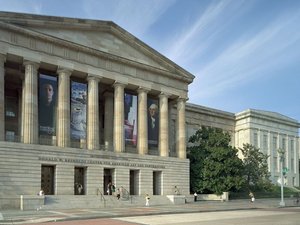 Smithsonian American Art Museum
A Chronicle of American Identity: The Smithsonian American Art Museum Nestled within the venerable Old Patent Office Building in Washington, D.C., the Smithsonian American Art Museum is more than simply a repository for artistic treasures; it’s a pro...
The legacy of American Impressionism remains as vibrant today as it was at the turn of the century. These paintings serve as more than just aesthetic objects; they are windows into a vanishing era, capturing the spirit of landscapes and lifestyles that have since been transformed by time and progress. The movement’s emphasis on direct observation and emotional resonance continues to inspire contemporary artists and collectors alike, standing as a testament to the power of human perception.
For the modern enthusiast, owning a piece of this history allows for a daily encounter with the sublime. At OriginalUniqueArt.com, we honor this tradition by offering exquisite, handmade oil reproductions that capture the very soul of these masterpieces. Our artists, trained in the highest academic traditions, meticulously recreate the visible brushstrokes and deep tonal ranges of the original works on 100% cotton canvas. Whether you seek a large-scale landscape to anchor a room or a custom "remix" that brings an Impressionist touch to a personal photograph, our mission is to make the profound beauty of art history accessible to your home, ensuring that the ephemeral light of the past continues to illuminate your present.