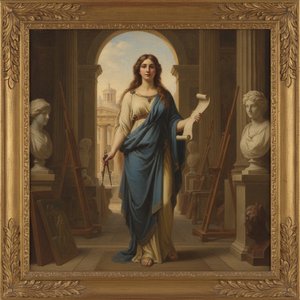
A Legacy Sculpted in Stone: Exploring the École des Beaux-Arts de Paris Step through the shadowed doors of the École des Beaux-Arts in Paris, and you don’t merely enter a museum; you step into the very heart of French artistic evolution. This isn't s...
To understand the profound gravity of Academic art, one must look beyond the canvas to the hallowed halls where such mastery was forged. This was not a movement born of spontaneous impulse, but rather a disciplined pursuit of perfection, cultivated within the prestigious institutions of Europe, most notably the École des Beaux-Arts in Paris. These academies were established to replace the medieval guilds, aiming to systematize the teaching of art through a rigorous curriculum that emphasized the emulation of established masters and the classical tradition. Within these walls, students did not merely learn to paint; they learned to observe the world through the lens of anatomy, geometry, and historical reverence.
The influence of these institutions was monumental, extending far beyond the borders of France to shape the visual language of the Western world for centuries. The standards set by the French Académie des Beaux-Arts became a global benchmark, blending the structured precision of Neoclassicism with the emotive depth of Romanticism. Figures such as Jean-Auguste-Dominique Ingres provided the foundational pillars for this style, emphasizing line and clarity. This pedagogical rigor ensured that artists were not merely artisans, but intellectuals capable of conveying complex cultural ideologies. The academy's role was to control taste and define "official art," creating a standard where technical excellence was inseparable from aesthetic and ethical concepts.
The legacy of this training is perhaps most visible in the works of sculptors like Gabriel Jules Thomas. Born in Paris in 1824, Thomas immersed himself in the esteemed traditions of the École des Beaux-Arts, internalizing a method steeped in idealized form. His triumph at the 1848 Prix de
de Rome with his depiction of Philoctète partant pour le siège de Troie serves as a testament to this era's demand for mastery over classical subject matter. Through such rigorous preparation, the academic tradition ensured that every stroke and every carved contour served a higher purpose: the pursuit of an eternal, idealized truth.
The Architecture of Identity: Symbolism, Status, and Authority in Portraiture
Cecilia Beaux’s Ernesta: A Portrait of Quiet Dignity Cecilia Beaux (1855-1942) stands as a monumental figure in American portraiture, particularly during the opulent era of the Gilded Age. Her artistic journey began amidst considerable personal hards...
In the realm of academic portraiture, a painting transcends the boundaries of a simple likeness; it becomes a carefully constructed monument to authority, intellect, and social standing. During the Gilded Age and the height of the 19th-century salons, portraiture served as the primary medium for documenting prestige. These works were often much more than records of a face; they were architectural constructions of identity, utilizing symbolism to communicate the subject's place within the social hierarchy. Whether through the inclusion of classical motifs or the deliberate arrangement of domestic objects, every element was chosen to reinforce a narrative of stability and power.
Consider the way an artist might use a single object to anchor a soul within a composition. In Cecilia Beaux’sErnesta, the presence of white lilies serves as a deliberate choice, reflecting purity and elegance, while the subject's composed posture conveys an unmistakable sense of inner reflection and dignity. Similarly, in portraits of institutional leaders, such as the depiction of James Leigh Strachan Davidson by George Reid, the painting functions as a vessel for institutional service and academic authority. The portraiture of this era did not shy away from the opulence of its subjects; rather, it utilized that very wealth to create a sense of permanence in an ever-changing world.
This construction of status often extended into the realm of the fantastical or the historical, as seen in Cecilia Beaux’sCecil Kent Drinker. By dressing a young boy in the attire of a medieval knight, the artist invokes themes of chivalry and romantic idealism, elevating a private moment into a timeless narrative. This ability to imbue a subject with character—moving beyond mere wealth to reveal an inner life—is what distinguishes true academic portraiture from simple documentation. It is an invitation to witness a moment where history, technique, and emotion converge to create something truly eternal.
Luminosity and Form: The Technical Mastery of Light and Anatomical Precision
Introduction To step into the world of Academic Realism is to enter a realm where technical perfection meets profound narrative depth. Imagine walking through the grand, hushed corridors of a 19th-century Parisian salon, where every brushstroke serve...
At the heart of Academic Realism lies a rigorous pursuit of absolute truth through the meticulous application of form, light, and anatomy. This was a discipline that sought to bridge the gap between the observable world and an idealized human experience. Artists of this tradition did not seek to distort reality through abstraction; instead, they aimed to elevate it. By applying an extraordinary level of detail, they allowed the viewer to feel the palpable weight of velvet, the cool smoothness of marble, and the warmth of human skin. This technical perfection was achieved through a deep respect for the visible world and the mastery of light as a sculpting tool.
The manipulation of light is perhaps the most transformative element in this genre. In Cecilia Beaux’s work, such as her portrait of Ernesta Beaux Drinker; the artist's sister; and Henry Sandwith Drinke, we see the use of soft, diffused lighting to define the contours of faces and the intricate folds of clothing. This careful use of light highlights the emotional weight of the subjects, pulling the viewer’s eye toward the heart of familial connection. The technique involves layering thin glazes over toned canvases, a hallmark that results in luminous surfaces capable of conveying subtle nuances of texture and tone.
This mastery extends to the very anatomy of the subjects. The academic tradition demanded an intimate knowledge of the human form, a skill passed down through generations of instructors and students. Whether it is the serene, inward gaze of a figure in William-Adolphe Bouguereau’sThe Wave or the anatomical precision found in the sculptures of Gabriel Jules Thomas, the goal was always to achieve a balance between realism and idealization. When executed correctly, the interplay of light and shadow creates a sense of depth that feels almost tactile, inviting the observer to touch the very air within the frame.
From Tradition to Impressionism: The Evolution of Academic Realism
The Soul of the Third Republic: The Artistic Journey of Alfred Philippe Roll In the vibrant, shifting landscape of late 19th-century France, few artists captured the pulse of a changing nation as poignantly as Alfred Philippe Roll . Born in Paris in ...
While the academic tradition is often viewed as a bastion of stability, it was in constant, dynamic dialogue with the burgeoning movements of its time. The evolution of this style is marked by a fascinating tension between the preservation of classical ideals and the embrace of new, sensory-driven techniques. As the 19th century progressed, the rigid boundaries of the academies began to encounter the fluid energy of Impressionism and the raw observation of Naturalism. This period saw artists like Cecilia Beaux navigating these two worlds, blending a refined academic sensibility with the Impressionist priority on capturing fleeting moments of light and color.
This evolution is beautifully illustrated in the work of Alfred Philippe Roll. Emerging from the prestigious halls of the École des Beaux-Arts, Roll’s early career was marked by a romantic sensibility that echoed the grandeur of his training. However, as the political landscape of France shifted through the Franco-Prussian War, his gaze moved toward a more grounded, empathetic realism. His masterpiece, The Flood at Toulouse, demonstrates this transition—moving beyond mere decoration to engage with the collective psyche and the raw truth of human suffering.
Even within the realm of portraiture, we see this stylistic shift. While the academic tradition provided the foundation of skill, the influence of artists like Manet and Degas introduced a sense of immediacy and movement. In Cecilia Beaux’s later works, her brushwork became more loose and expressive, capturing the shimmer of fabric and the play of light with an Impressionistic nuance that nonetheless remained rooted in classical proportion. This synthesis allowed the academic spirit to remain relevant, even as the art world moved toward the modern era.
The Enduring Legacy: Preserving Classical Grandeur in the Modern Era
Classical Realism is an artistic movement in the late-20th and early 21st century in which drawing and painting place as high value upon skills and beauty, combining elements of 19th-century neoclassicism and realism. == Origins == The term Classical...
In our contemporary age, characterized by the frantic and unscripted energy of digital imagery, the works of the Academic tradition offer a profound sense of grounding and permanence. The resurgence of interest in Classical Realism—a movement that honors the skills and beauty of the 19th-century masters—proves that the human desire for order, harmony, and storytelling remains unchanged. Modern practitioners, following the lineage of artists like Andrew Robertson, continue to celebrate the ability of a hand-painted work to capture character and convey status through meticulous craftsmanship.
The allure of these masterpieces lies in their ability to act as windows into a time when craftsmanship was synonymous with devotion. The visible texture of the paint, the deep tonal range of oil on canvas, and the sophisticated interplay of light and shadow remind us of the human hand's power to immortalize the ephemeral. Whether it is through the revival of traditional drawing methods or the creation of large-scale murals that evoke the grandeur of the Beaux-Arts style, the principles of balance and beauty continue to inspire.
For the modern collector, owning a piece of this tradition—whether an original reproduction or a meticulously crafted custom commission—is an act of artistic preservation. It is an opportunity to bring the quiet dignity, the historical weight, and the timeless prestige of the masters into the contemporary space. As we look back upon the legacies of the École des Beaux-Arts and the countless artists who walked its halls, we find that the pursuit of absolute truth through form and light is a journey that never truly ends.
***
*At OriginalUniqueArt.com, we celebrate this enduring legacy by offering exquisite, hand-painted reproductions of these canonical masterpieces. Our artists, trained in the very traditions discussed here, use 100% cotton canvas and fine oils to ensure every brushstroke captures the soul of the original. Whether you seek a window into the Gilded Age or a monumental piece for a modern interior, we invite you to explore our collection and bring the grandeur of art history into your home.*
Discover the profound beauty of Classical Realism. Explore a curated guide to academic mastery, from technical precision to timeless elegance, perfect for discerning collectors seeking museum-quality excellence and bespoke artistry.
Discover the profound beauty of Academic Art. Explore a world of anatomical precision, neoclassical elegance, and technical mastery through our curated insights into the timeless traditions of the great European academies.
Discover the profound elegance of Classical Realism. Explore a masterclass in technical precision, anatomical mastery, and the enduring legacy of academic art through our expert-led guide for discerning collectors and art enthusiasts.
Journey through history with 10 iconic Academic Realism masterpieces. Explore the legendary techniques and stories behind these timeless oil paintings. Find museum-quality art reproductions and elegant decor inspiration at OriginalUniqueArt.com. Discover all masterpieces on OriginalUniqueArt.com.
Explore the profound impact of academic portraiture. Discover how master techniques, historical symbolism, and classical realism create timeless authority for modern collectors seeking museum-quality prestige.

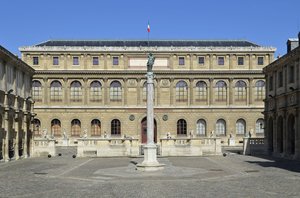 École des Beaux-Arts
 Ernesta
 10 Iconic Masterpieces That Defined Academic Realism
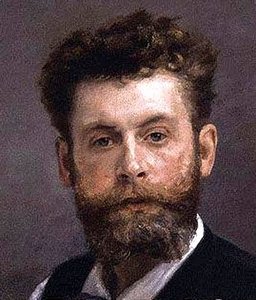 Alfred Philippe Roll