
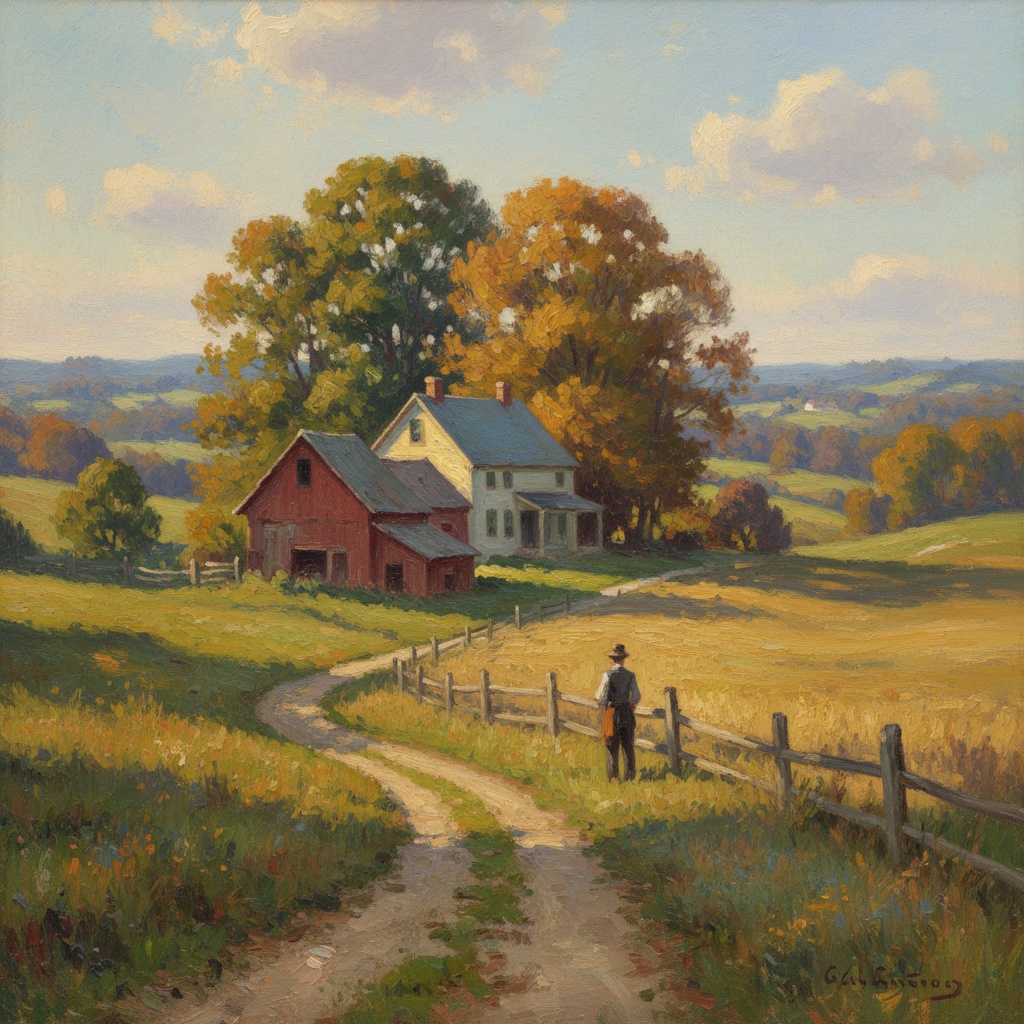
Early Influences and Artistic Training: From Boston Studios to Parisian Salons
 Wikipedia: Willard Metcalf
Willard Leroy Metcalf (July 1, 1858 – March 9, 1925) was an American painter born in Lowell, Massachusetts. He studied at the School of the Museum of Fine Arts, Boston, and later attended Académie Julian, Paris. After early figure-painting and illus...
Willard Leroy Metcalf’s artistic journey began not amidst the idyllic landscapes he would later immortalize, but within the bustling art scene of late 19th-century Boston. Born in 1858, a period marked by rapid industrialization and societal change, young Metcalf initially found himself drawn to the meticulous detail demanded by illustration – a practical path for an aspiring artist. However, even in these early works, a sensitivity to light and atmosphere hinted at the direction his art would ultimately take. Scholarship opportunities at the School of the Museum of Fine Arts provided foundational training, but it was a sojourn to Europe in 1883 that proved truly transformative. Paris, then the undisputed epicenter of artistic innovation, exposed Metcalf to a world far removed from the academic traditions of Boston. He studied under Gustave Boulanger and Jules-Joseph Lefebvre, absorbing techniques that would later be subtly woven into his unique style. His early European paintings reflected the prevailing tastes – scenes reminiscent of Jean Millet’s pastoral depictions – yet even then, a nascent desire for capturing fleeting moments of natural beauty began to emerge.
The Transition to Impressionism: Finding His Voice in Light and Color
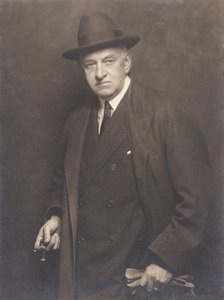 Willard Leroy Metcalf
Explore the serene landscapes of Willard Leroy Metcalf (1858-1925), a key figure in American Impressionism. Discover his tranquil New England scenes & vibrant art.
Metcalf's return to America in 1888 marked a period of experimentation. While continuing to work as an illustrator and portrait painter, he increasingly sought opportunities to explore landscape painting. The late 1890s were somewhat fallow creatively; a lavish social life occasionally overshadowed his artistic pursuits. However, the tide began to turn with his involvement in “The Ten American Painters” – a group of artists who seceded from the Society of American Artists in 1897, seeking greater freedom and independence. This association proved pivotal. Crucially, it was through his friendship with Childe Hassam that Metcalf truly embraced Impressionism. Hassam’s encouragement spurred him to focus on direct observation of nature, prioritizing the ephemeral qualities of light and color over meticulous detail. He began to shed the constraints of earlier styles, developing a lighter palette and looser brushwork – characteristics that would define his mature work. This wasn't merely an adoption of a European style; Metcalf infused it with a distinctly American sensibility, focusing on scenes closer to home.
Old Lyme and the Cornish Colony: A Chronicle of New England Life
American Impressionism was a style of painting related to European Impressionism and practiced by American artists in the United States from the mid-nineteenth century through the beginning of the twentieth. The style is characterized by loose brushw...
The summer of 1905 proved to be a watershed moment. Drawn by Hassam’s enthusiasm, Metcalf discovered Old Lyme, Connecticut – a burgeoning art colony centered around Florence Griswold’s boarding house. This idyllic setting, with its picturesque landscapes and vibrant artistic community, provided the perfect environment for his evolving style. He not only painted *en plein air*, capturing the freshness of the New England countryside but also became an integral part of the colony's social fabric. His painting, May Night (1906), a luminous depiction of Griswold’s house under a starry sky, garnered critical acclaim and financial success, solidifying his reputation. A few years later, Metcalf found another source of inspiration in Cornish, New Hampshire. Unlike the lively atmosphere of Old Lyme, Cornish offered a quieter, more contemplative setting – particularly appealing during the off-season. He spent eleven years immersed in the landscape, capturing its subtle nuances throughout the changing seasons.
Metcalf’s Poetic Landscapes: Themes of Rurality, Nostalgia, and Intimacy
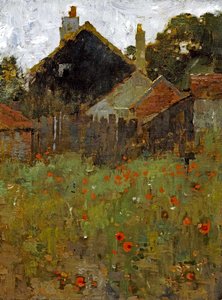 The Poppy Field
Experience the beauty of Willard Leroy Metcalf's 'The Poppy Field,' an Impressionist masterpiece capturing vibrant poppies and serene rural landscapes. A stunning oil painting reproduction available now!
Metcalf's art is often described as poetic – a testament to his ability to evoke emotion through subtle observation. He wasn’t interested in grand vistas or dramatic narratives; instead, he focused on the quiet beauty of everyday life in rural New England. His paintings are filled with scenes of weathered barns, sun-dappled fields, and intimate domestic moments. Works like Indian Summer Vermont capture a sense of nostalgia for a simpler time, while others, such as Captain Lord House, Kennebunkport, Maine, reveal a deep appreciation for the architectural charm of New England homes. He masterfully depicted the interplay of light and shadow, creating an atmosphere that is both serene and evocative. His canvases often feature a near-square format, lending a sense of intimacy and balance to his compositions. Beyond technical skill, Metcalf possessed a remarkable ability to imbue his landscapes with a quiet emotional resonance – a quality that continues to captivate viewers today.
Legacy and Influence: Metcalf's Enduring Contribution to American Art
Though he initially faced challenges in establishing his artistic voice, Willard Leroy Metcalf ultimately became known as the “Poet Laureate of New England Impressionism.” His dedication to capturing the beauty of the American landscape – particularly its rural scenes – left an indelible mark on the art world. While the rise of modernism overshadowed many Impressionist painters in the early 20th century, Metcalf’s work has experienced a resurgence in recent years, appreciated for its quiet elegance and emotional depth. His influence can be seen in the works of subsequent landscape artists who sought to capture the beauty of the natural world with sensitivity and nuance. Metcalf's paintings are not merely representations of places; they are evocative expressions of a particular time and place – a testament to his enduring vision and artistic skill. Discover the timeless appeal of Willard Leroy Metcalf’s art, available now through OriginalUniqueArt, where museum-quality reproductions bring these iconic landscapes into your home.




