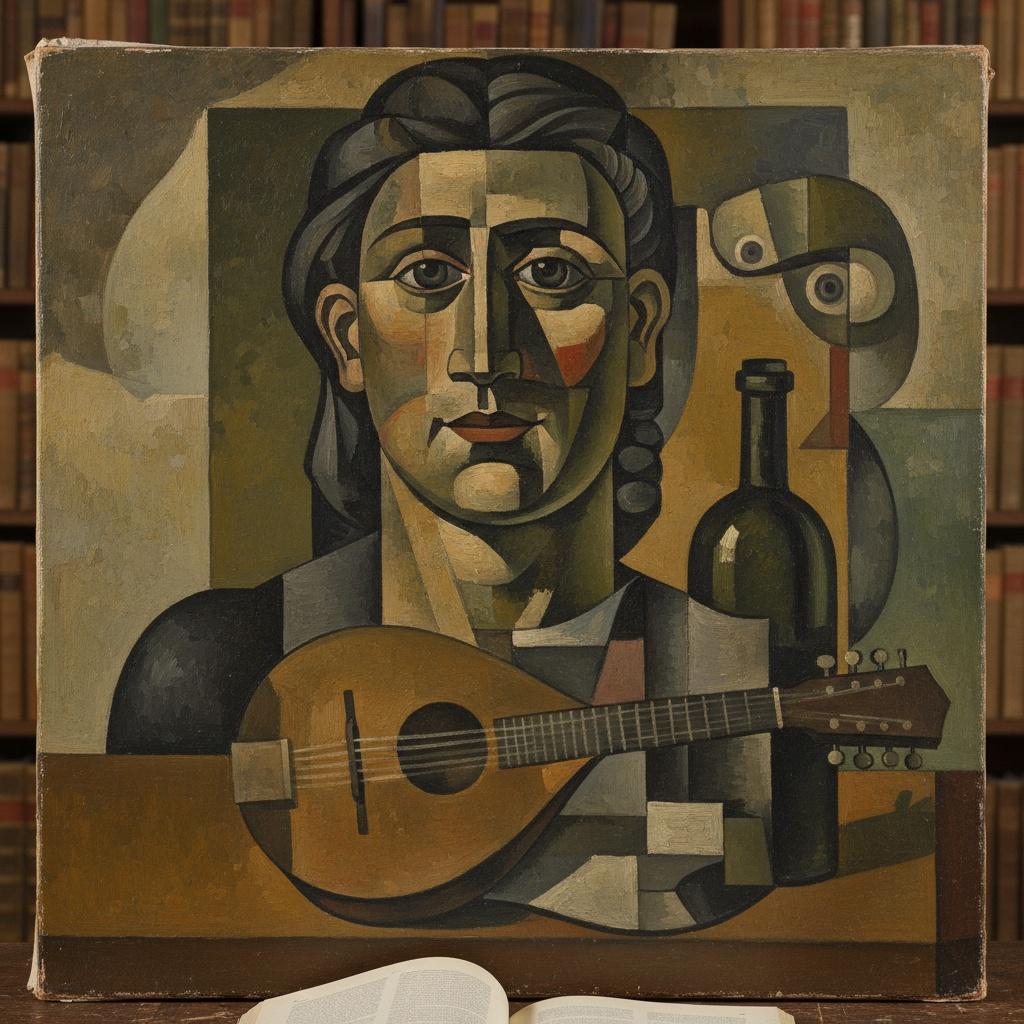
The Genesis of Fragmentation: Breaking the Single Perspective
For centuries, the Western tradition of painting was anchored by a singular, unwavering truth: the fixed viewpoint. From the Renaissance masters to the Impressionists, art sought to capture a moment through a window-like perspective, where depth and distance were meticulously orchestrated to mimic human vision. However, at the dawn of the twentieth century, a seismic shift occurred that would forever shatter this illusion. This was not merely a change in style, but a fundamental revolution in how we perceive reality itself. The birth of fragmentation marked the end of the passive observer and the beginning of an active, intellectual engagement with the canvas.
This radical departure sought to move beyond the superficiality of what the eye sees to capture what the mind knows. Instead of presenting a subject from one static angle, artists began to dismantle the object, exploring its various facets simultaneously. This movement challenged the very concept of a "correct" view, suggesting instead that truth is multifaceted and temporal. For the discerning collector, understanding this genesis is crucial; it represents the moment art transitioned from being a mirror of nature to becoming an independent language of form and structure.
The Mechanics of Analysis: Geometric Abstraction and Muted Palettes
To understand Analytical Cubism, one must look past the initial confusion of broken lines and enter the disciplined realm of geometric deconstruction. The term "analytical" is not incidental; it describes the rigorous process by which artists like Pablo Picasso and Georges Braque dissected their subjects. They stripped away the distractions of color and sentiment to focus on the underlying architecture of form. By reducing complex organic shapes into cylinders, spheres, and cones, they created a visual vocabulary that prioritized structure over surface decoration.
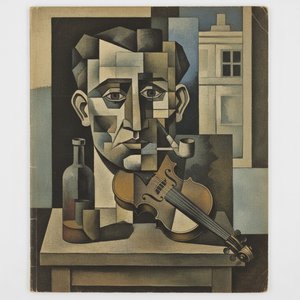
This intellectual rigor was accompanied by a deliberate restraint in color. The palette of this era was famously somber, dominated by earthy ochres, muted greys, deep browns, and subtle blacks. This monochromatic approach served a profound purpose: it prevented the emotional weight of vibrant hues from obscuring the complex interplay of planes. In works such as Braque’s untitled (3ically), the viewer is not seduced by light or pigment but is instead invited to trace the rhythmic overlapping of translucent facets. It is a cerebral experience, where the eye must work to reconstruct the subject from a sea of interlocking geometric fragments.
Masters of the Method: The Collaborative Vision of Picasso and Braque
The revolution of fragmented perspective was not the work of a solitary genius, but rather the result of an intense, almost symbiotic dialogue between two titans of modernism. Between 1908 and 1912, Pablo Picasso and Georges Braque worked with such close proximity that their individual styles often became indistinguishable. This period of intense collaboration pushed the boundaries of abstraction further than any single artist could have achieved alone. They shared a common goal: to find a way to represent the fourth dimension—time—within the two-dimensional confines of the canvas.
While Picasso brought an explosive, transformative energy, Braque contributed a profound sense of structural harmony and poetic rhythm. Together, they developed a method of "overlapping planes" that allowed them to present multiple viewpoints within a single composition. When examining iconic pieces like Picasso’s Man with a Guitar or his Still Life with Bottle of Rum, one witnesses this shared mastery. They were not merely painting objects; they were inventing a new way to navigate the space between the viewer and the subject, creating a tension that remains palpable even a century later.
Decoding the Canvas: How to Interpret Overlapping Planes and Forms
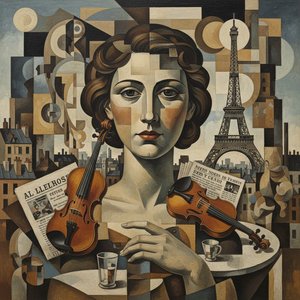
For the collector approaching an Analytical Cubist work, the challenge lies in learning to "read" the canvas. At first glance, the subject may seem lost in a labyrinth of shards. However, the key to interpretation is to look for the subtle anchors of reality—the indices of the object. A curved line might suggest the rim of a glass; a particular shadow might hint at the neck of a bottle; a fragment of text or a musical note might ground the abstraction in a recognizable setting. These are the clues left by the artist to guide the viewer through the fragmentation.
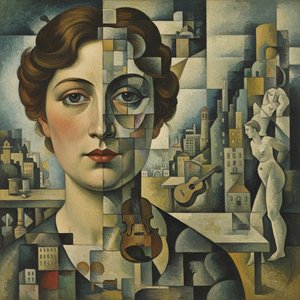
The beauty of this style lies in its depth and ambiguity. The overlapping planes create a shallow, compressed space that forces the eye to move constantly across the surface. This movement mimics the way our own minds process information—we do not see a chair as a static image, but as a collection of memories, angles, and textures. By mastering this decoding process, one begins to appreciate the profound psychological depth of the movement. It is an art of reconstruction, where the viewer becomes a co-creator of the image, piecing together the fragmented reality through sheer intellectual effort.
The Legacy of Cubism: From Analytical Foundations to Modern Abstraction
The ripples of the Cubist revolution extended far beyond the initial period of fragmentation. The analytical techniques developed by Picasso and Braque laid the essential groundwork for nearly every major movement that followed. The emphasis on geometric structure paved the way for Constructivism; the exploration of flattened space influenced Futurism; and the liberation of form from representation eventually led to the total abstraction of artists like Piet Mondrian. Even in the later works of artists such as Helen Gerardia, one can detect the enduring influence of Cubist spatial logic and the use of negative space.
Today, the legacy of Analytical Cubism lives on in our very way of seeing a fragmented, digital world. It taught us that reality is not a single, cohesive narrative but a collection of perspectives, much like the multifaceted surfaces of a diamond. For the modern collector, acquiring or appreciating works influenced by this era is an engagement with the very foundation of modern visual literacy. It remains a testament to the power of art to break boundaries, challenge perceptions, and ultimately, to redefine the essence of human experience.
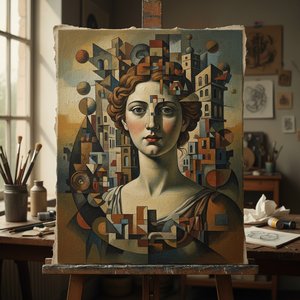
At OriginalUniqueArt.com, we celebrate this enduring legacy of human creativity. Whether you are seeking to deepen your collection with museum-quality reproductions of these revolutionary masterpieces or looking to transform your own memories through our custom oil painting services, our mission is to bring the profound depth of art history into your personal space. From Giclée prints that capture every subtle shade of a Braque still life to bespoke commissions that reimagine modern life through a Cubist lens, we provide the bridge between historical genius and contemporary passion.