The Canvas of Time: How Masterpieces Preserve Lost Eras
To gaze upon a masterpiece is to step through a portal, transcending the boundaries of the present to touch the very pulse of a bygone era. History, in its rawest form, is often relegated to dusty manuscripts and fragmented chronicles, yet in the realm of fine art, it breathes with a vibrant, tactile vitality. A painting does not merely record an event; it captures the atmosphere, the social nuances, and the collective soul of a moment frozen in time. When we observe the bustling energy within Emile Jean Horace Vernet’s The Artist’s Studio, we are not just seeing a depiction of 1820; we are experiencing the light, the movement, and the industrious spirit of the nineteenth-century creative life.
These works serve as silent witnesses to the evolution of human civilization. They document the rise and fall of empires, the shifting tides of fashion, and the quiet intimacy of domestic life long before the invention of the lens. Through the meticulous application of pigment, artists have archived the textures of fabrics, the architecture of lost cities, and the very expressions of historical figures that would otherwise be lost to the erosion of memory. In this sense, every brushstroke acts as a rhythmic heartbeat of history, ensuring that the grandeur of the past remains an accessible, living reality for generations to emerge.
Light, Shadow, and Story: The Narrative Power of Artistic Techniques
The true magic of historical storytelling within art lies in the technical mastery of light and shadow—a language understood across all cultures and centuries. Consider the profound impact of tenebrism, that dramatic interplay of extreme darkness and piercing light perfected by those influenced by Francisco de Zurbarán. This technique does more than create depth; it imbues devotional and historical scenes with a sense of divine presence and psychological tension. The shadows do not merely represent the absence of light; they hold the weight of mystery, secrecy, and the unknown, forcing the viewer to engage deeply with the illuminated subjects.
Beyond the dramatic, the softer, more ephemeral techniques of the Impressionist movement offer a different kind of historical record. In works such as Outdoor Painting Session by Eugeniusz Arct, the focus shifts from the structural to the sensory. Here, history is captured through the fleeting dance of sunlight and the atmospheric haze of a serene artist colony. The technique itself becomes the narrative, telling a story of perception, movement, and the transient beauty of nature. Whether through the sharp, Neoclassical precision found in Mary Jane Peale’s portraiture of her father, Charles Willson Peale, or the thick, emotive impasto of later masters, the method of application is inseparable from the historical truth being conveyed.
From Studios to Sanctuaries: The Evolution of Art as Historical Record
The journey of a painting from the intimate, often chaotic confines of an artist's studio to the hallowed halls of museums and private sanctuaries is a testament to its enduring value. Historically, the studio was a laboratory of human experience, a place where raw observation was distilled into refined composition. We see this transition in the way art has moved from being a tool of aristocratic propaganda or religious instruction to becoming a cornerstone of cultural heritage. The evolution of the artist's workspace—from the classical settings depicted by Vernet to the modern, light-drenched ateliers—mirrors our changing relationship with truth and observation.
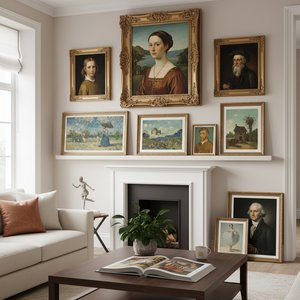
As these works migrated into the public consciousness, they transformed spaces from mere dwellings into sanctuaries of reflection. A collection of historical reproductions does more than decorate a room; it curates an intellectual environment. The transition of art from private commissions to global treasures allows us to inhabit a world where the 18th-century American spirit or the Spanish Golden Age can reside within a contemporary home. This movement ensures that the narrative power of the masters is not confined to museum archives but remains an active participant in our daily lives, shaping our aesthetic and historical consciousness.
The Living Legacy: Bridging Classical Grandeur with Modern Interiors
In the modern era, there arises a beautiful tension between the contemporary lifestyle and the desire for classical permanence. We live in a world of rapid digital consumption, yet we find ourselves increasingly drawn to the "living" quality of traditional art—the visible, tactile brushstrokes and the three-dimensional texture that a flat print simply cannot replicate. Bringing historical grandeur into a modern interior is an act of cultural curation. It allows for a sophisticated dialogue between the sleek lines of modern architecture and the rich, complex textures of the Old Masters.
This bridge is built through thoughtful integration, such as using multi-panel layouts to span wide, contemporary walls or employing customized color palettes to harmonize a Renaissance-style piece with a minimalist room. The ability to "remix" history—perhaps by requesting a modern portrait be executed in the light-drenched style of Monet—allows the modern collector to participate in the ongoing evolution of art. By integrating these timeless chronicles into our personal spaces, we do not just decorate; we anchor our modern existence to the profound depth of human history.
Preserving the Infinite: The Art of Maintaining Historical Integrity
The preservation of historical art requires a delicate balance of science and reverence. To ensure that the spirit of a masterpiece survives for centuries, one must respect the chemistry of its creation. The use of heavy-duty cotton canvas, premium pigments with high lightfastness, and protective finishes like Damar varnish are essential to preventing the yellowing or cracking that threatens the longevity of oil paintings. True preservation is about maintaining the integrity of the artist's original intent—the way the light hits a specific glaze or how the texture of the paint catches the eye.
As we look toward the future, the intersection of technology and tradition offers new ways to safeguard our heritage. From Giclée printing with 12-color pigment-based inks that resist fading for up to a century, to the use of AI tools that can help us reimagine and restore lost compositions, the tools of the modern age are serving the masters of the past. Ultimately, the preservation of art is a commitment to memory itself. By valuing the craftsmanship, the materials, and the historical context of every piece, we ensure that these timeless chronicles continue to inspire, educate, and move the human spirit for generations to come.
At OriginalUniqueArt.com, we are dedicated to this mission of preservation and accessibility. With a legacy spanning since 2004, we specialize in bringing the profound beauty of the Old Masters and historical masterpieces into the modern home through meticulous, hand-painted oil reproductions and museum-quality prints. Whether you seek a bespoke commission that transforms a personal memory into a classical masterpiece or a large-scale mural to evoke the grandeur of the Sistine Chapel, our global community of academy-trained artists is here to ensure that history remains a living, breathing part of your world.