The Silvered Surface: The Metaphysical Significance of Mirrors in Art History
To gaze into a mirror is to encounter a paradox; it is to see the world as it appears, yet to be confronted by an image that possesses no physical substance. Throughout the annals of art history, the silvered surface has served as far more than a mere tool for vanity or a device for capturing light. It has functioned as a profound metaphysical threshold, a boundary between the tangible reality of the viewer and the illusory realm of the depicted. In the hands of the Old Masters, the mirror was a silent witness to the complexities of human existence, acting as a window into the soul and a conduit for exploring the very nature of perception.
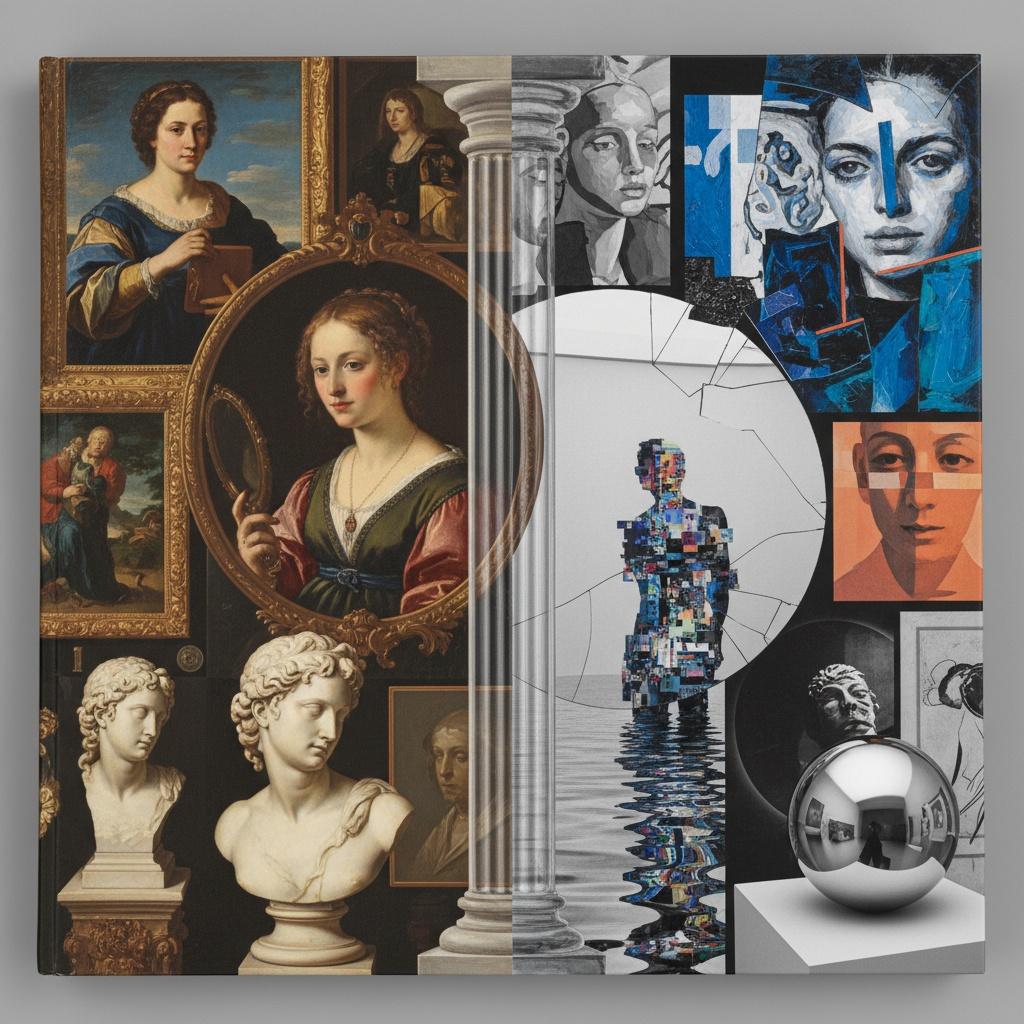
When we examine the meticulous rendering of reflective surfaces in classical portraiture, we observe a deliberate attempt to capture the ephemeral. The artist does not simply paint glass; they paint the way light bends, the way shadows soften upon impact, and the way the surrounding environment is subtly distorted by the curvature of the medium. This technical mastery serves a higher purpose: it invites the viewer into a state of introspection. By including a reflection within a frame, the painter breaks the "fourth wall" of the canvas, pulling the spectator into the narrative and suggesting that the truth of a subject lies not just in their outward appearance, and visible form, but in the hidden layers revealed through the reflective gaze.
Ultimately, the mirror in art acts as an emblem of truth and deception. It possesses the power to reveal the intimate details of a sitter's countenance while simultaneously masking the reality behind a shimmering, deceptive sheen. This duality has captivated scholars and enthusiasts for centuries, making the study of reflective surfaces an essential pursuit for anyone seeking to understand the deeper currents of art historical symbolism.
Fractured Realities: Surrealism and the Multiplicity of the Self
As we transition from the controlled elegance of classical realism into the turbulent waters of the twentieth century, the mirror undergoes a radical transformation. The Surrealists, driven by an obsession with the subconscious and the dreamscape, abandoned the mirror as a tool of clarity and instead embraced it as an instrument of fragmentation. No longer was the reflection a faithful reproduction of reality; instead, it became a site of psychic rupture, where the boundaries between the self and the "other" began to dissolve into a kaleidoscopic chaos.
Consider the profound contributions of Salvador Dalí, whose work often utilized mirrors to challenge the stability of the human ego. In his unfinished masterpiece, DalH from the Back Painting Gala from the Back Eternalized by Six Virtual Corneas Provisionally Reflected in Six Real Mirrors, we witness a dizzying exploration of multiplicity. Here, the reflection is not singular but multiplied, fractured into various perspectives that defy a unified sense of identity. Dalí employs mirrors to create a "virtual" reality, where the image of the beloved—and by extension, the artist himself—is dispersed across a series of reflected corneas. This technique forces the viewer to navigate a labyrinth of sightlines, mirroring the fragmented nature of memory and the subconscious mind.
This era of art introduced the concept that the self is not a monolith but a collection of shifting, often contradictory, reflections. Through the use of distorted mirrors and layered imagery, Surrealist masters demonstrated that reality is merely one layer of a much deeper, more complex experience. The mirror became a tool for deconstructing the psyche, proving that what we see in our own reflection may be nothing more than a beautiful, terrifying hallucination.
The Infinite Gaze: Exploring Depth and Illusion through Reflective Techniques
Beyond the psychological implications of the mirror lies its incredible capacity for technical illusion. For the skilled painter, the challenge of depicting reflection is an exercise in managing light, depth, and spatial ambiguity. The mastery of these elements allows an artist to create a sense of infinite space within the confines of a two-dimensional plane. This pursuit of the "infinite gaze" relies heavily on the manipulation of highlights, glazes, and the subtle interplay of color temperatures.
The technique of trompe l'oeil—meant to deceive the eye—finds its most potent expression in the depiction of reflective objects. By meticulously applying thin layers of oil paint, artists can simulate the high-gloss finish of polished metal or the translucent depth of glass. This process requires an intimate understanding of how light interacts with different textures. A single, well-placed highlight on the edge of a reflected vase can suddenly grant the object a three-dimensional presence that seems to leap from the canvas. This creates a tension between the flat surface of the painting and the perceived depth of the reflected space, engaging the viewer in a continuous loop of looking and re-looking.
This technical brilliance serves to expand the boundaries of the frame. When an artist successfully depicts a reflection that appears to recede into the distance, they are effectively expanding the architecture of the room or the landscape depicted. The mirror becomes a portal, offering a glimpse into a world that exists "behind" the painting, thereby enriching the compositional complexity and inviting a more profound engagement with the work's spatial logic.
Beyond the Looking Glass: Narcissism, Identity, and the Painted Portrait
The intersection of reflection and identity is perhaps most poignantly explored through the motif of the self-portrait. The act of painting oneself while looking into a mirror is an inherently reflexive process—both literally and figuratively. It is an intimate dialogue between the artist's hand and their eye, a moment where the creator becomes both the subject and the observer. This duality allows for an exploration of narcissism, but more importantly, it facilitates a deep dive into the construction of identity.
_In many historical self-portraits, the inclusion of a mirror serves to highlight the tension between how we present ourselves to the world and how we perceive our inner truth. The mirror can be used to show a "hidden" side of the artist—perhaps a more vulnerable or aged version of themselves that is not visible in the primary gaze. This creates a narrative of duality, suggesting that identity is a performance shaped by the presence (or absence) of an audience.
Furthermore, the mirror allows for the exploration of the "gaze" itself. When an artist depicts themselves looking into a mirror, they are inviting us to witness their act of self-scrutiny. We become voyeurs to their introspection. This layer of psychological depth transforms the portrait from a mere likeness into a complex study of self-awareness and the eternal human struggle to truly "know" oneself amidst the shifting reflections of social expectation and personal perception.
Reflections of the Divine: Light, Symmetry, and Spiritual Transcendence
In the sacred traditions of art, reflection has often been employed to signify the presence of the divine. The concept of light as a manifestation of God or spiritual truth finds its most elegant expression in the depiction of luminous, reflective surfaces. In religious iconography, a mirror or a highly polished surface is rarely just an object; it is a symbol of purity, clarity, and the reflection of heavenly light upon the earthly plane.
The use of symmetry in these works often mirrors the order and perfection of the cosmos. When light reflects symmetrically across a composition, it creates a sense of balance and equilibrium that evokes feelings of peace and transcendence. The way light dances upon a gilded surface or a polished marble floor in a Renaissance chapel is designed to lift the viewer's spirit, guiding their thoughts from the material world toward the ethereal. Here, reflection is not about the fragmentation of the self, but about the unification of the human experience with the divine.
Ultimately, whether through the fractured surrealism of Dalí or the luminous clarity of the masters, the theme of reflection remains one of art's most enduring and powerful motifs. It challenges us to look closer, to question our perceptions, and to recognize that within every surface, there lies a profound depth waiting to be discovered. To study the mirror in art is to study the very essence of human consciousness itself.
At OriginalUniqueArt.com, we celebrate this enduring legacy of human creativity. Our mission is to make the profound beauty of fine art accessible to collectors worldwide. From meticulously hand-painted oil reproductions of the Old Masters to custom commissions that transform your personal memories into timeless masterpieces, we bridge the gap between history and the modern home. Whether you seek a museum-quality reproduction or wish to reimagine a photograph through the lens of a legendary artist, our academy-trained specialists are dedicated to preserving the soul of every brushstroke.