The Genesis of Fragmentation: From Cézanne’s Structure to Cubist Revolution
To understand the radical rupture of Cubism, one must first look toward the quiet, structural revolution orchestrated by Paul Cézanne. Before the world was shattered into geometric planes, Cézanne began the profound work of treating nature not as a fleeting impression of light, but as a collection of fundamental volumes. He sought to find the cylinder, the sphere, and the cone within the landscape and the fruit bowl alike. This Post-Impressionist pioneer bridged the gap between the ephemeral beauty of Impressionism and the rigorous intellectualism of the modern era, teaching us that the essence of an object lies in its underlying architecture rather than its surface appearance.
It was this structural integrity that provided the fertile soil for Georges Braque and Pablo Picasso to cultivate a new visual language. Where Cézanne hinted at the permanence of form, the Cubists fully embraced the dissolution of it. They moved beyond the single-point perspective that had dominated Western art since the Renaissance, choosing instead to present a multifaceted reality. This transition was not merely a stylistic choice but a philosophical shift—a realization that our perception of an object is a cumulative experience of many viewpoints gathered over time.
The revolution was born from a desire to capture the complexity of a modernizing world. As the boundaries of science, physics, and perception expanded, so too did the canvas. The legacy of this era remains a cornerstone for any serious collector, representing the moment when art ceased to be a window into a scene and became an autonomous construction of thought and form.
Deconstructing the Object: The Analytical Approach to Still Life
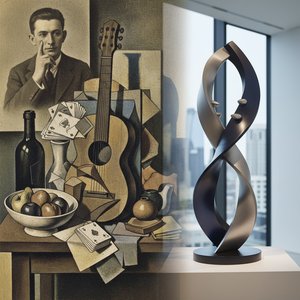
In the early stages of Cubism, known as Analytical Cubism, the still life served as the perfect laboratory for experimentation. Unlike grand landscapes that might distract with atmospheric effects, the humble arrangement of a carafe, a musical instrument, or a cluster of grapes offered a controlled environment for deconstruction. Artists like Georges Braque utilized this genre to dissect objects into their constituent parts. In works such as Still Life with a Bunch of Grapes, we witness a meticulous fragmentation where the boundaries between the object and the space surrounding it begin to blur.
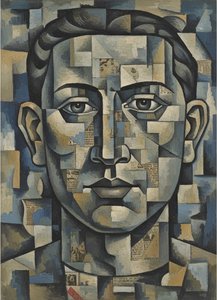
This process was an intellectual exercise in extreme scrutiny. The artist would approach a subject from multiple angles simultaneously, mapping out the edges, shadows, and planes on a single surface. This resulted in a dense, often monochromatic palette that prevented color from overwhelming the structural investigation. By stripping away the distractions of vibrant hues, the focus remained entirely on the interplay of light and shadow across fractured surfaces. The viewer is invited to participate in a cognitive reconstruction, piecing together the identity of the subject through a labyrinth of overlapping shapes.
This analytical rigor transformed the still life from a passive depiction of domesticity into a dynamic exploration of spatial logic. Each fragment serves as a clue, a shard of reality that, when viewed with an educated eye, reveals the profound complexity hidden within the most mundane arrangements. It is a testament to the power of the artist to find infinite depth within the finite boundaries of a tabletop.
Geometric Harmony and the Interplay of Form and Space
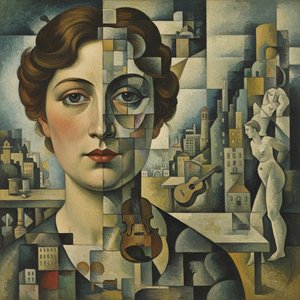
The true magic of Cubist composition lies in its ability to achieve a sense of equilibrium amidst apparent chaos. While the forms may appear broken or disjointed, there is an underlying mathematical harmony that governs the arrangement. The use of geometric shapes—triangles, quadrilaterals, and circles—creates a rhythmic cadence across the canvas. This rhythm guides the eye through the composition, ensuring that despite the fragmentation, the work possesses a cohesive, structural unity.
In masterpieces such as Braque’s Still Life with Musical Instruments, we see how the rigid geometry of the instruments interacts with the surrounding negative space. The space between objects is treated with the same importance as the objects themselves. In Cubism, space is not a void; it is a tangible element, often rendered as a series of interlocking planes that push and pull against one another. This creates a shallow, compressed depth that forces the viewer to confront the two-dimensional reality of the canvas while simultaneously experiencing a multi-dimensional concept of form.
For the discerning collector, this interplay offers a sophisticated aesthetic experience. The tension between the solid mass of the painted forms and the ethereal quality of the fractured space creates a visual energy that is both intellectually stimulating and visually arresting. It is a dance of geometry where every line and angle contributes to a larger, harmonious whole.
The Evolution of Color and Texture in Synthetic Cubism
As the movement progressed into what is known as Synthetic Cubism, the approach shifted from deconstruction to construction. Rather than breaking objects down, artists began to build them up using a broader range of materials and more vibrant palettes. This era introduced the concept of collage, where textures such as newspaper, wallpaper, or sand were integrated directly into the work, adding a tactile dimension that challenged the traditional boundaries of painting.
Fernand Léger emerged as a vital figure in this evolution, bringing a bold, industrial energy to the movement. His 1919 works exemplify a move toward more vibrant colors and a fascination with the sleek, geometric forms of the machine age. Unlike the muted tones of the Analytical phase, Léger’s compositions celebrate the dynamism of modern life through primary colors and smooth, tubular shapes. This infusion of color and texture breathed new life into the Cubist vocabulary, making it more accessible and visually impactful.
This period also saw a greater emphasis on the "materiality" of art. The addition of physical textures meant that the canvas was no longer just a surface for representation but a physical object in its own right. This evolution toward texture and color paved the way for much of the abstract art that would follow, proving that the Cubist revolution was not a static moment in history, but a continuous, evolving dialogue with the essence of creativity.
The Legacy of Cubist Still Life in Modern Interior Curation
Today, the influence of Cubist still life extends far beyond the museum walls, finding a profound resonance in contemporary interior design and art curation. The principles of geometric abstraction—balance, rhythm, and structural clarity—are highly sought after by collectors looking to create sophisticated, modern living spaces. A well-placed Cubist reproduction can serve as an intellectual anchor for a room, providing a focal point that invites contemplation and conversation.
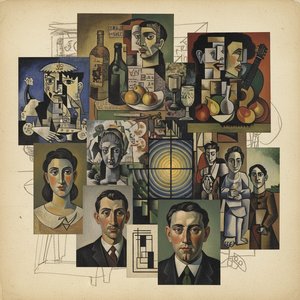
In the context of modern architecture, which often emphasizes clean lines and open volumes, the fragmented forms of Cubism complement the environment perfectly. Whether it is a large-scale multi-panel arrangement spanning a wide wall or a singular, textured oil painting, these works bring a sense of historical depth and curated elegance to a home. The ability to appreciate the "remixed" history of art allows collectors to bridge the gap between the avant-garde traditions of the early 20th century and the sleek aesthetics of the present day.
Ultimately, collecting Cubist-inspired art is an investment in a way of seeing. It is a commitment to valuing complexity, structure, and the beauty found in the reconstruction of reality. As we continue to navigate an increasingly fragmented world, the ordered chaos of the Cubist still life remains a timeless testament to the enduring power of human perception and the transformative potential of art.
At OriginalUniqueArt.com, we celebrate this enduring legacy by offering exquisite, hand-painted reproductions that capture the very soul of these masterpieces. From the meticulous textures of oil on canvas to museum-quality Giclée prints, our mission is to bring the profound depth of art history into your personal collection with unparalleled craftsmanship and authenticity.