The Art of Opulence: Defining the Baroque Banquet
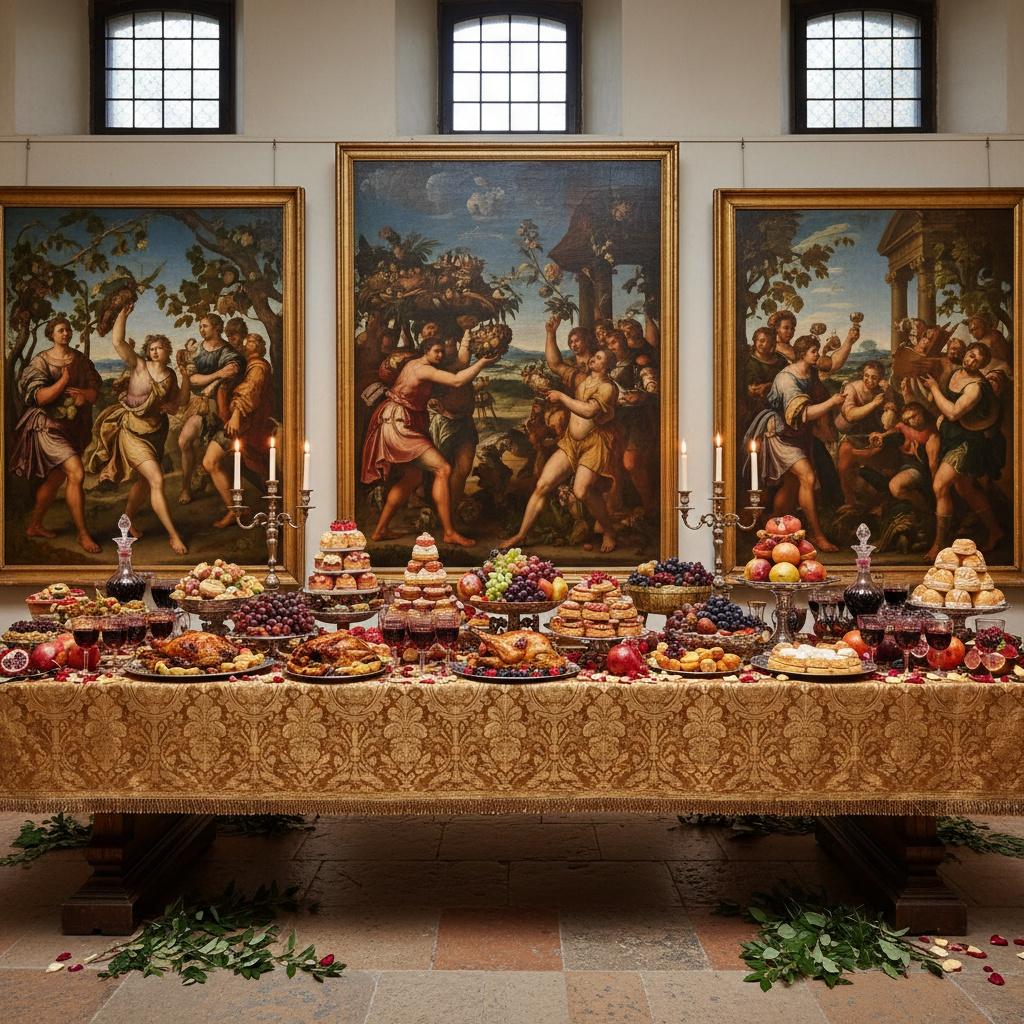
To step into the world of Baroque still life is to enter a realm where every brushstroke whispers of prosperity and every shadow tells a story of grandeur. During the seventeenth century, particularly within the flourishing courts of Europe, art became a profound medium for expressing the concept of abundance. These were not merely depictions of food; they were carefully orchestrated theatrical performances on canvas. The Baroque banquet serves as a window into an era of discovery and wealth, where the arrival of exotic goods from distant lands transformed the dining table into a stage for global connection.
In these compositions, we witness a deliberate tension between the eternal and the ephemeral. While the golden goblets and silver platters suggest a permanent state of luxury, the presence of slightly bruised fruit or a single wilting petal serves as a memento mori—a gentle reminder of the fleeting nature of life. This duality creates a sophisticated emotional depth that invites the viewer to linger, much like one might pause before a lavish feast, contemplating both the joy of the present moment and the inevitable passage of time.
Nature's Bounty: The Sensory Language of Fruit Still Life
Beyond the structured grandeur of the banquet lies a more intimate celebration of the earth’s generosity. The genre of fruit still life allows for a focused exploration of texture, color, and light, turning the simplest elements of nature into objects of intense veneration. When we observe works such as those by Robert Spear Dunning, we are transported into a sensory experience where the velvety skin of a peach or the translucent glow of a grape becomes almost tactile. The artist’s ability to capture the moisture on a freshly picked fruit or the dusty bloom on an apple invites a visceral response from the observer.
This mastery of detail extends to the very way light interacts with organic forms. Through the use of subtle gradations and masterful highlights, painters create a sense of volume that makes the fruit appear to swell within the frame. There is a profound rhythm in these compositions; the cascading curves of vines and the heavy weight of ripening pears guide the eye in a continuous loop of discovery. It is a visual language of plenty, where the sheer variety of shapes and hues celebrates the biological richness of our world, rendered with an academic precision that honors the subject matter.
Golden Light and Gilded Textures: Mastering the Pronkstilleven
For the true connoisseur of classical art, the pronkstilleven—or "ostentatious still life"—represents the pinnacle of technical and material achievement. This specific sub-genre was designed to dazzle, focusing on the most expensive and rare objects imaginable. Artists like Abraham van Beyeren became masters of this style, utilizing a palette that emphasized the reflective brilliance of gold, the cold sheen of silver, and the intricate patterns of fine porcelain. The challenge for the painter was immense: to replicate the way light bounces off a polished metal surface or refracts through a crystal goblet with absolute fidelity.
The technique required for such works involves a meticulous layering of glazes to build up a luminous depth. It is not merely about painting an object, but about painting the light that defines it. In a true pronkstilleven, the texture of the heavy fabrics, such as velvet or damask, provides a soft contrast to the hard, gleaming surfaces of precious metals. This interplay of textures creates a multidimensional experience, where the eye is constantly challenged and rewarded by the complexity of the artist's execution, reflecting the high social aspirations and the sophisticated tastes of the era's elite collectors.
Floral Grandeur: Celebrating Life through Botanical Mastery
While fruit captures the essence of sustenance, floral still life captures the very soul of beauty. The works of artists such as David Ryckaert III and Joseph Nigg demonstrate a breathtaking devotion to botanical accuracy and aesthetic splendor. These paintings often feature arrangements that could never exist in reality—bouquets composed of flowers from different seasons, all blooming in perfect, impossible unison. This creates a dreamlike state of eternal spring, a curated garden preserved forever within the confines of a frame.
The technical brilliance lies in the ability to differentiate between the delicate, paper-thin petals of a rose and the sturdy, waxy leaves of a tulip. Every bloom is treated with individual reverence, often emerging from deep, dark backgrounds that push the vibrant colors forward toward the viewer. This use of chiaroscuro—the dramatic contrast between light and dark—adds a sense of sculptural weight to each flower. In these compositions, we find a celebration of life in its most fragile and exquisite form, a testament to the artist's ability to find the infinite within the minute.
A Legacy of Abundance: From Flemish Masters to Modern Collectors
The echoes of these historical masterpieces continue to resonate in the contemporary world. The passion for capturing abundance and the celebration of fine craftsmanship remain unchanged, bridging the centuries between the Old Masters and today's art enthusiasts. Whether it is through the detailed fruit compositions of Pieter van Overschee or the dramatic landscapes of George Lance, the legacy of the Baroque era lives on in our enduring appreciation for beauty, texture, and the profound stories told through still life.
For those seeking to bring this sense of timeless luxury into their own environments, OriginalUniqueArt.com offers a gateway to this magnificent history. We specialize in creating exquisite, hand-painted oil reproductions that honor the academic excellence of the masters. Our artists meticulously recreate the tactile brushstrokes and luminous glazes of the original works, ensuring that every piece is not just a print, but a living testament to the art of abundance. From custom commissions that transform personal memories into historical masterpieces to museum-quality Giclée prints, we invite you to curate a collection that celebrates the eternal feast for the eyes.