The Soul of the Space: Defining the Emotional Impact of Classical vs. Modern Art
Every interior, no matter how meticulously designed, possesses a silent heartbeat—an emotional resonance that dictates how a person feels the moment they cross the threshold. For the discerning decorator, selecting art is not merely an act of decoration; it is an exercise in psychological architecture. When we consider the choice between classical and modern aesthetics, we are deciding whether to invite a sense of historical continuity or a burst of contemporary vitality into a room. Classical art, with its roots in the profound traditions of the Renaissance and Baroque eras, offers a sanctuary of stability. It speaks of heritage, of the enduring human spirit, and of a connection to the masters who once defined the very limits of beauty. There is a certain gravity in a well-placed oil reproduction that anchors a room, providing a sense of permanence in an ever-changing world.
Conversely, modern art serves as a catalyst for conversation and movement. It does not seek to replicate the world as it is, but rather to interpret it through the lens of emotion, abstraction, and raw energy. Choosing modern pieces allows a decorator to inject spontaneity and intellectual curiosity into a space. Where classical works might whisper of quiet contemplation and reverence, modern works shout with color, texture, and form. The tension between these two poles—the nostalgic pull of the past and the provocative edge of the present—is where the most captivating interiors are born. To master this choice is to understand that art is the ultimate tool for setting a room's emotional temperature.
Timeless Elegance: Curating Grandeur through Renaissance and Baroque Masterpieces
To curate with classical grandeur is to embrace the language of light, shadow, and meticulous detail. There is an undeniable prestige in surrounding oneself with works that evoke the opulence of historical courts. Imagine a foyer graced by the dramatic chiaroscuro of a Rembrandt-inspired portrait, where the deep, velvety shadows create a sense of mystery and profound depth. Such pieces do more than occupy wall space; they command attention through their technical mastery. The weight of history is felt in every brushstroke, particularly when utilizing high-quality oil reproductions that capture the physical texture of the original masters.
This era of art is characterized by a reverence for anatomy, perspective, and the divine. When a decorator selects works reminiscent of the Baroque period, they are introducing a sense of theatricality and drama. The use of rich, warm palettes—golds, deep crimsons, and burnt umbers—can transform a minimalist room into a space of regal warmth. This is not merely about nostalgia; it is about utilizing the academic rigor of the Old Masters to create an atmosphere of sophistication. Whether it is a sweeping landscape that suggests an endless horizon or a delicate floral study that celebrates the ephemeral nature of life, classical art provides a foundation of elegance that remains impervious to the fleeting whims of fashion.
Bold Expression: Infusing Contemporary Energy with Abstract and Modern Movements
In stark contrast to the structured narratives of the past, modern and contemporary art offer a playground for the imagination. For the decorator looking to break away from tradition, abstract movements provide an unparalleled opportunity to play with color theory and spatial dynamics. An abstract canvas, characterized by its lack of representational subject matter, allows the viewer to project their own emotions onto the work. This creates a dynamic relationship between the inhabitant and the environment. The energy of a modern piece can act as a focal point that disrupts a monochromatic room, providing a much-needed pulse of life.
Modernism also celebrates the beauty of form and the innovation of medium. We see this in the way contemporary works might utilize bold, geometric shapes or even the integration of sculptural elements, such as an elegant iron violin sculpture with gold accents, which brings a three-dimensional Art Deco flair to a modern interior. The focus shifts from "what" is being depicted to "how" it is felt. This movement allows for a more personalized, expressive approach to decorating, where the art reflects the individual's unique perspective on the world. It is an invitation to embrace the unexpected, the fragmented, and the vibrant, ensuring that a space feels as alive and evolving as the people who inhabit it.
The Art of the Mix: Sophisticated Strategies for Blending Eras in Luxury Interiors
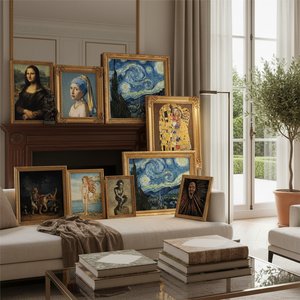
The most sophisticated interiors are rarely monochromatic in their historical references; rather, they are a curated dialogue between different centuries. The true hallmark of an expert decorator is the ability to achieve a seamless blend of classical and modern elements without creating visual discord. This "remixing" of art history requires a delicate touch. One might pair a large-scale, traditional oil painting of a pastoral scene with a sleek, minimalist sofa and contemporary abstract prints. The key lies in finding common threads—perhaps a shared color palette or a recurring motif that bridges the gap between the two eras.
A successful blend often relies on scale and proportion to create balance. A heavy, ornate frame around a classical piece can be balanced by the clean, frameless lines of a modern Giclée print. Furthermore, using texture as a unifying element can prevent the room from feeling fragmented. The physical depth of a hand-painted oil reproduction, with its visible, impasto brushstrokes, can find harmony with the smooth, graphic precision of modern lithography. By treating art as a cohesive collection rather than a series of isolated objects, a decorator can create a layered, multidimensional environment that feels both deeply rooted in history and vibrantly present in the moment.
Expert Consultation: Tailoring Bespoke Artworks to Your Architectural Vision
Ultimately, the pinnacle of interior curation is the move from selection to creation. For those with a truly unique architectural vision, the ability to commission bespoke art offers a level of personalization that no off-the-shelf piece can match. At OriginalUniqueArt, we believe that art should be as unique as the home it inhabates. Through professional art consultation, decorators and collectors can embark on a journey of "stylistic customization." This might involve taking a contemporary photograph and requesting it be reimagined through the lens of an Impressionist master, or perhaps creating a multi-panel triptych that follows the specific architectural lines of a grand staircase.
This bespoke process is a marriage of technology and traditional craftsmanship. Utilizing digital mockups, clients can visualize how a custom commission will interact with their specific lighting and wall colors before the first drop of paint touches the canvas. Whether it is a large-format mural designed to transform a ceiling into a frescoed masterpiece or a personalized family portrait rendered in the dramatic style of the Renaissance, the goal is total alignment with the interior's soul. Through expert guidance, the boundaries between the art and the architecture dissolve, leaving behind a space that is not just decorated, but truly composed.