Early Life and Artistic Foundations: The Shepherd Brothers
 Wikipedia: Thomas H. Shepherd
Thomas Hosmer Shepherd (16 January 1793, France – 1864) was a British topographical watercolour artist well known for his architectural paintings. == Life and work == Thomas was the brother of topographical artist George "Sidney" Shepherd, Thomas w...
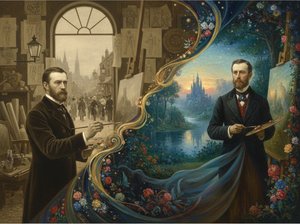
The name Thomas Hosmer Shepherd resonates with a particular clarity when one considers the visual record of 19th-century Britain, specifically its rapidly evolving urban landscapes. Born in France in 1793, Shepherd’s artistic journey began within a family already steeped in topographical artistry. His brother, George “Sidney” Shepherd, was his early collaborator and influence, and distinguishing between their earliest works can be a subtle undertaking. The Shepherds initially focused on London views for publications like Ackermann’s Repository of the Arts, establishing a foundation built upon meticulous observation and a burgeoning talent for capturing architectural detail. This familial partnership laid the groundwork for Thomas's eventual rise as the preeminent topographical watercolour artist of his time, though it was Thomas who would achieve lasting renown for his ability to not merely *depict* buildings but to imbue them with life.
London's Architectural Renaissance: Documenting Metropolitan Improvements
--- title: Metropolitan improvements; or London in the nineteenth century: being a series of views, of the new and most interesting objects in the British metropolis & its vicinity; from original drawings, with historical, topographical & critical il...
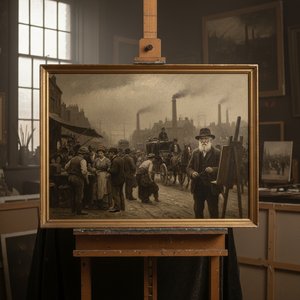
Shepherd’s breakthrough came with his involvement in Metropolitan Improvements, a monumental publication commissioned by Jones & Co. This project wasn’t simply about illustrating new structures; it was an ambitious undertaking to chronicle the transformation of London itself. The early 19th century witnessed a period of unprecedented growth and modernization – grand squares, imposing public buildings, and burgeoning commercial districts reshaped the city's fabric. Shepherd’s paintings served as visual testaments to this change, offering a romanticized yet remarkably accurate portrayal of progress. He didn’t merely present facades; he populated his scenes with bustling street life—carriages, pedestrians, horses, and vendors—creating a vibrant tapestry that conveyed the energy and dynamism of the era. These weren't sterile architectural renderings but windows into a living, breathing metropolis.
The Crace Collection and Preservation of Old London
While Metropolitan Improvements brought Shepherd initial acclaim, his most enduring legacy is inextricably linked to Frederick Crace, an avid collector and interior decorator. Recognizing the ephemeral nature of old London—buildings constantly being demolished to make way for new developments—Crace commissioned Shepherd to paint a comprehensive record of structures facing imminent destruction. This partnership proved pivotal. Crace’s foresight ensured that hundreds of Shepherd's original watercolours survived, forming an invaluable collection now housed at the British Museum. These paintings aren’t just beautiful artworks; they are vital historical documents, preserving glimpses of London as it once was—a London rapidly vanishing under the weight of modernization. The Crace Collection stands as a testament to both Shepherd’s skill and Crace's dedication to architectural preservation.
Mastering Atmospheric Perspective: A Signature Style
Aerial perspective, or atmospheric perspective, is the effect the atmosphere has on the appearance of an object as viewed from a distance. As the distance between an object and a viewer increases, the contrast between the object and its background de...
Shepherd’s paintings are immediately recognizable for their distinctive style, characterized by an extraordinary attention to detail coupled with a masterful use of atmospheric perspective. This technique—whereby objects in the distance appear paler and less distinct due to the intervening atmosphere—wasn't merely a technical skill but a means of creating depth and realism. He understood how light and shadow played across surfaces, subtly softening edges and conveying a sense of spatial recession. This wasn’t simply about accurate representation; it was about evoking a mood, capturing the quality of light on a particular day, and immersing the viewer in the scene. The effect is remarkably lifelike, drawing the eye into the painting and creating a palpable sense of presence. His ability to render this atmospheric nuance set him apart from his contemporaries.
Beyond London: Edinburgh, Bath, and Bristol in Shepherd’s Vision
Though best known for his depictions of London, Shepherd's artistic scope extended beyond the capital. He travelled extensively, documenting the architectural beauty of Edinburgh, Bath, and Bristol, each city offering its own unique character and charm. His series on Edinburgh, Modern Athens, captured the neoclassical grandeur of the “New Town,” while his views of Bath celebrated the elegance of Georgian architecture. In Bristol, he documented the bustling harbor and the city’s maritime heritage. These commissions demonstrate Shepherd's versatility and adaptability; he wasn’t simply replicating a style but responding to the specific aesthetic qualities of each location. He consistently brought his signature attention to detail and atmospheric perspective to these projects, creating cohesive visual narratives that captured the essence of each city.
Legacy and Lasting Influence: Shepherd's Contribution to Topographical Art
Thomas Hosmer Shepherd’s contribution to topographical art is immeasurable. His paintings offer a unique window into 19th-century Britain, providing invaluable insights into its architecture, social life, and urban development. His work wasn’t merely about recording buildings; it was about capturing the spirit of an era—the energy, the dynamism, and the subtle beauty of everyday life. The enduring appeal of his paintings lies in their combination of meticulous detail, atmospheric realism, and a romantic sensibility. Today, Shepherd's works are prized by collectors and art historians alike, serving as both historical documents and exquisite examples of watercolour artistry. His legacy continues to inspire artists and captivate audiences with its timeless beauty and evocative power.