Introduction: The Allure of Subtlety – Beyond Bold Hues
For centuries, art has captivated us with vibrant displays of color, yet a quieter revolution has been unfolding—a shift towards the nuanced beauty of muted palettes. These are not simply ‘soft’ colors; they possess a depth and resonance often overlooked in favor of bolder statements. There's an inherent sophistication in restraint, a power that lies in suggestion rather than proclamation. This exploration delves into the history, psychology, and techniques behind these captivating hues, revealing how artists have harnessed their ability to evoke emotion, atmosphere, and a profound sense of tranquility. We will journey from the misty landscapes of Tonalism to the contemplative interiors of today, uncovering why muted colors continue to hold such enduring appeal.
A Historical Perspective: From Tonalism to Modern Masters
Tonalism was an artistic style that emerged in the 1880s when American artists began to paint landscape forms with an overall tone of colored atmosphere or mist. Between 1880 and 1915, dark, neutral hues such as gray, brown or blue, often dominated c...
The roots of our fascination with subdued color lie deep within 19th-century American art, specifically in the movement known as Tonalism. Artists like George Inness and James McNeill Whistler sought to capture not merely *what* they saw, but *how* they felt. Rejecting the precise realism of earlier styles, they embraced atmospheric effects, using a limited range of grays, browns, blues, and greens to create evocative scenes shrouded in mist and shadow. Consider Whistler’s “Nocturne in Black and Gold,” a painting that famously sparked controversy for its departure from traditional representation but now stands as an iconic example of the style. This wasn't about replicating reality; it was about conveying mood—a sense of quiet contemplation, almost spiritual longing.
The influence of the French Barbizon school, with its emphasis on landscape and natural light, also played a crucial role. However, Tonalism developed a distinctly American character, often imbued with themes of nostalgia and the sublime. As we move into the early 20th century, artists continued to explore muted palettes, though often within different contexts. Edvard Munch’s “Taking Tea” (1883), while belonging to the Expressionist movement, utilizes loose brushstrokes and a restrained color scheme to convey a poignant sense of mentorship and contemplation. The painting isn't defined by bright colors but by the emotional weight carried within its subdued tones.
The Psychology of Muted Colors: Evoking Emotion and Atmosphere
 The Chromatic Spectrum of Feeling: Exploring Color & Emotion in Art History
Explore the fascinating relationship between color and emotion in art history. Discover how master artists used color to evoke feelings & cultural meanings, plus the psychology behind it all.
Why do muted colors resonate so deeply with us? The answer lies in the fascinating field of color psychology. While color associations can vary across cultures, certain principles remain consistent. Bright, saturated colors tend to be stimulating and energetic, grabbing our attention immediately. Muted colors, conversely, are calming and soothing. They allow the eye to rest, fostering a sense of peace and tranquility. This is because they require more processing by the brain—we aren’t bombarded with immediate visual information, allowing for deeper contemplation.
The subtle interplay of hues also influences our perception of space and emotion. Cool muted tones (blues, grays) often evoke feelings of serenity and introspection, while warmer muted tones (browns, ochres) can create a sense of comfort and nostalgia. As documented in studies on color therapy, these shades can even have physiological effects, lowering heart rate and reducing stress levels. The choice of palette isn’t merely aesthetic; it's a powerful tool for shaping the emotional landscape of an artwork or interior.
Mastering the Palette: Techniques for Achieving Harmonious Muted Tones
 Pauline Ono In Blue
Explore "Pauline Ono In Blue" by Jean-François Millet! A stunning 19th-century portrait in muted tones, showcasing classical style & emotional depth. Discover its rich details.
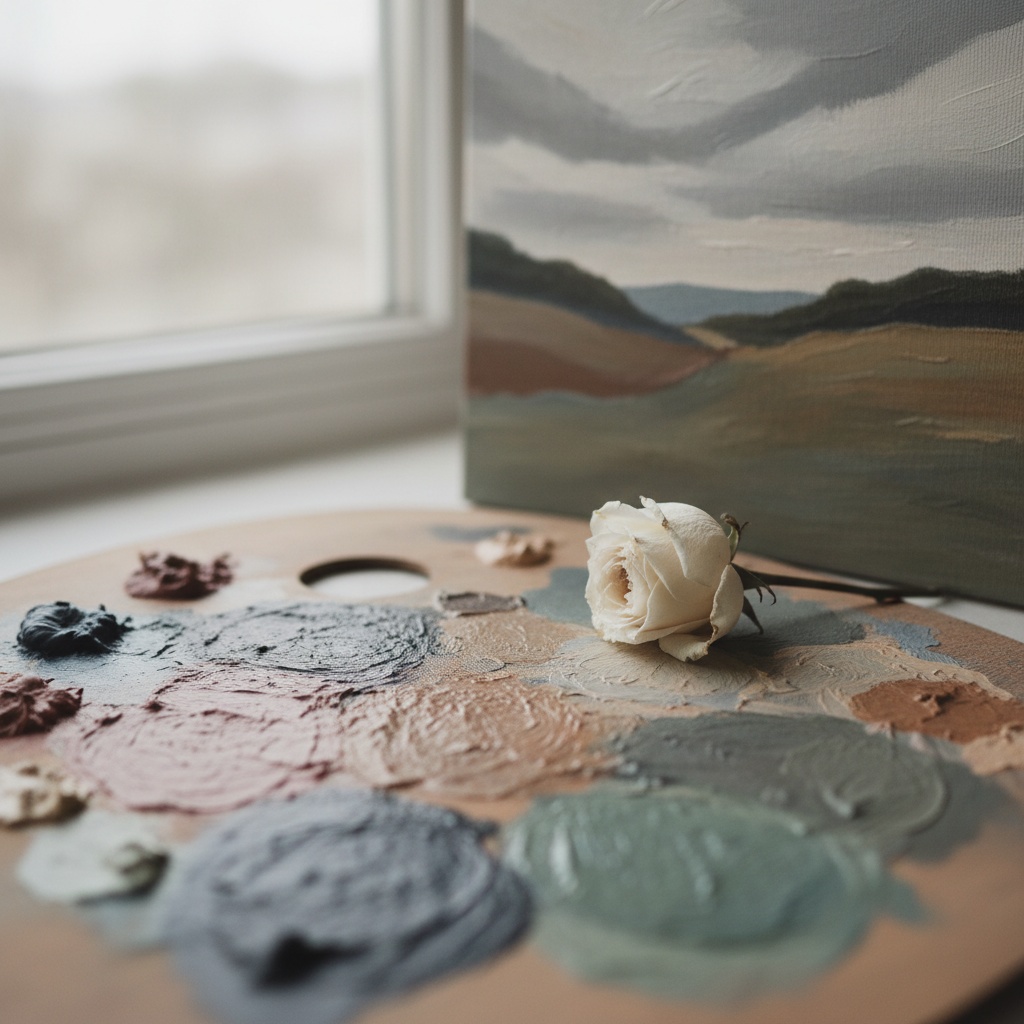
Creating a truly effective muted color scheme requires more than simply diluting bright colors. The key lies in understanding how to mix and layer hues to achieve depth and complexity. One common technique is to combine a color with its complementary color—for example, mixing red with green. This doesn’t necessarily result in brown; rather, it creates a nuanced shade that feels less jarring than pure red. Another approach involves incorporating earthy tones—ochres, umbers, siennas—to ground the palette and add warmth.
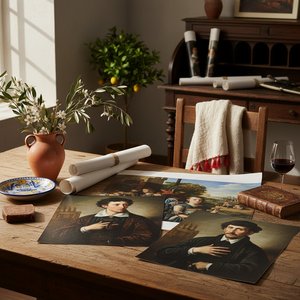
Jean-François Millet's “Pauline Ono In Blue” exemplifies this technique beautifully. The subtle blues are not stark or vibrant but rather softened by underlying earth tones, creating a sense of classical elegance and emotional depth. Experimentation is crucial. Don’t be afraid to layer colors—apply thin glazes over existing layers to build up complexity and create a sense of atmosphere. Remember that the goal isn't to eliminate color entirely but to refine it, to imbue it with subtlety and nuance.
Muted Colors in Interior Design: Creating Serene & Sophisticated Spaces
The principles we’ve explored translate seamlessly into the realm of interior design. In a world saturated with visual stimuli, muted colors offer a welcome respite—a chance to create spaces that feel calm, inviting, and restorative. Think soft grays on walls paired with warm wood tones and natural textures. Or consider a palette of dusty blues and greens in a bedroom, evoking the tranquility of the ocean or forest.
Muted colors also provide an excellent backdrop for showcasing artwork and furniture. They allow individual pieces to stand out without overwhelming the space. Furthermore, they are incredibly versatile—they work well with a variety of styles, from minimalist modern to cozy farmhouse. The key is to create balance—to avoid monotony by incorporating different textures and patterns.
Contemporary Applications: The Enduring Appeal of Subdued Aesthetics
Today, we see the influence of muted colors everywhere—in graphic design, fashion, and even web development. This isn’t simply a fleeting trend; it reflects a deeper cultural shift towards simplicity, mindfulness, and a desire for authenticity. Designers are increasingly embracing palettes that feel grounded and natural, rejecting the hyper-saturated aesthetics of recent years.
The enduring appeal of muted colors lies in their ability to evoke emotion, create atmosphere, and foster a sense of tranquility. Whether you’re an artist seeking to capture a specific mood or a homeowner looking to create a serene space, these hues offer a powerful tool for transforming your vision into reality. At OriginalUniqueArt, we celebrate the beauty of art in all its forms—from bold masterpieces to the subtle nuances of muted palettes. Explore our collection today and discover how you can bring the timeless elegance of subdued aesthetics into your world.