Introduction: The Enduring Appeal of Inner Reflection in Art
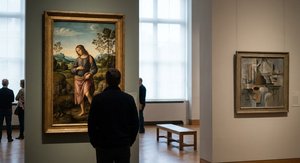
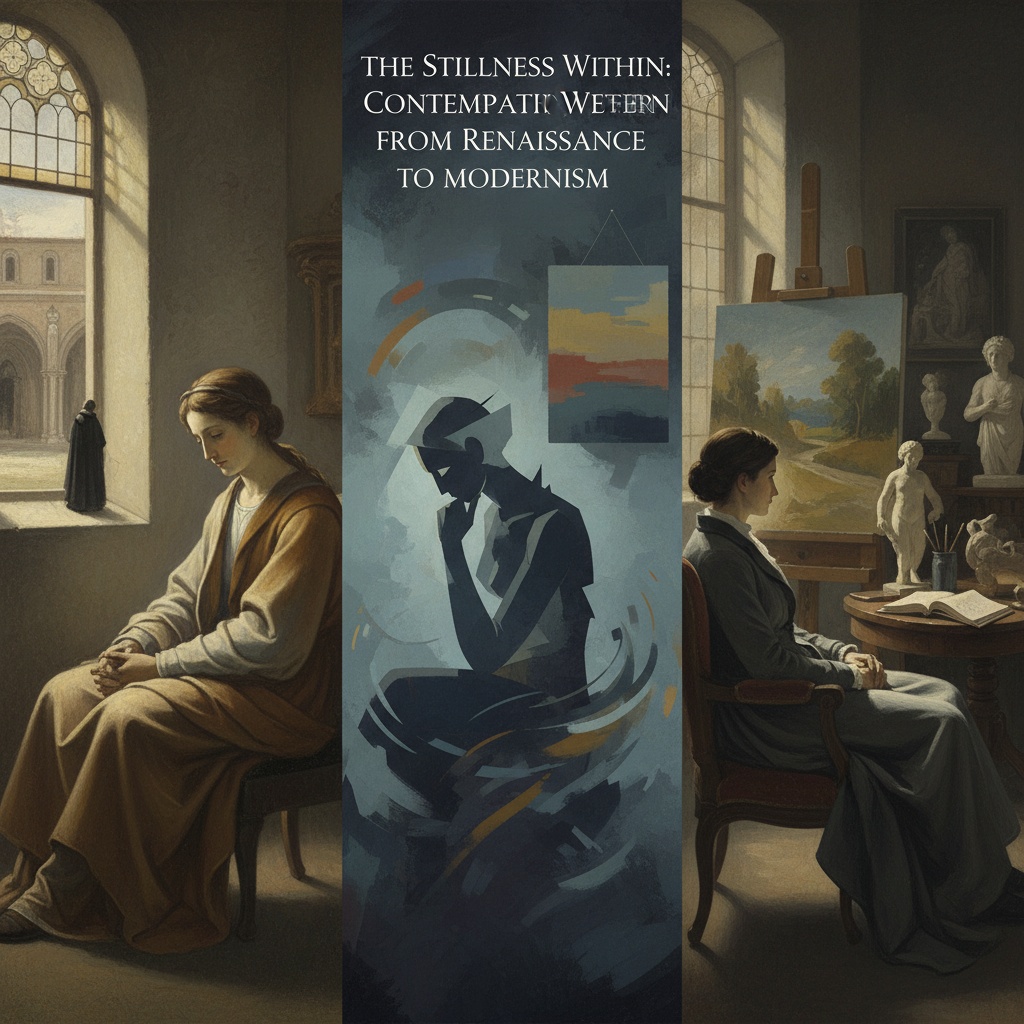
From the earliest cave paintings to the most avant-garde installations, art has served as a mirror reflecting humanity’s deepest concerns – and perhaps none more profoundly than our search for meaning within ourselves. The act of contemplation, that quiet turning inward, has been a persistent theme throughout Western artistic tradition, evolving in form and expression yet remaining fundamentally connected to the human condition. This exploration delves into how artists across centuries have visualized inner life, from the devotional piety of the Renaissance to the abstract landscapes of Modernism, revealing a continuous dialogue between the external world and the silent spaces within.
Renaissance Seeds: Humanism, Devotion, and Early Expressions of Contemplation
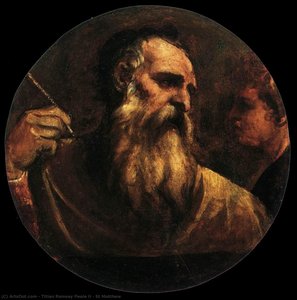 St Matthew
Discover "St Matthew" by Titian Ramsay Peale II – a rediscovered Renaissance masterpiece showcasing the artist's refined style and attention to detail. Explore this sacred art piece today!
The Renaissance, with its rediscovery of classical learning and burgeoning humanist philosophy, provided fertile ground for artistic explorations of the individual psyche. While still deeply rooted in religious iconography, a new emphasis on human emotion and experience began to permeate sacred subjects. Consider Titian Ramsay Peale II’s “St Matthew”, a rediscovered masterpiece that exemplifies this shift. The artist doesn't merely depict a biblical figure; he captures a moment of profound intellectual and spiritual engagement, the subtle nuances of expression hinting at an inner life wrestling with divine truths. This focus on psychological realism was revolutionary. Simultaneously, artists like Giorgione, in works such as “The Three Ages of Man,” moved beyond explicit narrative to explore allegorical representations of human existence – a contemplation not of specific events but of the very nature of time and mortality. The sfumato technique, masterfully employed by Giorgione, creates an ethereal quality, inviting viewers into a meditative state alongside the figures depicted. Even in works seemingly focused on external action, like early depictions of saints, there’s a growing sense of interiority—a quiet dignity suggesting inner fortitude and spiritual grace.
Baroque Drama & Mannerist Introspection: Exploring Emotional Depth
 Giuseppe Arcimboldo
Discover Giuseppe Arcimboldo (1527-1593), the Italian Mannerist master renowned for his surreal portraits composed of fruits, vegetables & objects. Explore his whimsical yet insightful art!
The Baroque period, while known for its dramatic flair and opulent displays, also harbored a fascination with the complexities of human emotion. Artists like Caravaggio used chiaroscuro—the stark contrast between light and dark—to heighten psychological tension and draw viewers into the emotional turmoil of their subjects. However, it was perhaps in the Mannerist movement that we see a more deliberate turn towards introspection. Giuseppe Arcimboldo’s surreal portraits, composed of fruits, vegetables, and objects, initially appear whimsical, but beneath the surface lies a deeper contemplation on transience, decay, and the ephemeral nature of beauty. These aren't simply still lifes; they are meditations on the human condition disguised as playful arrangements. Hans Holbein the Younger’s “The Agony in the Garden”, though predating the height of Mannerism, foreshadows this preoccupation with psychological states. The raw emotion and vulnerability depicted in Christ's torment resonate deeply, inviting viewers to share in his suffering—a powerful example of art as a vehicle for empathetic contemplation.
The 19th Century’s Search for Solitude: Romanticism and the Rise of Symbolism
The 19th century witnessed a growing disillusionment with Enlightenment rationality, leading artists to seek solace in emotion, imagination, and the subjective experience. Romanticism embraced the power of nature as a catalyst for introspection, portraying landscapes not merely as scenic vistas but as reflections of inner states. Artists increasingly turned inward, exploring themes of solitude, melancholy, and spiritual longing. This shift paved the way for Symbolism, which rejected literal representation in favor of evocative imagery designed to tap into the subconscious mind. The Symbolists sought to express abstract ideas—dreams, fears, desires—through veiled metaphors and suggestive forms, creating works that demanded active contemplation from the viewer. The emphasis moved away from depicting *what* was seen towards exploring *how* it felt.
Modernism's Quiet Revolution: Abstraction, Minimalism, and Inner Landscapes
Monochromatic painting has played a significant role in modern and contemporary Western visual art, originating with the early 20th-century European avant-gardes. Artists have explored the non-representational potential of a single color, investigati...
The 20th century saw a radical departure from traditional artistic conventions with the rise of Modernism. Abstraction, in its various forms, became a powerful tool for exploring inner landscapes—a rejection of external representation in favor of pure form and color. Artists like Wassily Kandinsky believed that abstract art could bypass rational thought and directly access the spiritual realm. Minimalism further stripped away representational elements, reducing art to its essential components – line, shape, and texture – inviting viewers into a state of quiet contemplation. Even monochrome paintings, seemingly devoid of subject matter, became vehicles for exploring subtle variations in tone and surface, prompting introspection on perception itself. The act of looking—of truly *seeing*—became the artwork’s primary focus. This pursuit of pure aesthetic experience echoes earlier traditions of meditative practice, albeit expressed through radically different visual languages.
Conclusion: Contemplation as a Timeless Dialogue Between Art and the Self
Throughout Western art history, the theme of contemplation has manifested in diverse forms—from devotional portraits to abstract compositions. What unites these seemingly disparate works is their ability to evoke inner reflection, prompting viewers to engage with fundamental questions about existence, emotion, and spirituality. The enduring legacy of this artistic tradition lies not simply in the beauty of the artworks themselves but in their capacity to serve as catalysts for self-discovery. At OriginalUniqueArt, we believe that art should be accessible to all, allowing everyone to experience the transformative power of these timeless masterpieces and embark on their own journey of contemplation. Explore our collection today and discover a world of artistic inspiration—a world where beauty meets introspection, and the external world becomes a mirror reflecting the silent spaces within.