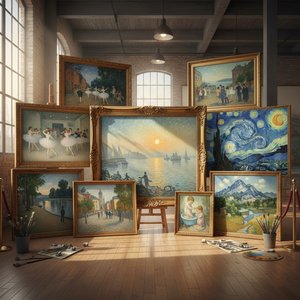
The Dawn of Impressionism: Challenging Artistic Conventions
The 19th century was a period of profound upheaval, not just politically and socially, but also within the realm of art. For centuries, European painting had been dominated by the rigid standards of the Académie des Beaux-Arts in France – an institution that prized historical narratives, mythological scenes, and meticulous realism. Artists were expected to adhere to established techniques, favoring carefully blended brushstrokes and a restrained palette. But beneath the surface of this academic tradition, a quiet rebellion was brewing. A new generation of artists, fueled by a desire for artistic freedom and a fascination with the changing world around them, began to question these long-held conventions.
This burgeoning movement found its initial spark in the works of painters like Eugène Delacroix and J.M.W. Turner, who dared to prioritize color and emotion over precise representation. However, it was a group of Parisian artists – Claude Monet, Pierre-Auguste Renoir, Edgar Degas, Camille Pissarro, Alfred Sisley, and Berthe Morisot among them – who would ultimately shatter the established order. Frustrated by repeated rejections from the Salon de Paris, the official art exhibition controlled by the Académie, they decided to forge their own path.
In 1874, these artists staged an independent exhibition, a bold act of defiance that marked the birth of Impressionism. The name itself was initially derisive, coined by critic Louis Leroy after viewing Claude Monet’s painting *Impression, soleil levant* (Impression, Sunrise). He intended it as an insult, suggesting the work was merely a fleeting “impression” rather than a finished piece. Yet, the artists embraced the label, recognizing that it accurately captured their intention: to depict not what they knew to be true about a subject, but what they *saw* in a particular moment.
Key Characteristics & Techniques: Capturing Light and Atmosphere
At the heart of Impressionism lies an obsession with light – its ephemeral qualities, its ability to transform colors and shapes, and its profound impact on human perception. Unlike their predecessors who labored over details in the studio, the Impressionists ventured *en plein air* – outdoors – to paint directly from nature. This allowed them to capture the fleeting effects of sunlight as it danced across landscapes, water surfaces, and urban scenes.
To achieve this effect, they abandoned traditional techniques like meticulous blending and glazing. Instead, they employed visible brushstrokes, often applying pure, unmixed colors side-by-side on the canvas. This technique, known as broken color, created a vibrant, shimmering surface that mimicked the way light interacts with our eyes. The Impressionists weren’t interested in creating an illusion of reality; they wanted to convey the *sensation* of seeing.
Composition also underwent a radical shift. Traditional paintings often featured carefully balanced compositions and clear focal points. Impressionist works, however, frequently embraced asymmetrical arrangements, cropped figures, and unconventional viewpoints – mirroring the spontaneity of everyday life. The subject matter itself broadened to include scenes of modern urban existence: bustling boulevards, cafes, theaters, and leisure activities.
Iconic Artists and Masterpieces: Monet, Renoir, and Beyond
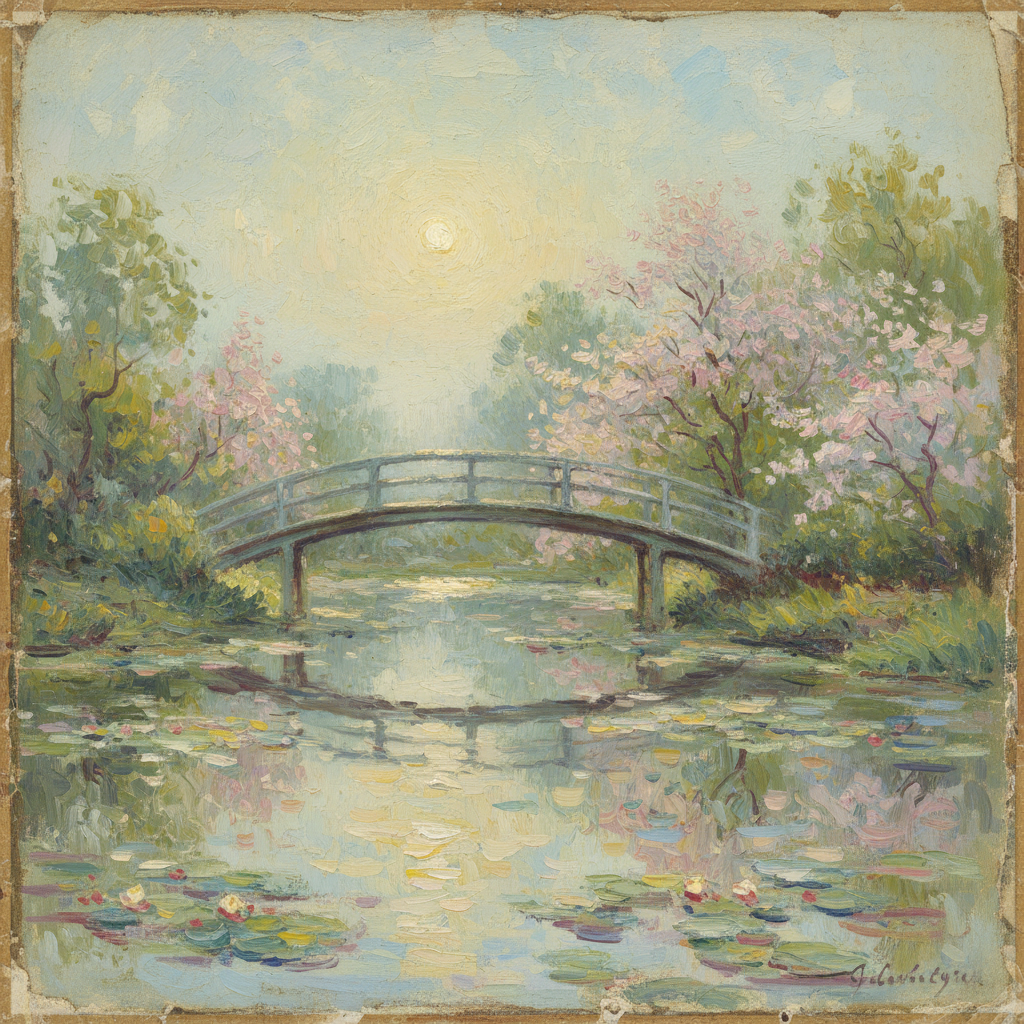
While Impressionism was a collaborative movement, certain artists stand out as particularly influential figures. Claude Monet, arguably the most iconic of the Impressionists, dedicated his life to capturing the ever-changing effects of light on water lilies, haystacks, and the Rouen Cathedral. His series paintings – depicting the same subject under different conditions – exemplify his commitment to exploring the nuances of perception.
Pierre-Auguste Renoir, known for his joyous depictions of Parisian life, captured the warmth and intimacy of human connection in works like *Bal du moulin de la Galette*. His paintings are characterized by a soft, luminous palette and a focus on figures bathed in sunlight.
Edgar Degas, though often reluctant to be labeled an Impressionist, shared their interest in capturing modern life. He is best known for his depictions of ballet dancers – graceful yet vulnerable figures caught in moments of practice or performance. His innovative compositions and dynamic brushwork revolutionized the way movement was portrayed in art.
Berthe Morisot, a pioneering female Impressionist, brought a unique sensitivity to her paintings of domestic life and portraits of women and children. Her delicate brushstrokes and subtle color harmonies create an atmosphere of quiet intimacy.
Impressionism’s Influence: A Bridge to Modern Art
The impact of Impressionism extended far beyond its initial circle of artists. By challenging the established norms of academic painting, they paved the way for a new era of artistic experimentation. Their emphasis on subjective perception and individual expression laid the groundwork for Post-Impressionism, with artists like Vincent van Gogh, Paul Cézanne, and Paul Gauguin building upon their innovations while forging their own distinct styles.
Van Gogh’s emotional intensity and expressive brushwork, Cézanne’s exploration of form and structure, and Gauguin’s fascination with symbolism and primitive art all owe a debt to the Impressionist revolution. Impressionism's legacy continued to ripple through the 20th century, influencing movements like Fauvism, Cubism, and Abstract Expressionism.
Experiencing Impressionism Today: Collections and Reproductions
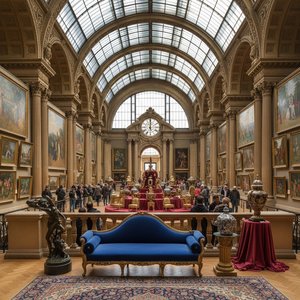
Today, the masterpieces of Impressionism are celebrated in museums around the world, drawing millions of visitors each year. The Musée d’Orsay in Paris, housed in a former railway station, boasts an unparalleled collection of Impressionist and Post-Impressionist art. Other notable collections can be found at the Art Institute of Chicago, the Museum of Modern Art in New York, and the National Gallery in London.
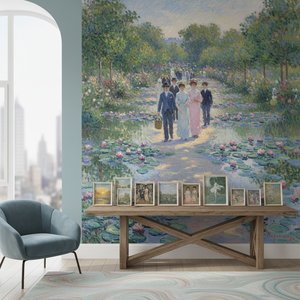
For those seeking to bring the beauty of Impressionism into their own homes, high-quality reproductions offer an accessible alternative. provides meticulously crafted oil paintings and giclée prints that capture the essence of these iconic works. Whether you’re drawn to Monet’s serene water lilies or Renoir’s vibrant scenes of Parisian life, a reproduction allows you to experience the magic of Impressionism firsthand.
- Explore our collection: Browse Artworks
- Discover Artists: View Artists
- Custom Reproductions: Create Your Own Masterpiece