
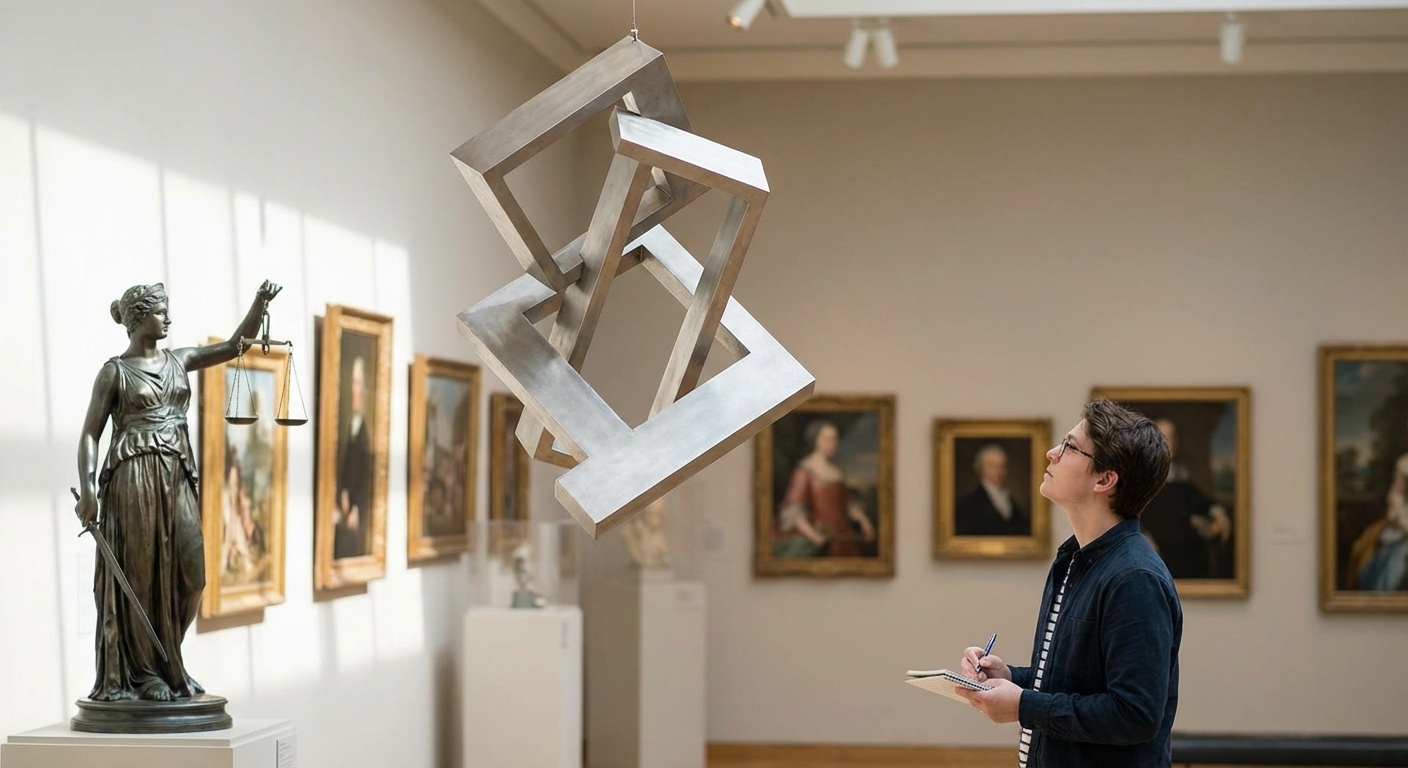
Introduction: The Enduring Appeal of Equilibrium
From the earliest cave paintings to the most avant-garde contemporary installations, the human impulse to create balance – both visual and emotional – has been a defining characteristic of artistic expression. But what constitutes ‘balance’ in art is far from static; it's a dynamic interplay of elements, a delicate negotiation between opposing forces that resonates deeply within us. It speaks to our innate desire for order amidst chaos, for a sense of completion and wholeness reflected in the world around us. This exploration delves into how artists across diverse movements have sought to evoke this equilibrium, not merely as an aesthetic principle but as a profound reflection of the human condition.
Renaissance Harmony: Order, Proportion, and Divine Balance
The Renaissance witnessed a fervent rediscovery of classical ideals, and with it, a renewed emphasis on mathematical proportion and geometric order. Artists like Leonardo da Vinci believed that beauty was intrinsically linked to harmony, achievable through precise ratios – the Golden Ratio being paramount. In works such as The Last Supper, this isn’t simply about accurate perspective; it's about creating a composition where every element—the figures, the architecture, even the light—contributes to a sense of serene balance. This wasn’t merely an intellectual exercise; it was believed to mirror the divine order of the universe. The use of symmetrical arrangements and carefully calibrated compositions aimed to elevate the subject matter, imbuing it with a spiritual weight and timeless quality. The human form itself became a vessel for demonstrating this harmony, as exemplified in Michelangelo's sculptures where anatomical precision served not just realism but an idealized representation of God’s creation.
Impressionism's Fleeting Moments & the Pursuit of Visual Unity
The Impressionists, rebelling against the rigid academic traditions, approached balance from a radically different perspective. Instead of striving for perfect symmetry and precise detail, they sought to capture the fleeting effects of light and atmosphere. Artists like Monet and Renoir embraced asymmetry and broken color, creating compositions that felt less structured and more akin to spontaneous observations. However, this wasn’t a rejection of balance altogether; rather, it was a shift in *how* balance was achieved. Visual unity became paramount – not through precise mirroring but through the harmonious interplay of colors, tones, and brushstrokes. A painting like Monet's Impression, Sunrise doesn’t offer a static equilibrium; instead, it presents a dynamic sense of movement and light where color relationships create a captivating visual rhythm. The eye is led across the canvas not by rigid lines but by subtle gradations and complementary hues, resulting in an immersive experience that prioritizes feeling over precise representation.
Abstract Expressionism: Chaos, Control, and the Search for Inner Balance
The Abstract Expressionists took this exploration even further, abandoning representational forms altogether. Artists like Jackson Pollock and Mark Rothko sought to express raw emotion directly onto the canvas, often through spontaneous gestures and non-figurative compositions. At first glance, their works might appear chaotic and unbalanced, but a closer examination reveals a carefully considered interplay of forces. Pollock’s drip paintings, for example, are not random splatters; they represent a controlled release of energy, a dance between the artist's body and the canvas. Rothko’s color field paintings, with their large expanses of luminous hues, aim to evoke profound emotional responses through subtle variations in tone and texture. The balance here isn’t about symmetrical arrangements but about achieving an inner equilibrium – a sense of stillness and contemplation amidst apparent chaos. It's a deeply personal form of expression where the artist seeks to reconcile opposing forces within themselves and translate that into a visual language.
Kandinsky and the Spiritual Resonance of Color and Form
Wassily Kandinsky, a pioneer of abstract art, believed that color possessed inherent spiritual qualities. His paintings, like Reciprocal Accords and Tensions Relaxed, are not depictions of the external world but explorations of inner states of being. He theorized about the emotional impact of different colors and shapes, believing they could evoke specific feelings and sensations. Kandinsky sought to create a visual harmony that resonated with the soul, achieved through carefully orchestrated compositions where color relationships were paramount. He moved beyond simply juxtaposing complementary hues; he explored how colors interacted with each other, creating vibrations and tensions that mirrored the complexities of human experience. The balance in his work isn’t about static arrangements but about dynamic interplay – a constant flow of energy and emotion expressed through abstract forms. He saw art as a means to transcend the material world and connect with a higher spiritual reality.
Contemporary Approaches to Harmony: Multi-Panel Arrangements and Spatial Cohesion
Today, artists continue to explore new ways to evoke harmony in their work. One notable trend is the use of multi-panel arrangements, where a single artwork is divided into multiple canvases or sections. This approach allows for greater complexity and nuance, creating a sense of spatial cohesion that draws the viewer into a more immersive experience. By carefully arranging these panels, artists can create dynamic rhythms and visual narratives that unfold across the wall. Furthermore, contemporary artists are increasingly incorporating elements from diverse cultures and traditions, blending different aesthetic principles to create unique and hybrid forms of expression. The pursuit of balance remains central, but it’s now often approached with a greater awareness of context and cultural sensitivity. Ultimately, the enduring appeal of harmony lies in its ability to connect us to something larger than ourselves – a sense of order, beauty, and wholeness that transcends time and culture.



