The Ancient Roots: The Nude in Greek Art & Philosophy
The nude, as a form of visual art that focuses on the unclothed human figure, is an enduring tradition in Western art. It was a preoccupation of Ancient Greek art, and after a semi-dormant period in the Middle Ages returned to a central position with...
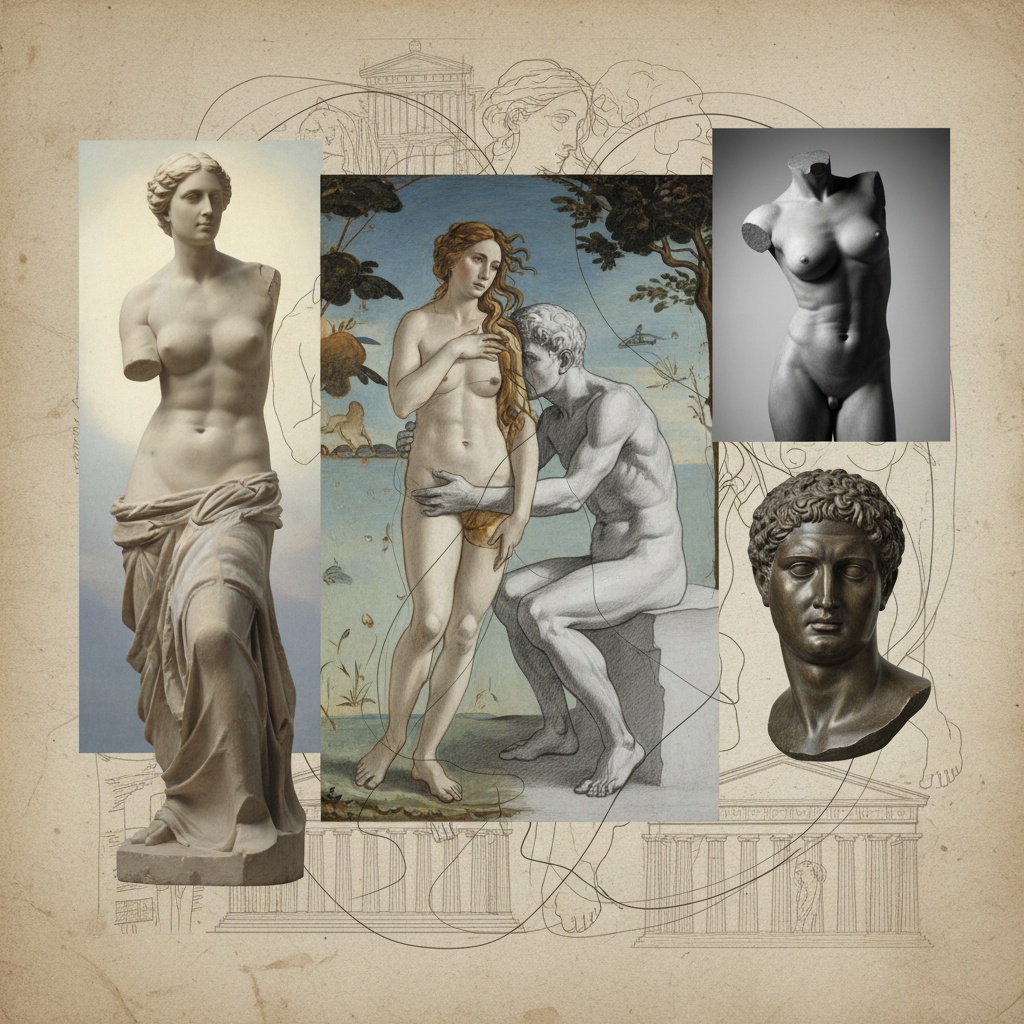
The story of the nude in art is inextricably linked to the ancient Greeks, a civilization that elevated the human form to an unprecedented level of aesthetic and philosophical significance. Unlike earlier cultures where nudity often signified vulnerability or ritualistic practice, the Greeks saw the unclothed body as embodying kalos kagathos – the ideal of beauty and goodness. This wasn’t merely about physical perfection; it was a pursuit of harmony, proportion, and intellectual virtue manifested in tangible form. Sculptors like Phidias and Praxiteles didn't simply replicate anatomy; they sought to capture an idealized version of humanity, reflecting their belief that humans were the measure of all things. The kouroi and korai – archaic statues of young men and women – represent early explorations of this ideal, evolving into the more dynamic and naturalistic forms of the Classical period. The emphasis wasn’t on individual portraiture but on universal archetypes. This reverence for the human body extended beyond sculpture; it permeated their mythology, philosophy, and even athletic competitions, where athletes performed nude as a celebration of physical prowess and divine connection.
Renaissance Rebirth: Rediscovering Classical Ideals
A figure drawing is a drawing of the human form in any of its various shapes and postures, using any of the drawing media. The term can also refer to the act of producing such a drawing. The degree of representation may range from highly detailed, an...
After centuries where depictions of the nude were largely subsumed by religious iconography in medieval art, the Renaissance witnessed a profound rediscovery of classical antiquity. Artists like Donatello and Michelangelo spearheaded this revival, drawing inspiration from unearthed Roman sculptures and ancient texts. However, it wasn’t simply a matter of imitation. The Renaissance artists infused their work with a new sense of realism, psychological depth, and individual expression. Michelangelo's David, for example, is not merely a technically brilliant rendering of the biblical hero; it embodies human strength, vulnerability, and intellectual contemplation. The study of anatomy became paramount – Leonardo da Vinci’s meticulous drawings reveal an obsessive pursuit of understanding the underlying structure of the body. This period also saw a shift in how nudity was perceived. While still often couched within religious or mythological narratives, the nude figure began to be appreciated for its inherent beauty and expressive potential. Federico Barocci’s sketches, like “Three Studies of a Male Figure both Nude and Clothed,” demonstrate this meticulous exploration of form alongside considerations of faith and composition.
Baroque Sensuality & Rococo Playfulness: A Shift in Perspective
The Baroque period marked a departure from the Renaissance's emphasis on idealized forms, embracing drama, emotion, and sensuality. Artists like Rubens and Bernini infused their nudes with a dynamic energy and theatrical flair. Bodies were rendered with lush textures, vibrant colors, and a heightened sense of movement. This wasn’t about cold perfection but about evoking visceral responses in the viewer. Guercino's pencil drawings exemplify this shift, capturing fleeting moments and expressive linework that convey both physical form and emotional intensity. The Rococo era further embraced pleasure and frivolity, with artists like Boucher creating scenes of idyllic beauty and playful eroticism. “Reclining Female Nude” by François Boucher is a prime example – a celebration of classical grace and sensuality, often depicting mythological figures in intimate settings. This period saw the nude become increasingly associated with aristocratic leisure and refined taste.
19th-Century Realism and the Academic Tradition
The 19th century witnessed a complex interplay between academic tradition and emerging realist movements. The Académie des Beaux-Arts championed idealized nudes based on classical models, emphasizing technical skill and anatomical accuracy. However, artists like Courbet and Manet challenged these conventions, portraying the nude in more direct and unidealized ways. They sought to depict the human body as it truly was – with imperfections, flaws, and a sense of lived experience. This often sparked controversy, as audiences were accustomed to seeing nudes presented through a romanticized lens. The focus shifted from mythological or allegorical subjects to contemporary life, exploring themes of social realism and individual identity. This period also saw the rise of figure drawing as a fundamental element in artistic training, with artists dedicating themselves to mastering the complexities of human anatomy and form.
Modern Interpretations: Challenging Conventions and Exploring Identity
The 20th and 21st centuries witnessed an explosion of diverse approaches to the nude. Artists like Picasso and Matisse deconstructed traditional forms, exploring cubism and abstraction. Others, such as Philip Pearlstein, revived figurative art with a modernist sensibility, often depicting nudes in everyday settings with clinical precision. This period saw a rejection of idealized beauty standards and a greater emphasis on individual expression and psychological depth. The nude became a vehicle for exploring themes of gender, sexuality, identity, and the human condition. Artists challenged conventional notions of representation, questioning societal norms and pushing the boundaries of artistic expression. This era also saw a renewed interest in classical realism, with artists like Richard Lack combining elements of 19th-century neoclassicism and realism to create works that valued both skill and beauty.
The Enduring Legacy: The Nude as a Symbol of Beauty, Truth, and Vulnerability
Throughout history, the nude has served as more than just a depiction of the human body; it’s been a symbol of beauty, truth, vulnerability, and spiritual awakening. From the ancient Greeks' pursuit of kalos kagathos to modern artists' explorations of identity, the nude continues to captivate and challenge us. The enduring appeal lies in its ability to transcend cultural boundaries and connect with fundamental human emotions. The study of the nude – whether through figure drawing, sculpture, or painting – remains a cornerstone of artistic training, fostering an understanding of anatomy, proportion, and expressive form. Artists like Francis Rudolph demonstrate this timeless beauty through intimate nude studies, while Willem Danielsz van Tetrode explored classical themes and allegorical subjects with masterful technique. At OriginalUniqueArt.com, we celebrate this rich legacy by offering high-quality reproductions of masterpieces from across the ages, allowing you to bring the enduring power of the nude into your own home. Explore our collection today and discover the captivating history of this timeless art form.