The Genesis of Baroque: Historical Context & Counter-Reformation Roots
 Wikipedia: Counter-Reformation
The Counter-Reformation (Latin: Contrareformatio), also sometimes called the Catholic Revival, was the period of Catholic resurgence that was initiated in response to, and as an alternative to or from similar insights as, the Protestant Reformations ...
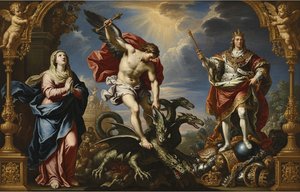
The early 17th century witnessed a seismic shift in the artistic landscape, giving rise to the Baroque movement – a style characterized by its drama, grandeur, and emotional intensity. To understand this flourishing, one must first look to the tumultuous backdrop of the Counter-Reformation. Following the Protestant Reformation’s challenge to papal authority, the Catholic Church sought to reaffirm its power and reconnect with its followers. Art became a potent weapon in this ideological battle, moving away from the restrained classicism of the Renaissance towards a more dynamic and persuasive visual language. The Council of Trent (1545-1563) played a pivotal role, advocating for art that was accessible, emotionally resonant, and explicitly devotional. This wasn’t merely about aesthetics; it was about reclaiming hearts and minds through spectacle and spiritual fervor.
Prior to Baroque, Mannerism had already begun to challenge the harmonious balance of the High Renaissance, introducing elongated forms and complex compositions. However, Baroque took these tendencies further, embracing a theatricality that aimed to overwhelm the senses. Artists were no longer content with simply depicting religious scenes; they sought to *immerse* viewers in them, creating experiences that evoked awe, wonder, and ultimately, faith. This desire for emotional impact fueled innovations in composition, light, and subject matter, setting the stage for a new era of artistic expression.
A Symphony of Senses: Key Characteristics of Baroque Art – Drama, Light & Movement
In art, chiaroscuro (English: kee-AR-ə-SKOOR-oh, -SKURE-, Italian: [ˌkjaroˈskuːro]; lit. 'light-dark') is the use of strong contrasts between light and dark, usually bold contrasts affecting a whole composition. It is also a technical term used by ...
The hallmarks of Baroque art are immediately striking: a palpable sense of movement, intense emotionality, and a masterful use of light and shadow. Artists abandoned the static compositions of earlier periods in favor of dynamic arrangements filled with swirling figures, dramatic diagonals, and a heightened sense of energy. This wasn’t simply about depicting action; it was about conveying a feeling of unrestrained power and passion. Chiaroscuro, the stark contrast between light and dark, became a defining technique, used to create depth, highlight key elements, and evoke a powerful emotional response.
Consider Francisco de Zurbarán’s ‘The Holy Family,’ where the figures emerge from deep shadows, illuminated by a single source of light. This dramatic lighting not only emphasizes their spiritual significance but also creates an atmosphere of profound reverence. Similarly, Peter Paul Rubens frequently employed dynamic compositions and rich colors to convey a sense of exuberance and vitality. His paintings are often filled with swirling draperies, muscular figures, and a palpable energy that draws the viewer into the scene. The Baroque aesthetic wasn’t limited to painting; sculpture also embraced movement and drama, as exemplified by Gian Lorenzo Bernini's works which seem to capture fleeting moments in time.
Masters of the Baroque: Exploring Iconic Artists and Their Defining Works
The Baroque period produced a constellation of artistic geniuses, each contributing uniquely to the movement’s evolution. Caravaggio, with his revolutionary realism and dramatic use of chiaroscuro, fundamentally altered the course of painting. His works, often depicting scenes from everyday life imbued with religious significance, were both groundbreaking and controversial. Rubens, a master of color and composition, created monumental canvases filled with dynamic figures and opulent details, serving as court painter to numerous European monarchs.
Zurbarán, known for his austere yet powerful depictions of monastic life and religious themes, brought a unique sense of spirituality to the Baroque aesthetic. His paintings often feature stark contrasts between light and shadow, emphasizing the humility and devotion of his subjects. Andrea Pozzo, though primarily a fresco painter, exemplifies the Baroque’s ambition to create illusionistic spaces that blurred the boundaries between art and reality. His quadratura frescoes, such as those found in Sant'Ignazio in Rome, are breathtaking examples of perspective and architectural deception.
Beyond Painting: Sculpture, Architecture & the Gesamtkunstwerk of the Baroque Era
While painting often takes center stage when discussing the Baroque, sculpture and architecture were equally integral to the movement’s overall aesthetic. Baroque sculpture embraced dynamic poses, elaborate draperies, and a heightened sense of realism, aiming to evoke emotion and create a theatrical experience. Bernini, arguably the most influential sculptor of the period, masterfully combined sculpture with architecture to create immersive environments that blurred the boundaries between different art forms.
Baroque architecture was characterized by its grandeur, ornamentation, and dramatic use of space. Churches were often designed to overwhelm the senses, featuring soaring domes, elaborate facades, and opulent interiors filled with sculptures, paintings, and gilded details. This wasn’t simply about creating beautiful buildings; it was about creating a Gesamtkunstwerk – a total work of art that engaged all the senses and evoked a profound emotional response. The Doria Pamphilj Gallery in Rome provides an excellent example of how Baroque painting, sculpture, and architecture coalesced to create a stunning display of wealth, power, and artistic patronage.
Baroque's Global Reach: Regional Variations and Lasting Influence on Western Art
The Baroque style wasn’t confined to Italy; it spread throughout Europe, adapting to the unique cultural and religious contexts of each region. In Northern Europe, artists like Jacob van Oost blended Baroque techniques with local traditions, creating works that reflected a more restrained aesthetic. In France, Baroque architecture emphasized symmetry and opulence, exemplified by the Palace of Versailles, which became a symbol of royal absolutism.
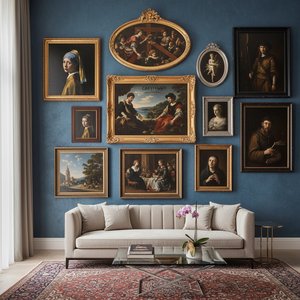
Spanish Baroque, as seen in the works of Velázquez, masterfully combined drama with introspection, exploring themes of identity, power, and the human condition. The influence of the Baroque continues to resonate today, shaping our understanding of art history and inspiring contemporary artists. From its dramatic use of light and shadow to its emphasis on emotional intensity, the Baroque aesthetic remains a powerful force in Western culture. At OriginalUniqueArt.com, you can explore high-quality reproductions of iconic Baroque masterpieces, bringing the drama and grandeur of this remarkable era into your own home.