The Genesis of Intaglio: From Ancient Metalwork to the Renaissance Masterpiece
The story of human expression is etched into the very fabric of our history, often beginning with the tactile manipulation of precious metals. Long before the printing press revolutionized the dissemination of knowledge, the roots of intaglio can be traced back to as early as 5,000 B.C. In the ancient cradles of civilization, such as Sumer, artisans demonstrated a profound mastery over gold, silver, and copper, carving intricate designs into jewelry that whispered tales of divinity and status. As centuries cascaded into the Middle Ages, this skill evolved through the hands of goldsmiths, who applied their delicate engravings to armor, musical instruments, and sacred religious objects. These early practitioners were not merely decorators; they were the precursors to a new era of visual communication.
The true metamorphosis occurred when the artisan's craft transitioned from ornamental metalwork to a deliberate medium for artistic reproduction. By the 1430s, masters like Martin Schongauer began to exploit the unique properties of copper engraving, transforming a decorative technique into a sophisticated form of printmaking. This shift marked the birth of the intaglio tradition, where the recessed lines of a plate could hold ink and transfer complex imagery onto paper. It was a moment when art moved beyond the singular, precious object and toward a reproducible medium that could carry the weight of profound artistic vision across borders and generations.
The Burin's Path: The Technical Precision of the Engraving Process
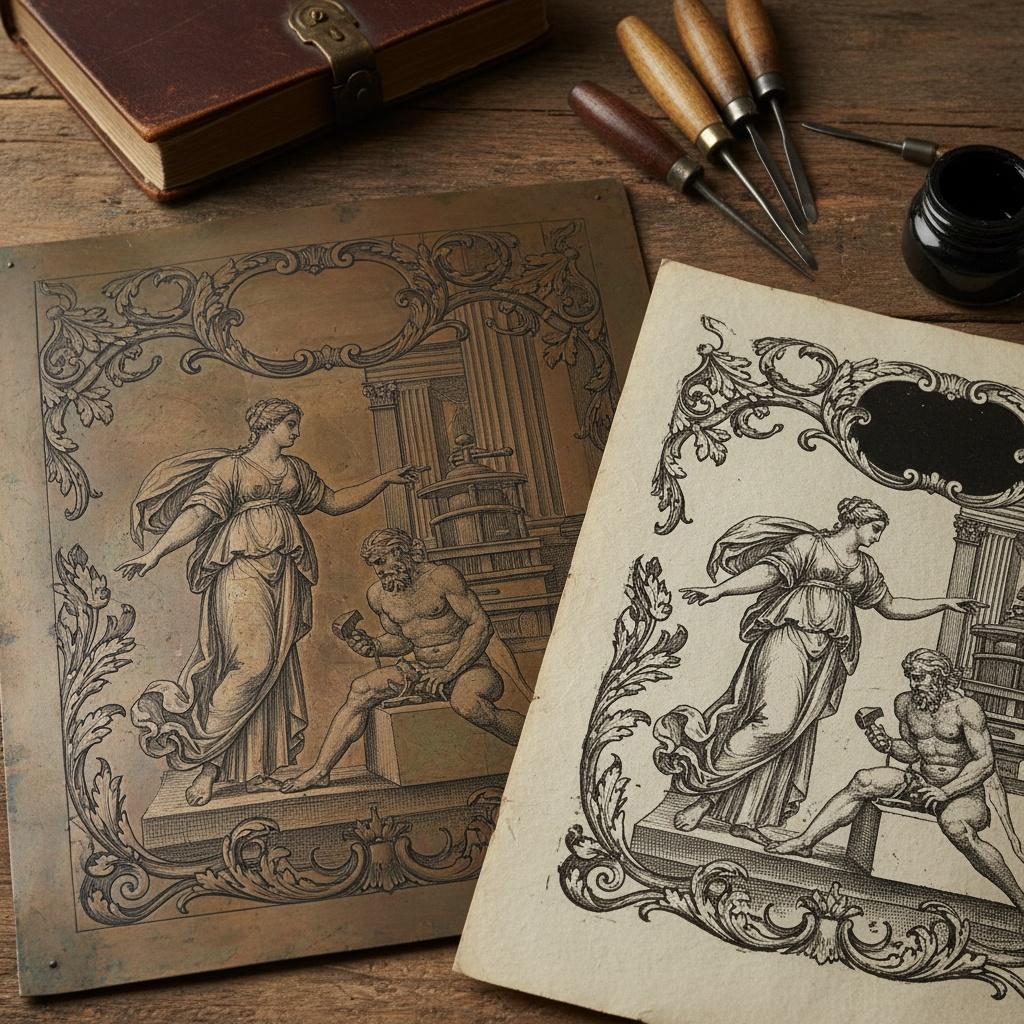
To witness an engraving in progress is to observe a dance of extreme discipline and physical fortitude. Unlike relief printing, where the raised surface holds the ink, engraving belongs to the intaglio family, meaning the image resides within the sunken grooves of a metal plate, typically copper or zinc. The process begins with a meticulous preparation: the metal plate must be polished until it is a mirror-like surface, devoid of even the most microscopic scratch that might betray the artist's intent. Once this pristine canvas is established, the printmaker introduces the burin, a specialized steel tool featuring a sharp, diamond-shaped tip set into a rounded wooden handle.
The act of engraving is an exercise in controlled resistance. The artist holds the burin and pushes it through the metal, carving precise channels that will eventually cradle the ink. This requires immense steady-handedness; every movement must be deliberate, as the depth and width of the incision directly dictate the darkness and weight of the resulting line. As the tool bites into the copper, the printmaker manages the pressure to create a varied topography of grooves. After the composition is complete, ink is applied across the entire plate and then carefully wiped away from the surface, leaving the pigment trapped only within the incised lines. When passed through the heavy rollers of a press, the paper is forced into these recesses, pulling the ink upward to reveal a crisp, striking image.
Lines of Light and Shadow: Achieving Depth through Cross-Hatching and Texture
The true magic of engraving lies in its ability to simulate the infinite gradations of light and shadow using nothing but monochromatic lines. Because the medium lacks the fluid washes of watercolor or the blended pigments of oil painting, the engraver must rely on a sophisticated vocabulary of mark-making to create the illusion of three-dimensional form. This is achieved through the masterful use of hatching—parallel lines that follow the contours of the subject—and cross-hatching, where intersecting layers of lines create denser, darker areas of tone.
Through these rhythmic intersections, an engraver can sculpt light itself. A single, fine line might suggest a delicate highlight on a silk garment, while a dense web of overlapping strokes can evoke the heavy, velvet darkness of a nocturnal landscape. The artist must also consider the texture of the subject matter; the way a burin moves across the plate can mimic the roughness of stone, the softness of skin, or the reflective sheen of polished metal. This technical virtuosity allows for a level of detail that is almost sculptural, providing a tactile quality to the print that invites the viewer to linger on every meticulously rendered shadow and brilliant highlight.
Beyond the Blade: Exploring Related Intaglio Techniques like Etching and Drypoint
While engraving represents the pinnacle of manual precision, the intaglio family encompasses a broader spectrum of techniques, each offering a unique aesthetic language. One of the most significant departures from the direct carving of the burin is etching. In etching, the artist does not physically struggle against the metal; instead, they utilize the chemical power of acid. The plate is first coated with an acid-resistant ground, and the artist draws through this layer with a needle, exposing the metal beneath. When submerged in an acid bath, the liquid "bites" into the exposed lines, creating the image. This allows for a much more fluid, spontaneous line that closely resembles the freedom of a pen-and-ink drawing.
Other specialized methods further expand this artistic repertoire. Drypoint, for instance, involves scratching directly into the plate without acid, creating a "burr"—a rough edge of displaced metal—that catches extra ink and produces a soft, velvety, and slightly blurred line. Then there are more complex tonal processes like aquatint, which uses resin dust to create broad areas of textured tone, or mezzotint, a laborious method that begins with a completely roughened plate and works backward from dark to light. Together, these techniques form a rich toolkit, allowing printmakers to navigate between the sharp, clinical precision of engraving and the atmospheric, painterly depths of their counterparts.
The Legacy of the Print: How Engraving Shaped Art History and Visual Communication
The historical impact of engraving cannot be overstated; it was the original engine of visual literacy. Before the age of photography and digital media, engravings were the primary means by which the great works of art and the significant events of history were documented and shared. The ability to produce multiple, high-quality impressions allowed for the widespread dissemination of classical imagery, influencing the tastes of collectors and the education of artists across the globe. It democratized the experience of art, bringing the grandeur of the Old Masters into the homes of a burgeoning middle class.
Even as printing technologies evolved, the fundamental principles established by the engravers remained foundational to the art world. The precision, the mastery of line, and the profound understanding of light and shadow that define engraving continue to inspire contemporary printmakers and collectors alike. Today, when we look upon a museum-grade reproduction or a fine art print, we are seeing the enduring legacy of those early artisans who first learned to command the metal, turning a simple scratch into a timeless window onto the human experience.
At OriginalUniqueArt.com, we celebrate this profound history of craftsmanship. Our mission is to preserve the spirit of these legendary techniques by offering exquisite hand-painted reproductions and museum-quality prints that honor the meticulous detail and emotional depth of the masters. Whether you are seeking a custom oil masterpiece or a beautifully textured Giclée print, we bring the timeless elegance of art history into the modern home.