Introduction: Defining Ethereality and its Artistic Resonance
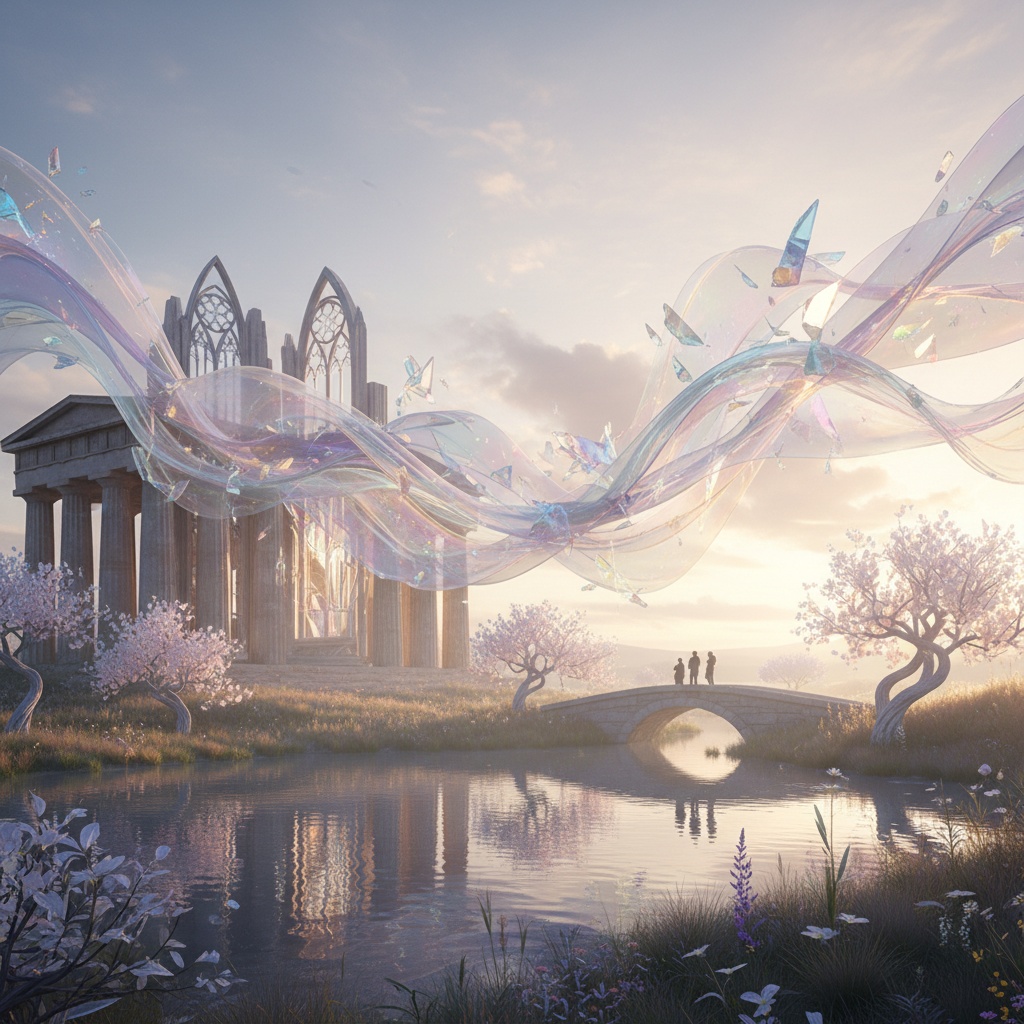
The pursuit of the ethereal—that which is delicate, light, and seemingly beyond the grasp of earthly experience—has captivated artists across centuries. More than a mere aesthetic preference, it represents a yearning for something transcendent, a visual echo of spiritual or emotional states that lie just beyond the tangible world. This desire manifests in diverse forms: shimmering colors, ambiguous forms, and compositions designed to evoke feelings rather than depict concrete realities. For the discerning collector, understanding this impulse—the historical currents that shaped it and the techniques employed to achieve it—deepens appreciation for works that resonate on a profoundly human level. It’s about recognizing not just *what* is depicted, but *how* the artist sought to convey an ineffable quality of being.
Symbolism's Embrace of the Mystical: Russian Roots & Beyond
 Wikipedia: Russian symbolism
Russian symbolism was an intellectual, literary and artistic movement predominant at the end of the 19th and beginning of the 20th century. It arose separately from West European symbolism, and emphasized defamiliarization and the mysticism of Sophio...
The late 19th and early 20th centuries witnessed a surge in Symbolist movements across Europe, yet perhaps nowhere was this fascination with the unseen more potent than in Russia. Distinct from its Western counterparts, Russian Symbolism arose from a unique intellectual landscape steeped in the mysticism of Sophiology—the study of divine wisdom—and a profound sense of societal upheaval. Figures like Fyodor Tyutchev and Vladimir Solovyov laid the philosophical groundwork, emphasizing defamiliarization as a means to access deeper truths hidden beneath the surface of everyday life. Artists such as Alexandre Benois, with his evocative depictions of melancholic landscapes and aristocratic interiors, sought to capture fleeting moments of beauty tinged with an underlying sense of loss and spiritual longing. This wasn’t simply about illustrating myths or legends; it was about creating visual metaphors for the soul's journey. The influence extended beyond painting, permeating literature and music, all unified by a shared desire to move beyond realism and explore the inner world. Unlike the often-decadent aesthetic of Western Symbolism, Russian artists frequently engaged with themes of national identity and religious searching, creating works that were both intensely personal and deeply rooted in their cultural context.
The Pre-Raphaelites and the Pursuit of Spiritual Beauty
While geographically distant from Russia, the Pre-Raphelite Brotherhood shared a similar rejection of materialism and a fervent desire to reconnect with spiritual ideals. Founded in 1848, this group of English painters—including Dante Gabriel Rossetti, John Everett Millais, and William Holman Hunt—sought inspiration not in the academic traditions of their time but in the art that predated Raphael, particularly the Italian masters of the early Renaissance. They believed that these earlier works possessed a sincerity and spiritual depth lost in later artistic conventions. Their meticulous attention to detail, vibrant colors, and often-mythological subject matter were all employed to create images of breathtaking beauty and moral significance. Unlike the Symbolists’ focus on inner states, the Pre-Raphaelites frequently depicted scenes from literature—Shakespeare, Tennyson, Keats—imbued with a sense of idealized romance and religious allegory. The luminosity in their paintings wasn't merely technical skill; it was an attempt to capture a divine light, a reflection of the spiritual realm within the earthly one.
Abstract Expressionism and the Evocation of Inner Realms
Jumping forward to mid-20th century America, we find Abstract Expressionism—a movement that seemingly abandoned representational imagery altogether. However, beneath the bold brushstrokes and non-figurative forms lay a similar yearning for transcendence. Artists like Mark Rothko, Barnett Newman, and Jackson Pollock weren’t interested in depicting objects or scenes; they sought to express raw emotion and spiritual states directly onto the canvas. Rothko's color field paintings, with their layered rectangles of luminous hues, are particularly evocative of this pursuit. He aimed to create an immersive experience for the viewer, a space where contemplation could lead to profound emotional and even spiritual insight. Pollock’s “drip” technique, while appearing chaotic, was rooted in a desire to access the subconscious mind—to allow the painting to emerge from a state of pure intuition. This wasn't about depicting *what* they felt but allowing viewers to *feel* alongside them, creating an intimate connection with the artist’s inner world.
Neoshamanism in Contemporary Art: Exploring Shadow and Transcendence
The contemporary art landscape reveals a continued fascination with spirituality, often manifesting through practices informed by neoshamanism. This movement draws on ancient shamanic traditions—rituals involving altered states of consciousness to connect with the spirit world—and adapts them for modern contexts. Artists exploring this territory frequently employ expressive art techniques as a means of accessing and integrating their “shadow selves”—the repressed or disowned aspects of their personalities. Doctoral research, such as that by Robert Edward Boyle, highlights how experiential workshops utilizing neoshamanic practices can facilitate profound self-discovery through deep image work and personal journeys. These explorations aren’t about escaping reality but confronting it—embracing the totality of human experience, including its darker aspects. The resulting artworks often feature ambiguous forms, symbolic imagery, and a raw emotional intensity that reflects the transformative power of this inner work. This contemporary approach demonstrates how ancient wisdom can be reinterpreted to address modern psychological needs, offering a path towards wholeness and spiritual integration.
Conclusion: The Enduring Appeal of Ethereal Aesthetics
From the mystical landscapes of Russian Symbolism to the abstract emotionality of Abstract Expressionism and the introspective practices of neoshamanism, the pursuit of ethereal aesthetics remains a powerful force in art. This enduring appeal stems from our innate human desire for meaning beyond the material world—a longing for connection with something larger than ourselves. For collectors, recognizing this historical thread—the techniques employed to evoke these feelings and the cultural contexts that shaped them—deepens appreciation for works that truly resonate. At OriginalUniqueArt.com, we offer a curated selection of handmade oil paintings and museum-quality prints that capture the essence of these movements, allowing you to bring the beauty and transcendence of ethereal art into your own space. Explore our collection today and discover pieces that speak to your soul.