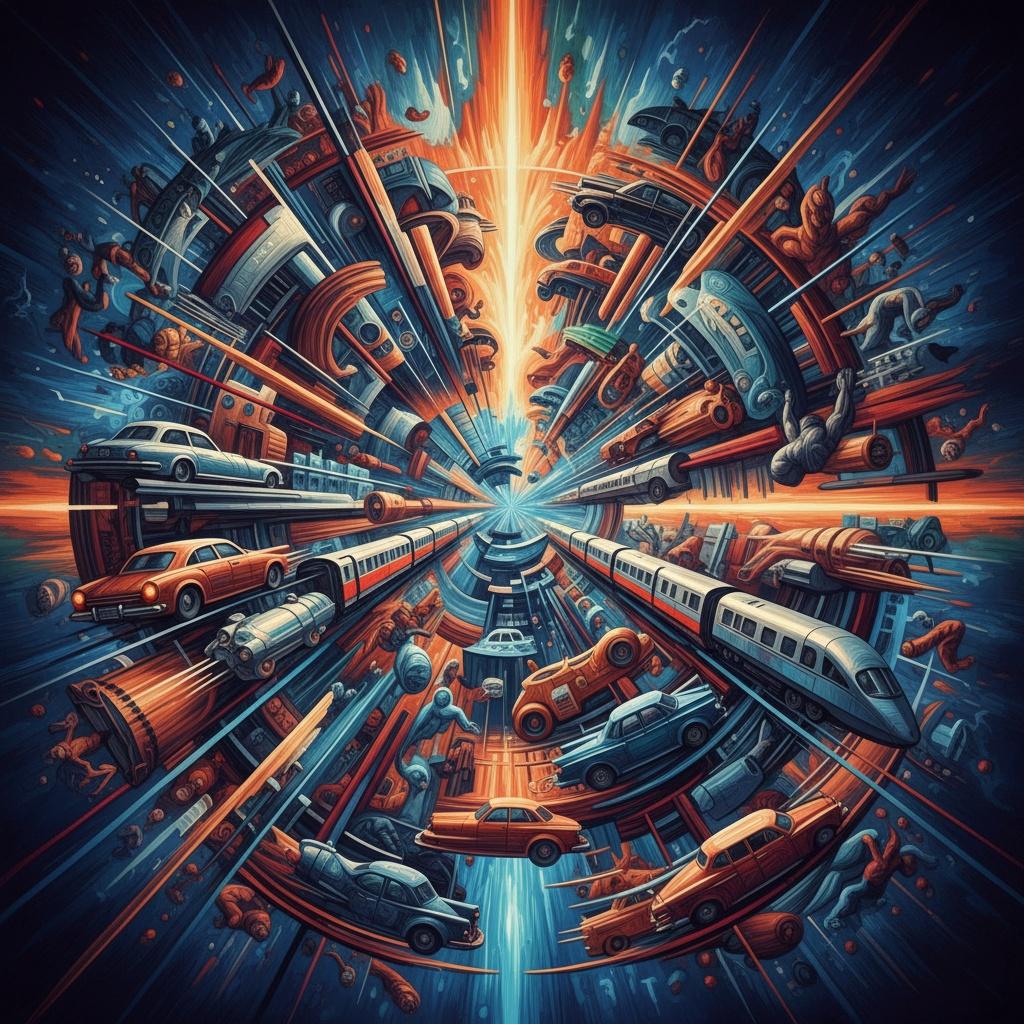
The Manifesto of Modernity: Understanding the Futurist Revolution
At the dawn of the twentieth century, a seismic shift occurred within the European avant-garde, one that sought to shatter the stagnant traditions of the past and embrace the frenetic pulse of a new era. This was Futurism—a movement not merely of aesthetic preference, but of profound ideological rebellion. Born from the fiery manifestos of Italian intellectuals, Futurism rejected the heavy weight of classical antiquity and the nostalgic reverence for Renaissance beauty. Instead, it looked toward the horizon of the industrial age, finding divinity in the roar of an engine, the glare of electric light, and the relentless forward march of progress.
To understand Futurism is to understand a fascination with the unrelenting momentum of life. The movement’s proponents believed that the world had been irrevocably changed by technology, and therefore, art had a duty to reflect this new reality. They sought to capture the "simultaneity" of experience—the way a single moment is composed of overlapping sensations, sounds, and movements. For the discerning collector, studying this period offers more than just an appreciation of form; it provides a window into the very moment when humanity first attempted to visually articulate the dizzying speed of the modern machine age.
This revolution was characterized by a desire to destroy museums and libraries, viewing them as mere cemeteries of thought. By prioritizing the now over the then, the Futurists paved the way for a radical redefinition of what art could achieve, transforming the canvas from a window into a stage for kinetic energy.
The Aesthetics of Velocity: Capturing Speed and Mechanical Energy
The central obsession of the Futurist painter was the concept of velocity. Where previous movements sought to freeze time in a state of eternal stillness, the Futurists aimed to dissolve the boundaries between an object and its environment through the depiction of motion. This was achieved through a sophisticated use of fragmented planes and directional lines that guide the eye across the composition with the same urgency found in a speeding locomotive.
Consider the works of Giacomo Balla, particularly his explorations of the automobile and mechanical movement. In pieces such as Speeding Automobile, the artist does not merely depict a car; he depicts the very essence of its transit. Through the use of repetitive, overlapping shapes and blurred edges, the painting mimics the visual persistence of motion. The subject becomes secondary to the sensation of acceleration itself. This technique creates a visceral experience for the viewer, where the eye is forced to move as rapidly as the subject matter.
This aesthetic of power extends beyond simple movement into the realm of mechanical energy. The Futurists were enamored with the strength of steel, the rhythmic precision of pistons, and the aggressive beauty of urban expansion. By utilizing sharp angles and a dynamic interplay of light and shadow, they translated the raw, industrial force of the early 1900s into a visual language that feels both aggressive and profoundly alive.
Dynamic Compositions: The Interplay of Light, Sound, and Motion
A true Futurist masterpiece is rarely a silent affair; it is a multisensory experience. The movement pioneered the idea that sight, sound, and touch are inextricably linked in the perception of modern life. This concept, often referred to as simultaneity, allowed artists to weave the auditory vibrations of a city street or the tactile sensation of wind into the very fabric of their visual compositions.
In works like Balla’s Abstract Speed + Sound, we see the pinnacle of this sensory integration. Here, the painting transcends literal representation to become a rhythmic arrangement of color and form that evokes the auditory landscape of a bustling metropolis. The use of Cubist-inspired fragmentation allows for the depiction of sound waves and light flickers as physical entities within the frame. It is an attempt to paint the invisible—to make the vibration of a passing train or the cacophony of a crowd visible to the naked eye.
This layering of sensations creates a profound depth that appeals to the sophisticated collector seeking art with intellectual and emotional complexity. The composition becomes a complex web of interpenetrating forces, where the distinction between the solid object and the ephemeral atmosphere begins to vanish. Through this technique, the Futurists achieved a sense of "plastic dynamism," a state where the painting itself seems to vibrate with the latent energy of the universe.
Key Figures of the Avant-Garde: From Balla to Boccioni
The brilliance of Futurism was fueled by a group of highly specialized artists, each bringing a unique perspective to the movement's core tenets. While they shared a common manifesto, their individual approaches varied from the lyrical abstraction of light to the sculptural intensity of physical form.
Giacomo Balla remains one of the most recognizable names, celebrated for his ability to deconstruct motion into its most fundamental, almost scientific, components. His work often leans toward the decorative and the rhythmic, using light and color to trace the paths of movement through space. In contrast, Umberto Boccioni brought a more muscular, structural dimension to the movement. His explorations, such as those seen in the atmospheric depths of Twilight, sought to capture the weight and volume of objects even as they were being transformed by motion.
Other vital contributors included Gino Severini, who bridged the gap between the Parisian Cubist style and Italian Futurism by infusing his scenes of modern nightlife with a sense of fragmented energy, and Carlo Carrà, whose journey from avant-garde dynamism to more grounded, metaphysical compositions reflects the complex evolution of the era. To collect works influenced by these masters is to curate a narrative of artistic transformation and the relentless pursuit of the new.
Collecting Futurism: Preserving the Spirit of the Machine Age
For the contemporary art collector, acquiring pieces that evoke the Futurist spirit is an investment in the history of modernism. While original canvases from this era are rare and highly coveted, the enduring legacy of their techniques continues to inspire new generations of artists and collectors alike. The challenge lies in finding works that truly capture that elusive sense of dynamism—the tactile energy and the unapologetic embrace of progress.
When seeking to integrate these themes into a modern collection, one might look for reproductions that honor the original's technical complexity. A high-quality oil reproduction, with its visible, impasto brushstrokes and layered textures, can breathe life into a space, much like the original movement sought to breathe life into the static art of the past. Whether through large-scale multi-panel sets that mimic the expansive nature of urban landscapes or custom commissions that reimagine modern subjects in a Futurist style, the goal is to preserve the vibrancy and power of this historic era.
Ultimately, collecting Futurism is about more than mere decoration; it is about celebrating the human drive toward innovation. It is an invitation to surround oneself with the energy of movement, ensuring that the revolutionary spirit of the machine age continues to resonate within the halls of modern connoisseurship.
About OriginalUniqueArt.com
OriginalUniqueArt.com is a global leader in fine art reproductions and custom commissions. Since 2004, we have been dedicated to making the world's most impactful masterpieces accessible to collectors worldwide. From meticulously handcrafted oil paintings that capture every tactile brushstroke to museum-quality Giclée prints, our mission is to preserve human creativity through unparalleled craftsmanship. Whether you are looking to transform a personal photograph into a period-correct masterpiece or seeking expert art consultation for your home, OriginalUniqueArt provides a seamless, transparent, and professional experience for the discerning enthusiast.