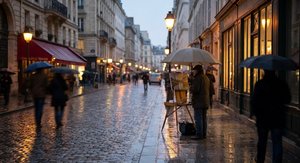
Early Life & Artistic Foundations: From Belfast Roots to Glasgow Training
 Wikipedia: John Lavery
Sir John Lavery (20 March 1856 – 10 January 1941) was an Irish painter best known for his portraits and wartime depictions. == Life and career == John Lavery was born in inner North Belfast, on 20 March 1856 and baptised at St Patrick's Church, Be...
Sir John Lavery’s story is one of remarkable ascent, a journey from the humble beginnings of inner North Belfast to becoming one of the most sought-after portraitists of his generation. Born in 1856, his early life was marked by tragedy; orphaned young, he found himself under the care of relatives who recognized a nascent artistic talent. This initial spark led him to Scotland in 1866, where he began formal training at the Haldane Academy in Glasgow. The city proved pivotal. Unlike the established art centers of London or Paris, Glasgow fostered a unique spirit of Realism and independent thought, qualities that would deeply influence Lavery’s developing style.
His early years were characterized by resourcefulness; to fund his artistic pursuits, he worked as a photographer's assistant, honing his observational skills and understanding of light—a skill that would become a hallmark of his work. A brief but formative period at Heatherley’s School in London was followed by studies at the Académie Julian in Paris during the early 1880s. While exposed to various influences, it was the Realist movement, particularly the works of Jules Bastien-Lepage, that resonated most strongly with Lavery. He absorbed their commitment to depicting everyday life and a naturalistic approach to form, laying the groundwork for his future artistic endeavors.
The Rise of a Portraitist: Queen Victoria, Society, and Lavery’s Breakthrough
 The Croquet Party
Admire 'The Croquet Party' by Sir John Lavery – a captivating Irish portrait from 1897. Explore this elegant society scene & discover a masterpiece of British art.
Upon returning to Glasgow, Lavery quickly established himself within the burgeoning art scene. He became associated with the “Glasgow School,” a loose collective of artists united by their rejection of academic convention and embrace of modern subject matter. However, it was a single commission in 1888 that irrevocably altered his trajectory: painting Queen Victoria’s visit to the Glasgow International Exhibition. This wasn't merely a portrait; it was a grand-scale depiction of an event, capturing the energy and excitement of the exhibition itself. The resulting studies were widely acclaimed, catapulting Lavery into the upper echelons of society.
The commission opened doors to a world of wealthy patrons and influential figures. He moved to London soon after, establishing a studio that quickly became a hub for the elite. Lavery possessed not only technical skill but also an innate ability to connect with his sitters, capturing their likenesses with both accuracy and sensitivity. His portraits weren’t simply representations; they were statements of status, personality, and social standing. This talent ensured a steady stream of commissions from prominent families and individuals, solidifying his reputation as the portraitist *du jour*.
Impressionistic Techniques & the Influence of Paris: Capturing Light and Modernity
While firmly rooted in Realism, Lavery’s style evolved significantly through exposure to Impressionism. His frequent visits to France, particularly the artists' colony at Grez-sur-Loing, were instrumental in this transformation. He began experimenting with looser brushwork, a brighter palette, and an increased focus on capturing fleeting moments of light and atmosphere. This wasn’t a wholesale adoption of Impressionistic principles; rather, Lavery integrated these techniques into his existing framework, creating a unique blend that retained the solidity of form while embracing the vibrancy of color.
His paintings from this period demonstrate a masterful understanding of *plein-air* painting—working outdoors directly from nature. He skillfully rendered the effects of sunlight on water, foliage, and skin tones, imbuing his works with a sense of immediacy and freshness. The influence of James Abbott McNeill Whistler is also evident in Lavery’s subtle color harmonies and refined compositions. He admired Whistler's ability to create atmospheric paintings that prioritized aesthetic beauty over strict realism.
Lavery's Irish Identity & Wartime Commissions: Navigating Nationalism and Duty
Despite his success in London, Lavery never fully severed ties with his Irish roots. Born in Belfast, he maintained a strong connection to the country and its political landscape. This is reflected in several of his works from the early 20th century, including dramatic depictions of key events during the Irish War of Independence and Civil War, such as portraits of John Redmond and Edward Carson. These paintings reveal a complex relationship with Irish nationalism—a sense of empathy tempered by pragmatism.
The outbreak of World War I presented Lavery with new opportunities and challenges. Appointed an official war artist, he was tasked with documenting the conflict on the home front. Ill health prevented him from traveling to the Western Front, but he nonetheless produced a series of powerful paintings depicting naval scenes at Scapa Flow and portraits of military personnel. These works, while not directly portraying the horrors of battle, captured the spirit of duty and resilience that defined the era.
Hazel Lavery: Muse, Collaborator, and a Portrait on Currency
 Mrs. Lavery
Admire 'Mrs. Lavery,' a captivating portrait by Sir John Lavery. Explore his signature style & Irish heritage through this exquisite hand-painted reproduction.
Central to understanding Lavery’s life and work is his relationship with his wife, Hazel Martyn. An American-born artist and heiress, Hazel was not merely a muse but an active collaborator and social force. She possessed striking beauty and poise, becoming the subject of over 400 of her husband's paintings. Their partnership extended beyond the artistic realm; they were renowned hosts, entertaining prominent figures from politics, art, and society.
During the Anglo-Irish Treaty negotiations in 1921, their London home served as a meeting place for Irish negotiators, highlighting their pivotal role in shaping the future of Ireland. Perhaps most famously, Hazel’s portrait graced Irish banknotes from 1928 until the mid-1970s and later appeared as a watermark—a testament to her enduring image and Lavery's artistic legacy. She became a symbol of modern Ireland, embodying elegance, intelligence, and national pride.
A Legacy in Paint: The Enduring Appeal of Sir John Lavery’s Artistry
Sir John Lavery’s career spanned several decades, marked by constant evolution and adaptation. He navigated shifting artistic trends with grace, seamlessly blending Realism, Impressionism, and portraiture to create a unique and recognizable style. His works continue to captivate audiences today, offering glimpses into the lives of prominent figures and the social landscapes of his time.
His legacy extends beyond his paintings; he was a skilled diplomat, a generous patron, and a champion of Irish art. The Ulster Museum in Belfast holds a significant collection of his work, providing a testament to his enduring connection with his homeland. Through OriginalUniqueArt, you can experience the beauty and artistry of Sir John Lavery firsthand, bringing these captivating masterpieces into your own home. Explore our selection of hand-painted reproductions and discover the timeless appeal of this remarkable artist.