The Genesis of Orphism: From Myth to Modernity
Orphism is the name given to a set of religious beliefs and practices originating in the ancient Greek and Hellenistic world, associated with literature ascribed to the mythical poet Orpheus, who descended into the Greek underworld and returned. Orph...
The early 20th century witnessed a seismic shift in artistic perception, a move away from representational accuracy towards the exploration of pure sensation and emotion. Within this revolutionary climate emerged Orphism, a short-lived yet profoundly influential art movement that sought to translate the power of music into visual form. The very name, bestowed by the poet Guillaume Apollinaire, hints at its origins: a fascination with the mythical figure of Orpheus, whose lyre possessed the ability to charm even the gods and lead souls from the underworld. Apollinaire envisioned painting as possessing a similar capacity—to evoke feeling directly, bypassing narrative and embracing abstraction. This wasn’t merely about depicting *what* was seen, but rather *how* it felt to experience the world, a concept deeply rooted in pre-Socratic philosophy that posited underlying harmonies governing existence.
To understand Orphism is to appreciate its lineage. It arose as a direct response to Cubism, yet diverged significantly from its analytical approach. While Cubists fractured objects into geometric components, dissecting form and space, the Orphists sought synthesis—a reassembling of visual elements not to represent reality, but to create a new one altogether. Early explorations often involved depictions of cityscapes, windows, and disks, subjects chosen for their inherent dynamism and potential for fragmentation. However, these were merely starting points; the true ambition lay in liberating color from its descriptive role and allowing it to function as an independent force.
Simultaneism & Color Theory: The Core Principles of Orphic Painting
At the heart of Orphism lies the concept of Simultaneism, developed by Robert Delaunay. This wasn’t simply about juxtaposing colors; it was a rigorous investigation into how they interact and influence one another when placed in close proximity. Delaunay believed that color existed not in isolation but as a dynamic interplay of vibrations, creating a visual resonance akin to musical chords. He drew inspiration from scientific theories of light and perception, particularly the work of Michel Eugène Chevreul on simultaneous contrast—the phenomenon where colors appear different depending on their surrounding hues. This understanding informed his compositions, which aimed to create a sense of luminosity and movement through carefully calibrated color relationships.
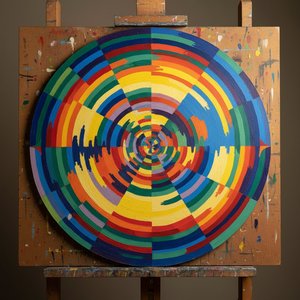
The Orphists weren’t simply applying pleasing palettes; they were constructing visual systems designed to stimulate the eye and evoke emotional responses. Warm colors advanced, cool colors receded, creating depth and rhythm within the canvas. Circular forms became a favored motif, symbolizing energy, continuity, and the cyclical nature of perception. The goal was to move beyond objective representation towards a purely subjective experience—a ‘visual symphony’ that resonated with the viewer on an intuitive level. This emphasis on sensation paved the way for later abstract movements like Color Field Painting and Op Art.
Robert & Sonia Delaunay: Pioneers of an Abstract Revolution
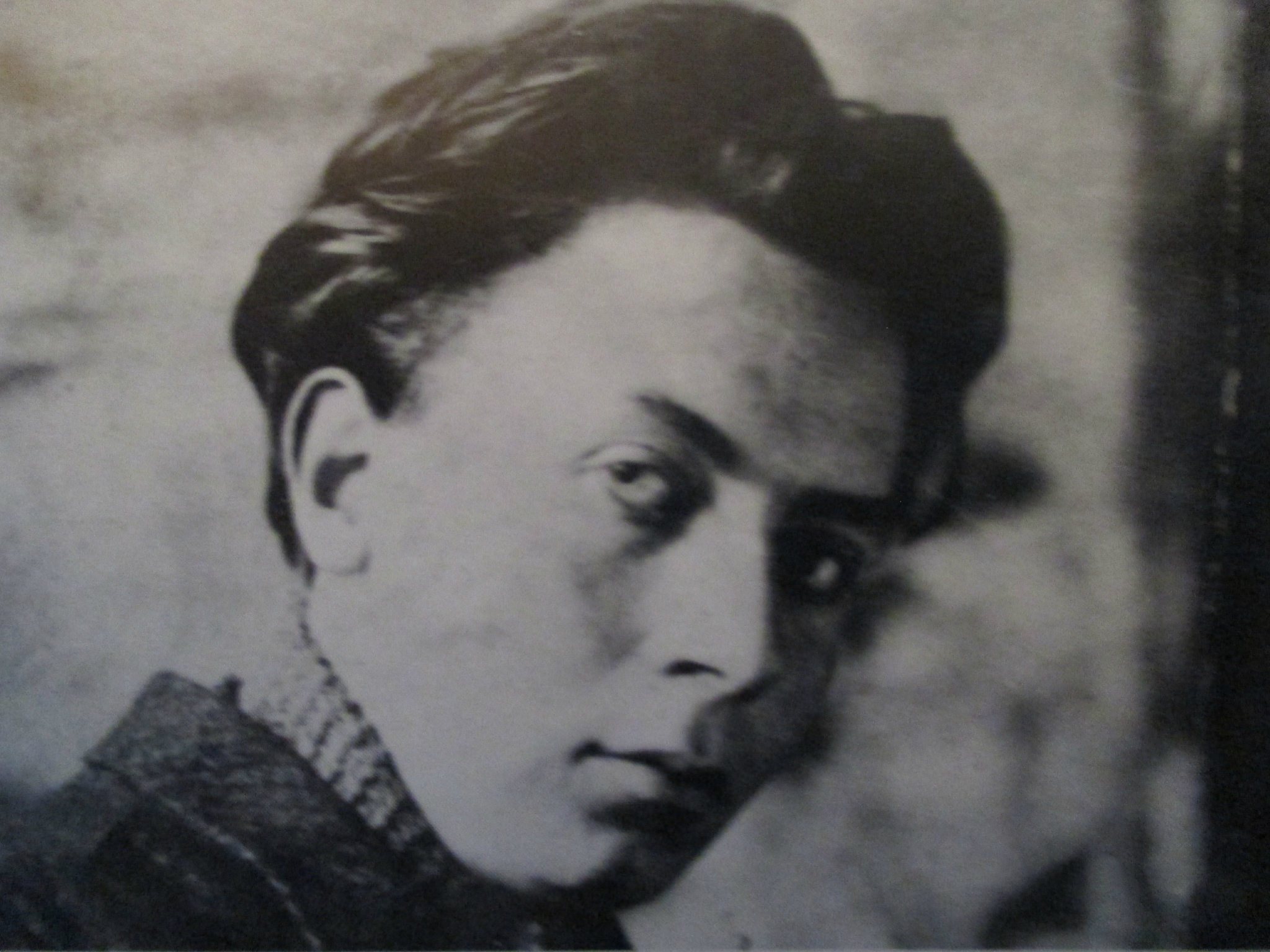 Wikipedia: Robert Delaunay
Robert Delaunay (French: [ʁɔbɛʁ dəlonɛ]; 12 April 1885 – 25 October 1941) was a French artist of the School of Paris movement; who, with his wife Sonia Delaunay and others, co-founded the Orphism art movement, noted for its use of strong colours and ...
While Apollinaire provided the theoretical framework, it was Robert and Sonia Delaunay who truly embodied the spirit of Orphism. Robert, often considered the movement’s central figure, relentlessly pursued his theories of Simultaneism, creating a series of vibrant paintings that explored the interplay of color and form in increasingly abstract compositions. His “Windows” series, for example, isn't about depicting actual windows but rather capturing the sensation of light filtering through glass—a fragmented kaleidoscope of hues and shapes. Similarly, his “Disks” series pushed abstraction further, reducing forms to pure circular elements that seemed to vibrate with energy.
Sonia Delaunay was no less pivotal. She extended Orphist principles beyond painting, applying them to textiles, fashion, interior design, and even theater sets. Her work demonstrated the versatility of the movement’s aesthetic, proving that abstraction wasn't confined to the easel but could permeate everyday life. She collaborated extensively with Robert, creating a holistic artistic vision where color and form unified various aspects of existence. Together, they established a vibrant studio environment that attracted other artists and intellectuals, fostering a spirit of experimentation and innovation.
Beyond Cubism: Distinguishing Orphism’s Unique Aesthetic
Though born from the fertile ground of Cubism, Orphism quickly distinguished itself through its distinct aesthetic priorities. Where Cubism often employed muted palettes and focused on dissecting form, Orphism embraced a riot of color and prioritized sensation over representation. While Cubist paintings frequently retained recognizable elements—a guitar, a still life—Orphic compositions increasingly abandoned figuration altogether, focusing instead on the interplay of abstract shapes and hues.
The key difference lies in intention: Cubism sought to analyze reality; Orphism aimed to transcend it. Cubist artists often deconstructed objects to reveal their underlying structure, while Orphists used fragmentation as a means of liberating color and creating new visual harmonies. This distinction is crucial for understanding the movement’s unique contribution to modern art—a shift from depicting *what* things are to exploring *how* they feel. The emphasis on rhythm, luminosity, and emotional resonance set Orphism apart as a truly independent artistic force.
The Brief Flame and Lasting Legacy of Orphism
Despite its visionary approach, Orphism remained a relatively short-lived movement, flourishing primarily between 1912 and 1914. The outbreak of World War I disrupted the artistic community in Paris, scattering its practitioners and halting momentum. Many artists, including Robert Delaunay, pursued other styles or focused on more politically engaged work. However, the impact of Orphism far outlived its brief existence.
Its influence can be seen in subsequent abstract movements, particularly Color Field Painting, which embraced large expanses of color to evoke emotional responses, and Op Art, which explored optical illusions and visual vibrations. Orphism’s emphasis on sensation and perception continues to resonate with contemporary artists, inspiring new explorations of color, form, and abstraction. The movement's legacy lies not in a specific style but rather in its radical questioning of artistic conventions—a challenge to represent reality directly and embrace the power of pure visual experience.
Orphism in the Home: Bringing a Symphony of Color to Your Space
The vibrant energy and dynamic compositions of Orphic paintings translate beautifully into modern interiors. Incorporating artworks inspired by Robert and Sonia Delaunay can infuse a space with a sense of optimism, movement, and intellectual sophistication. Consider pieces featuring bold color palettes—combinations of reds, yellows, blues, and greens—to create focal points and stimulate the eye.
Abstract compositions with circular forms and interlocking patterns evoke a sense of rhythm and harmony, making them ideal for living rooms or dining areas. Don’t be afraid to experiment with scale; larger canvases can create a dramatic impact, while smaller works add subtle pops of color and visual interest. At OriginalUniqueArt.com, you can explore a curated selection of reproductions inspired by the Orphist movement, allowing you to bring this ‘symphony of color’ into your own home. Whether you choose a classic Delaunay masterpiece or a contemporary interpretation, these artworks are sure to spark conversation and elevate your living space.