The Classical Turn: Poussin’s Early Influences & Artistic Formation
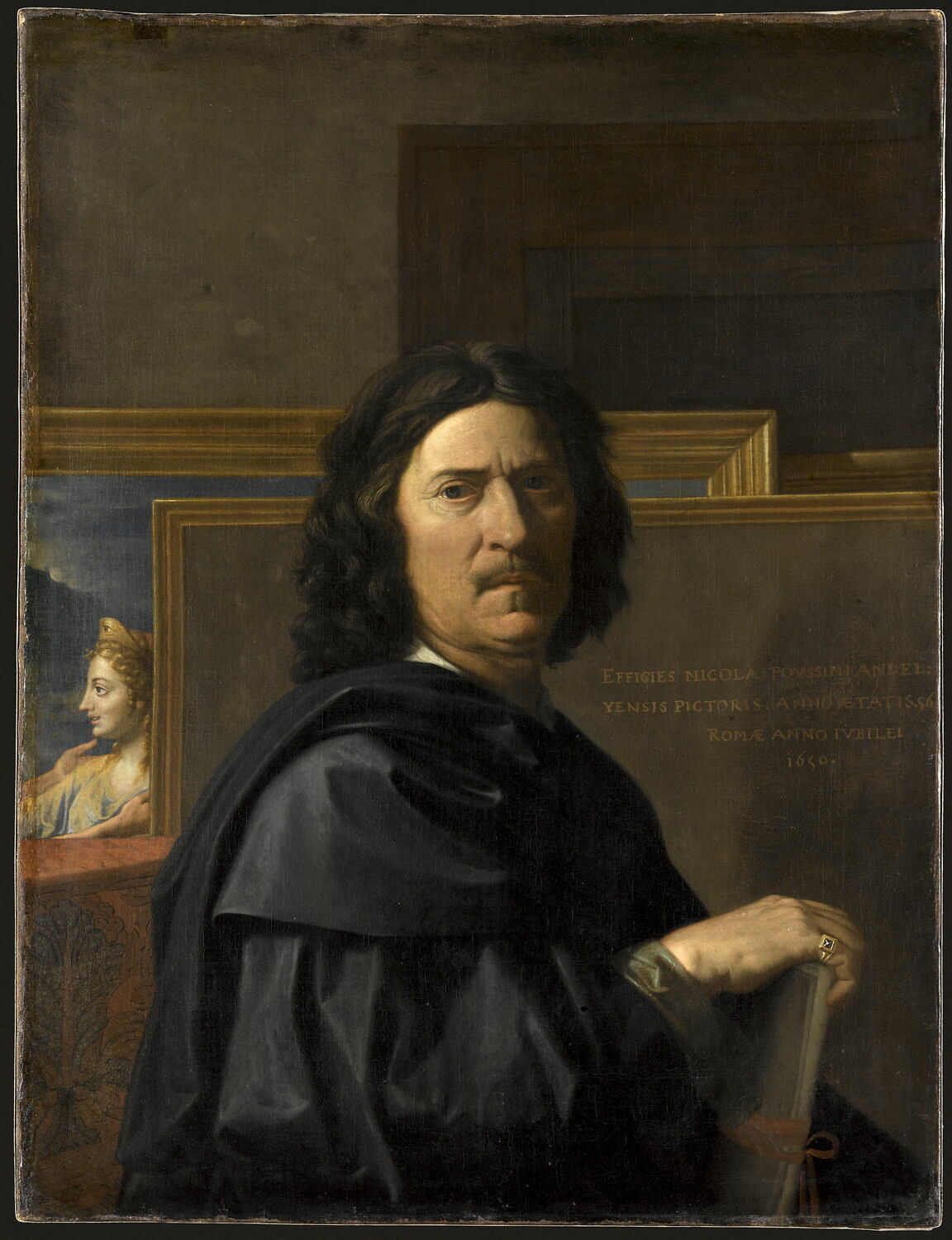 Wikipedia: Nicolas Poussin
Nicolas Poussin (UK: , US: , French: [nikɔla pusɛ̃]; June 1594 – 19 November 1665) was a French painter who was a leading painter of the classical French Baroque style, although he spent most of his working life in Rome. Most of his works were on rel...
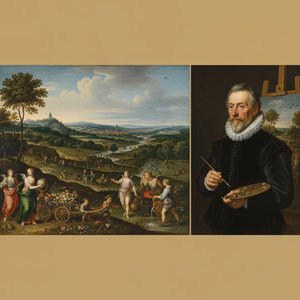
Nicolas Poussin, a name synonymous with order, clarity, and intellectual rigor, occupies a unique position within the vibrant tapestry of 17th-century French painting. Though his career unfolded largely in Rome – a deliberate exile from his native Normandy – it was a profound engagement with classical antiquity that defined his artistic vision. Born in 1594 near Les Andelys, Poussin’s early life offered little indication of the monumental impact he would have on the development of French art. Initial training under minor masters proved unsatisfying; his restless spirit and burgeoning ambition craved a deeper understanding of form and composition than provincial workshops could provide. The royal collections in Paris, brimming with Italian Renaissance works, ignited this yearning. These glimpses into the world of Raphael, Titian, and other masters served as a catalyst, propelling him towards Rome in 1624 – a journey that would irrevocably shape his aesthetic trajectory.
Early sketches reveal a fascination with storytelling and expressive figures, influenced by artists like Quentin Varin. However, Poussin quickly recognized the limitations of purely anecdotal painting. He sought something more enduring—a visual language capable of conveying universal truths and philosophical ideals. This quest led him to immerse himself in the study of ancient sculpture, architecture, and literature, absorbing the principles of balance, harmony, and proportion that underpinned classical art. His early Roman works, though modest in scale, already hint at the distinctive clarity and controlled energy that would become hallmarks of his mature style.
Rome as Crucible: Developing a Style Rooted in Antiquity
The Rome Poussin encountered was undergoing a dramatic rebirth, fueled by ambitious building campaigns and a renewed interest in classical ideals. This environment proved fertile ground for an artist dedicated to reviving the spirit of antiquity. Unlike many of his contemporaries who embraced the theatrical dynamism of the Italian Baroque – exemplified by artists like Caravaggio and Bernini – Poussin charted a different course. He gravitated towards a circle of like-minded scholars and patrons, including Cardinal Francesco Barberini and Cassiano dal Pozzo, who shared his passion for classical learning. These relationships provided not only financial support but also intellectual stimulation, encouraging him to delve deeper into the philosophical underpinnings of ancient art.
Poussin’s early Roman commissions – religious and mythological scenes painted for a discerning clientele – allowed him to refine his individual style. Works like *The Death of Germanicus* and *The Massacre of the Innocents* demonstrate a growing mastery of composition, with figures arranged in carefully balanced groups and imbued with a sense of restrained emotion. He began to prioritize line over color, favoring precise draftsmanship and sculptural forms that evoked the grandeur of ancient statuary. This deliberate rejection of Baroque exuberance signaled his commitment to a new aesthetic—one rooted in reason, order, and intellectual contemplation.
Order and Reason: Decoding the Compositional Logic of Poussin’s Paintings
Central to understanding Poussin's art is recognizing its inherent compositional logic. His paintings are not merely depictions of scenes; they are carefully constructed visual arguments—statements about human nature, morality, and the cosmos. He employed a rigorous system of geometric organization, often utilizing underlying structures based on triangles, squares, and circles to create a sense of balance and harmony. This emphasis on order reflects his belief in the inherent rationality of the universe.
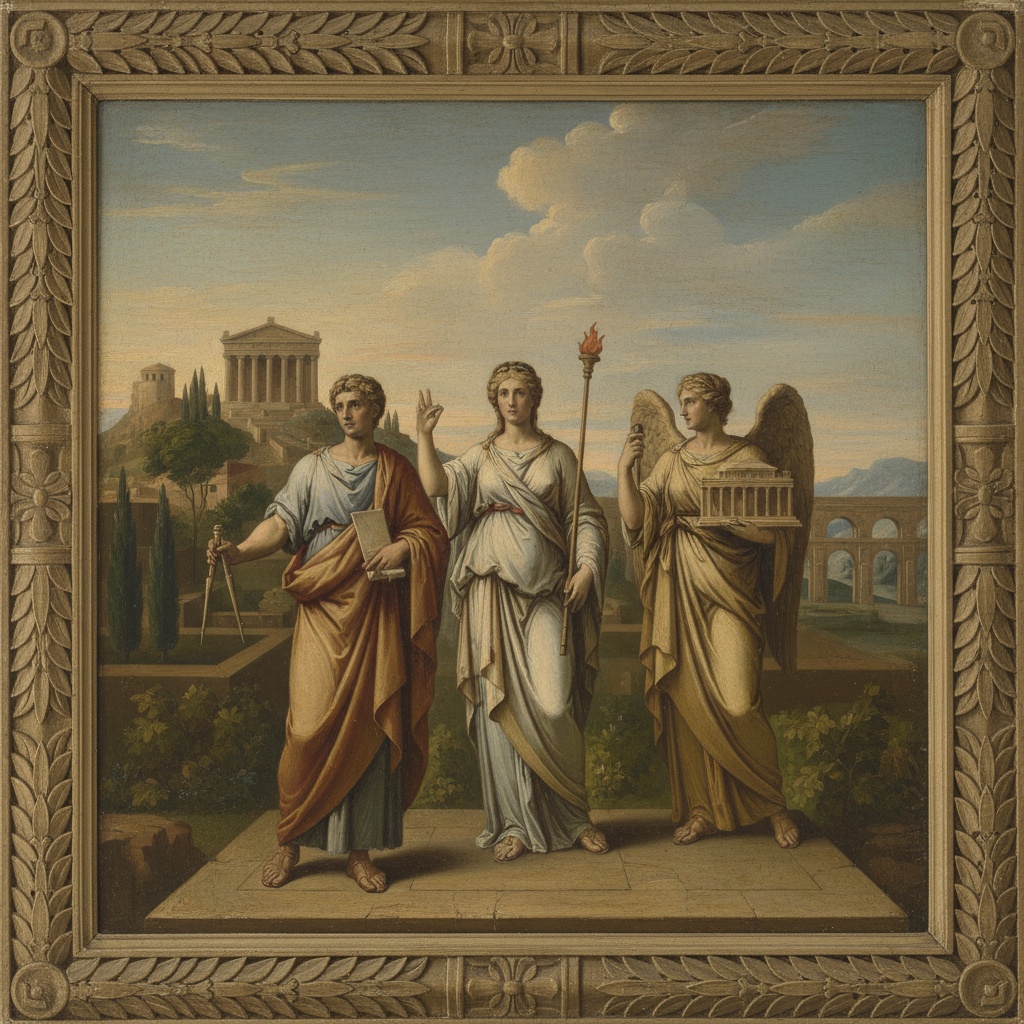
The principle of *disegno* – drawing as the foundation of all art – was paramount for Poussin. He meticulously planned each composition, creating preliminary sketches that reveal a deep understanding of anatomy, perspective, and spatial relationships. Figures are not arranged randomly but rather positioned to convey specific meanings and emotional states. The use of classical motifs—columns, arches, and ruins—further reinforces the sense of order and intellectual gravitas. Even his color palette is restrained, favoring muted tones and subtle gradations that enhance the clarity of form.
Allegory and Meaning: Unveiling Hidden Narratives in Poussin’s Works
Poussin was a master of allegory—the art of conveying abstract ideas through symbolic imagery. His paintings are often laden with hidden meanings, requiring careful interpretation to fully appreciate their depth. He drew upon classical mythology, history, and philosophy to create complex narratives that explored themes of virtue, vice, fate, and the human condition. *Et in Arcadia ego* (1637-1638), perhaps his most famous work, exemplifies this allegorical approach. The seemingly simple scene of shepherds contemplating a tomb is, in fact, a meditation on mortality and the inevitability of death.
The Seven Sacraments series, commissioned by Cardinal Richelieu, represents another example of Poussin’s allegorical prowess. Each painting depicts a sacrament—Baptism, Confirmation, Eucharist, etc.—not as a literal event but as a symbolic representation of spiritual grace and divine order. He imbued these scenes with layers of meaning, drawing upon theological texts and classical sources to create works that were both visually stunning and intellectually stimulating.
Landscape as Moral Stage: The Evolution of Poussin’s Later Style
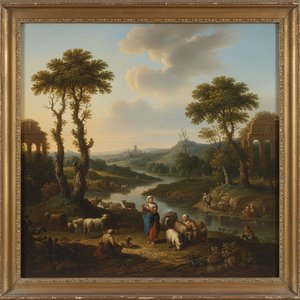
While initially focused on religious and mythological subjects, Poussin increasingly turned his attention to landscape painting in his later years. However, these landscapes are not merely depictions of nature; they serve as moral stages—settings for exploring themes of human solitude, contemplation, and the relationship between humanity and the natural world. He developed a distinctive style characterized by serene compositions, idealized forms, and a sense of timelessness.
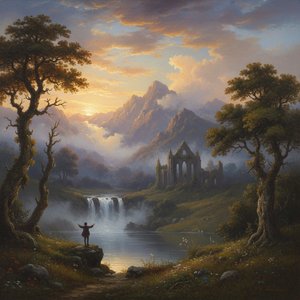
Works like *Landscape with Saint John on Patmos* demonstrate this evolution. The figure of Saint John, writing the Book of Revelation, is dwarfed by the vastness of the landscape, emphasizing his insignificance in the face of cosmic forces. Poussin’s later landscapes often feature ruins—reminders of past civilizations and the transience of human achievement. These elements contribute to a sense of melancholy and introspection, inviting viewers to contemplate their own mortality and place in the universe.
Poussin’s Enduring Legacy: Influence on Subsequent Generations of Artists
Despite periods of relative obscurity, Nicolas Poussin remained a major source of inspiration for artists throughout subsequent centuries. His emphasis on order, clarity, and intellectual rigor profoundly influenced the development of Neoclassicism in the 18th century. Jacques-Louis David, Jean-Auguste-Dominique Ingres, and Paul Cézanne all acknowledged their debt to Poussin’s art.
His legacy extends beyond stylistic imitation. Poussin’s belief in the power of art to convey universal truths and philosophical ideals continues to resonate with artists today. His paintings serve as a reminder that art can be more than just beautiful—it can be a profound expression of human thought, emotion, and spiritual aspiration. Explore the timeless masterpieces of Nicolas Poussin at OriginalUniqueArt.com, where exceptional reproductions bring his vision to life.