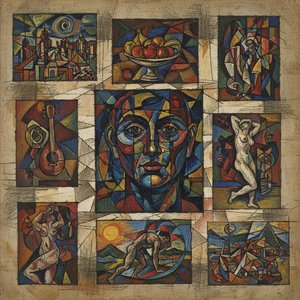
Early Life & Artistic Beginnings: Kraków to Montmartre
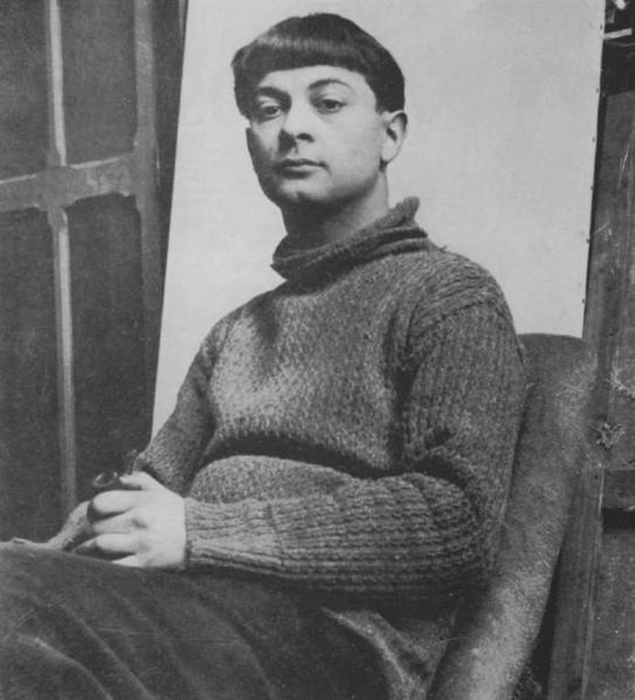 Wikipedia: Moïse Kisling
Moïse Kisling (born Mojżesz Kisling; 22 January 1891 – 29 April 1953) was a Polish-born French painter. Born in Kraków, then part of Austria-Hungary, to Jewish parents, Kisling studied at the Academy of Fine Arts. He left for Paris in 1910 at the age...
Moïse Kisling’s story is one of displacement, artistic awakening, and a relentless pursuit of self-expression. Born Mojżesz Kisling in 1891 in Kraków, then part of Austria-Hungary, his early life was steeped in the traditions of a vibrant Jewish community. Though initially destined for a more conventional path – his father was a tailor – a burgeoning passion for art quickly took hold. He enrolled at the Academy of Fine Arts in Kraków, benefiting from the guidance of Jozef Pankiewicz, who recognized his talent and wisely advised him to seek artistic opportunities in Paris, then the undisputed heart of the modern art world. In 1910, barely nineteen years old, Kisling embarked on a journey that would irrevocably shape his life and career.
Paris at the turn of the century was a crucible of innovation, teeming with new ideas and artistic movements. Montmartre, in particular, pulsed with energy, attracting artists from across Europe and beyond. Kisling initially found himself navigating a challenging landscape, relying on modest support from his mother and later, a generous patron discovered through Yiddish writer Shalom Asch. He quickly immersed himself in the bohemian atmosphere, frequenting studios and cafes, absorbing the influences that would define his unique artistic voice. This early period was one of exploration and experimentation, laying the foundation for the distinctive style he would soon develop.
A Central Figure in the School of Paris: Kisling’s Circle of Friends
 Wikipedia: School of Paris
The School of Paris (French: École de Paris, pronounced [ekɔl də paʁi]) refers to the French and émigré artists who worked in Paris in the first half of the 20th century. The School of Paris was not a single art movement or institution, but refers to...
Kisling didn't exist in isolation; he became an integral part of a remarkable constellation of artists known as the *School of Paris*. This wasn’t a formal institution, but rather a loose community of émigré painters who converged on the city, drawn by its creative magnetism. He forged close professional and personal relationships with some of the most influential figures of the era, notably Amedeo Modigliani and Jules Pascin. These friendships were not merely social; they were characterized by mutual support, artistic exchange, and a shared sense of alienation and ambition.
The studio Kisling maintained on Rue Joseph-Bara became a legendary gathering place, hosting lively receptions that attracted the avant-garde elite. Artists like Picasso, Juan Gris, and Max Jacob frequented his space, engaging in spirited debates about art, philosophy, and life. Modigliani, in particular, played a pivotal role in Kisling’s development, painting a striking portrait of him in 1916 – a testament to their close bond and artistic admiration. This period was marked by intense creativity and a willingness to challenge conventional norms, shaping the direction of modern art.
The Poignant Portraits of Moïse Kisling: Exploring His Signature Style
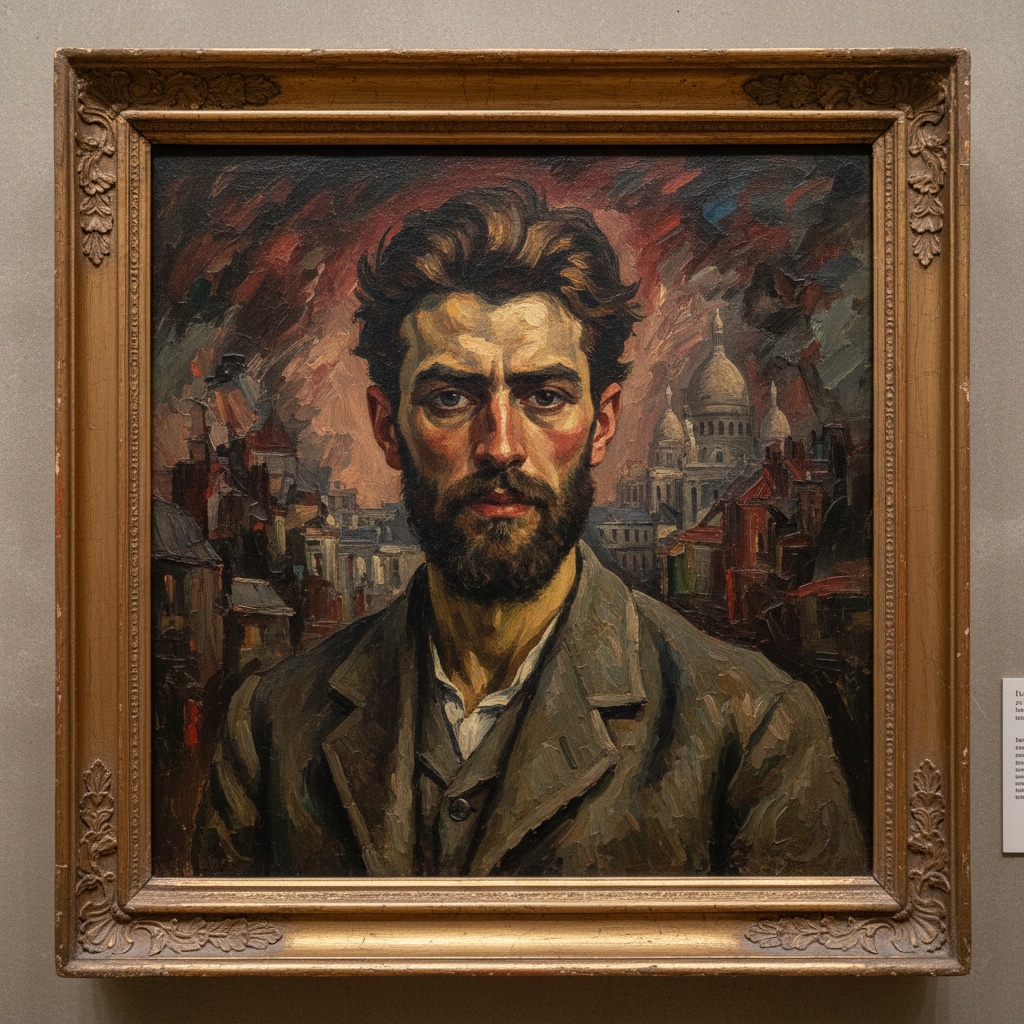
 untitled (9511)
Explore Moïse Kisling’s ‘untitled (9511)’ – a poignant oil portrait of a young boy. Discover its muted tones, textured style & introspective mood. #art #portrait #kisling
Kisling’s oeuvre is perhaps best known for its expressive portraits, nudes, and landscapes. While he explored various subjects throughout his career, it was his depictions of the human form that truly captured the attention of critics and collectors. His style is immediately recognizable – characterized by bold, simplified forms, often with elongated limbs and wide-set eyes. He employed a textured application of oil paint, creating surfaces that are both tactile and emotionally resonant.
There’s a distinct melancholy that pervades many of his portraits, hinting at the sitter's inner life and vulnerability. He wasn’t interested in mere physical likeness; rather, he sought to capture the essence of his subjects, their psychological state, and their place in the world. Untitled (9511), a poignant oil portrait of a young boy, exemplifies this approach – its muted tones and introspective mood drawing the viewer into a quiet contemplation. His work shares affinities with both Modigliani’s elegant distortions and Chagall’s lyrical dreamscapes, yet retains a unique sensibility all his own.
Navigating War and Displacement: Resilience and Continued Creativity
The outbreak of World War I dramatically altered Kisling's trajectory. He volunteered for service in the French Foreign Legion, experiencing firsthand the horrors of trench warfare and sustaining serious injuries. This experience undoubtedly left a lasting mark on his psyche, informing the emotional depth of his later work. After recovering from his wounds, he continued to paint, finding solace and purpose in artistic creation.
The interwar years saw Kisling achieve increasing recognition, with successful exhibitions and a growing circle of patrons. However, the looming threat of World War II cast a long shadow over his life. As a Jew living in France, he faced mounting persecution and discrimination. In 1940, despite being nearly fifty years old, he attempted to rejoin the army but ultimately fled to the United States, fearing for his safety under Nazi occupation. He continued to paint during his exile, exhibiting in New York City and Washington, demonstrating remarkable resilience in the face of adversity.
Kisling's Legacy & Rediscovery: A Lasting Impact on Modern Art
Following the defeat of Germany, Kisling returned to France, settling in Sanary-sur-Mer. He continued to paint until his death in 1953, leaving behind a substantial body of work that reflects a lifetime dedicated to artistic expression. While he enjoyed periods of acclaim during his lifetime, his contributions were somewhat overshadowed by the more celebrated figures of the School of Paris.
However, in recent years, there has been a growing appreciation for Kisling’s unique vision and lasting impact on modern art. His portraits, nudes, and landscapes are now recognized as powerful statements of human emotion and vulnerability. His story – one of displacement, resilience, and artistic dedication – resonates deeply with contemporary audiences. Museums around the world, including the Harvard Art Museums and the British Museum, hold significant collections of his paintings, ensuring that his work will continue to inspire generations to come. Kisling’s art offers a poignant glimpse into the complexities of the human condition, reminding us of the enduring power of creativity in the face of adversity.