Early Life and Artistic Beginnings: A Foundation in Portraiture
 Wikipedia: Miner Kilbourne Kellogg
Miner Kilbourne Kellogg (1814-1889) was an American painter noted for his Orientalist work, an art historian and art collector. == Life and career == Kellogg was born in Manlius Square, New York in 1814. He painted primarily portraits, figures and ...
Miner Kilbourne Kellogg’s artistic journey, though ultimately celebrated for his evocative landscapes imbued with a distinctly atmospheric quality, began within the more conventional realm of portraiture. Born in Manlius Square, New York, in 1814, Kellogg initially honed his skills capturing the likenesses of individuals – a practice that demanded meticulous observation and a keen understanding of form and light. This early dedication to realistic representation would prove foundational, providing the technical bedrock upon which he later built his more impressionistic and emotionally resonant style. While details of his formal training remain somewhat elusive, it’s clear Kellogg possessed an innate talent for capturing not merely physical appearance but also a sense of character within his subjects. These initial works, though less known today, reveal a developing artist grappling with the fundamentals of composition, color theory, and the subtle nuances of human expression – skills that would later be skillfully transferred to his depictions of place.
The Allure of the Orient: Kellogg's Travels and Orientalist Influences
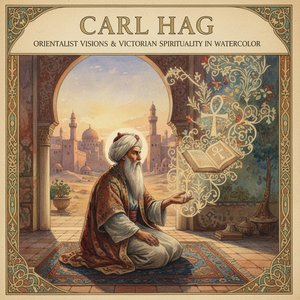
Kellogg’s career took an intriguing turn when he entered the service of the United States Department of State as a courier, a role that propelled him into Europe. This period proved transformative, exposing him to diverse cultures and artistic traditions. However, it was his subsequent travels – including a stint as a land surveyor in Texas – and a broader fascination with the Middle East that truly ignited his distinctive artistic vision. He became captivated by the exotic allure of “Orientalist” subjects—scenes from North Africa, the Levant, and beyond. This wasn’t merely an aesthetic preference; it reflected a wider 19th-century Western fascination with cultures perceived as both mysterious and romantic. Kellogg's paintings from this period aren’t simply depictions of faraway lands but rather interpretations filtered through his own sensibilities, often imbued with a sense of quiet contemplation and a delicate handling of light that foreshadowed his later Tonalist works. His personal collection, boasting pieces attributed to masters like Leonardo da Vinci and Raphael, speaks volumes about his discerning eye and deep engagement with art history.
Embracing Tonalism: Atmosphere, Light, and the Pursuit of Mood
Tonalism was an artistic style that emerged in the 1880s when American artists began to paint landscape forms with an overall tone of colored atmosphere or mist. Between 1880 and 1915, dark, neutral hues such as gray, brown or blue, often dominated c...
By the 1880s, Kellogg’s style had begun to coalesce into what we now recognize as American Tonalism. This artistic movement, characterized by its emphasis on atmosphere, muted colors, and a subjective emotional response to landscape, resonated deeply with artists seeking an alternative to the strict realism of earlier traditions. Kellogg wasn't merely *depicting* landscapes; he was striving to capture their *essence*, the feeling they evoked – a sense of tranquility, melancholy, or spiritual connection. This pursuit led him to prioritize tonal values over precise detail, employing soft brushwork and subtle gradations of color to create an overall impression of mist, haze, and diffused light. Like his contemporaries George Inness and James McNeill Whistler, Kellogg understood that the power of a landscape lay not in its literal representation but in its ability to stir the emotions of the viewer. He sought to convey a sense of place through feeling rather than precise documentation.
Techniques of Atmospheric Perspective in Kellogg’s Landscapes
Aerial perspective, or atmospheric perspective, is the effect the atmosphere has on the appearance of an object as viewed from a distance. As the distance between an object and a viewer increases, the contrast between the object and its background de...
Central to Kellogg's Tonalist aesthetic was his masterful use of aerial perspective, also known as atmospheric perspective. This technique, understood since antiquity – evidenced even in Pompeian frescoes – involves rendering distant objects with less contrast and saturation than those closer to the viewer. Colors shift towards a bluish hue, creating a sense of depth and recession. In Kellogg’s watercolors, this is particularly striking. His coastal scenes, like “Zembra,” demonstrate how he layered washes of color to suggest distance, softening edges and blurring details to create an ethereal quality. Similarly, in works such as “Crusaders Gate, Nicea” and “Tower of Hypacus, Jerusalem”, the ruins are enveloped in a gentle haze, evoking a sense of antiquity and decay. This wasn’t simply about replicating visual reality; it was about creating a mood – a feeling of timelessness and quiet contemplation. The loose lines and delicate brushwork further contribute to this effect, allowing the viewer's imagination to fill in the details and complete the scene.
Kellogg as Collector & Historian: A Broader Engagement with Art
Miner Kilbourne Kellogg was more than just a painter; he was a dedicated art historian and avid collector. His personal archives, now held at the University of Texas at Austin and the Indiana Historical Society, reveal a man deeply engaged with the broader artistic landscape of his time. Correspondence within these papers illuminates his relationships with prominent artists and critics, offering insights into the debates and trends shaping 19th-century American art. His collection, including works attributed to Renaissance masters, demonstrates a sophisticated understanding of art history and a discerning eye for quality. Furthermore, Kellogg actively promoted the work of other artists – notably Hiram Powers’ sculpture “The Greek Slave” – showcasing his commitment to fostering artistic appreciation within the United States. He even delivered lectures on fine arts, further solidifying his role as an intellectual figure within the art world.
Legacy and Rediscovery: The Enduring Appeal of a 19th-Century Visionary
Though perhaps not as widely recognized as some of his Tonalist contemporaries during his lifetime, Miner Kilbourne Kellogg’s work continues to resonate with audiences today. His paintings offer a glimpse into the artistic sensibilities of the late 19th century – a period marked by a growing appreciation for mood, atmosphere, and subjective experience. The delicate beauty of his watercolors, combined with his evident technical skill and intellectual curiosity, make him a compelling figure in American art history. His landscapes aren’t simply representations of place; they are invitations to contemplation, offering viewers a moment of quiet respite from the bustle of modern life. Rediscovery of Kellogg's work continues, with increasing appreciation for his unique contribution to the Tonalist movement and his broader engagement with art as both creator and historian. Explore more about Miner Kilbourne Kellogg’s captivating works at OriginalUniqueArt.com.