Early Life & Artistic Foundations: From Cartoons to Expressionist Beginnings
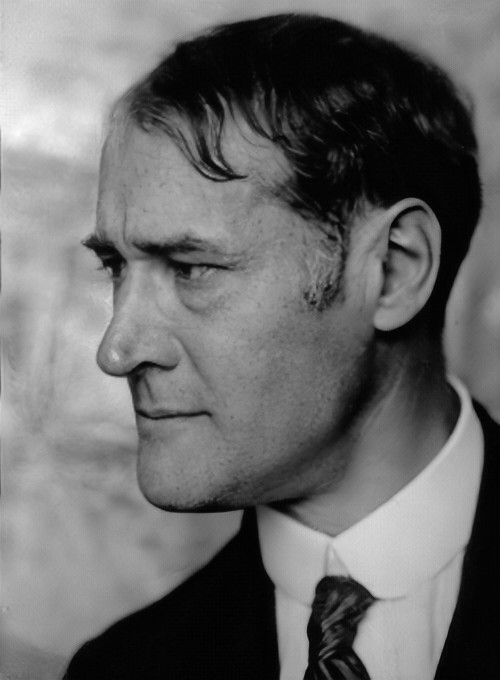 Wikipedia: Lyonel Feininger
Lyonel Charles Adrian Feininger (; July 17, 1871 – January 13, 1956) was a German-American painter, and a leading exponent of Expressionism. He also worked as a caricaturist and comic strip artist. He was born and grew up in New York City. In 1887 he...
Lyonel Feininger’s journey to becoming a celebrated Expressionist painter was anything but conventional. Born in New York City in 1871, his early life seemed destined for a different path – that of a cartoonist. His parents, both musically inclined—his father a violinist and composer, his mother a singer—instilled in him an appreciation for rhythm and structure, qualities that would later profoundly influence his artistic vision. He arrived in Germany at the age of sixteen, initially to study music, but quickly found himself drawn to the visual arts, enrolling in art schools in Hamburg and Berlin. For two decades, Feininger honed his skills as a caricaturist, contributing witty illustrations to prominent magazines like Harper’s Round Table and Lustige Blätter. This period wasn't merely a detour; it was a crucial apprenticeship, developing his keen observational skills, mastery of line, and an ability to distill complex ideas into concise visual forms. However, beneath the surface of these commercial endeavors lay a growing desire for more profound artistic expression. The rigid constraints of cartooning eventually gave way to a yearning for a style that could convey not just observation, but emotion – a shift that would lead him towards the burgeoning Expressionist movement.
The Architectural Vision: Buildings as Spiritual Symbols in Feininger’s Work
 Nacht
NachtExperience 'Nacht' by Lyonel Feininger – an evocative Expressionist cityscape bathed in moonlight. Explore the artist’s unique blend of Cubism & architectural themes.
Around 1907, a transformative change began to unfold in Feininger's art. He started focusing on architecture—specifically, churches, cathedrals, and the humble buildings of rural Germany. These weren’t simply depictions of structures; they were imbued with a deeply personal symbolism. Feininger saw buildings as metaphors for human aspiration, spiritual longing, and the passage of time. His architectural forms are often rendered in sharp angles and vibrant colors, appearing almost crystalline, as if constructed from light itself. This unique aesthetic wasn’t born from mere observation; it stemmed from his synesthetic experiences – a blending of senses where he perceived color alongside musical tones. He described “hearing” colors, which translated into the prismatic broken forms that characterize his paintings. Nacht, for example, exemplifies this perfectly—a cityscape bathed in moonlight, its buildings radiating an ethereal glow, simultaneously solid and translucent. The structures aren’t merely *in* space; they seem to emanate from within it, suggesting a hidden energy or spiritual force.
Cubism's Influence and the Development of a Unique Style
While deeply rooted in Expressionism, Feininger wasn’t immune to the revolutionary currents sweeping through the art world. The influence of Cubism is subtly present in his work, particularly in the fragmentation of forms and the multiple perspectives he employs. However, he never fully embraced the analytical rigor of Picasso or Braque. Instead, he synthesized Cubist principles with his own architectural vision and emotional intensity. His paintings aren’t about dissecting reality; they're about reconstructing it through a subjective lens. The overlapping planes and translucent colors create a sense of depth and movement, drawing the viewer into a dreamlike space. Feininger’s unique approach involved layering forms and using bold color palettes to convey not just what he saw, but how he *felt* about what he saw. This fusion of Cubist techniques with Expressionist emotion resulted in a style that was distinctly his own—a harmonious blend of intellectual analysis and spiritual yearning.
Feininger at the Bauhaus: Teaching, Innovation, and the Search for Gesamtkunstwerk
The Staatliches Bauhaus (German: [ˈʃtaːtlɪçəs ˈbaʊˌhaʊs] ), commonly known as the Bauhaus (German for 'building house'), was a German art school operational from 1919 to 1933 that combined crafts and the fine arts. The school became famous for its ap...
In 1919, Walter Gropius invited Lyonel Feininger to join the faculty of the newly founded Bauhaus school in Weimar. This marked a pivotal moment in his career. The Bauhaus, with its radical vision of uniting art, craft, and technology, provided an ideal environment for Feininger’s experimentation. He was appointed master artist in charge of the printmaking workshop, where he shared his expertise in woodcuts and drawing. His teaching philosophy emphasized the importance of individual expression within a framework of functional design. Feininger believed in the power of art to transform everyday life, and he encouraged his students to explore new materials and techniques. The Bauhaus’s pursuit of Gesamtkunstwerk – a “total work of art” encompassing all artistic disciplines—resonated deeply with Feininger's own holistic approach to creativity. He designed the iconic cover for the Bauhaus manifesto, a woodcut cathedral that perfectly encapsulated the school’s ideals.
Exile & Late Works: American Landscapes and Continued Exploration of Form
The rise of Nazism in Germany forced Feininger into exile in 1933. He returned to his native United States, settling in New York City. This period marked a shift in subject matter—he began painting the landscapes of Long Island and rural America. However, even in these new surroundings, his architectural sensibility remained prominent. He depicted barns, churches, and houses with the same crystalline forms and vibrant colors that characterized his earlier work. The American landscapes provided a fresh context for his exploration of form and symbolism. He continued to experiment with woodcuts and watercolors, refining his unique style and pushing the boundaries of abstraction. Despite facing personal hardship and professional challenges in exile, Feininger remained committed to his artistic vision, producing some of his most powerful and evocative works during this late phase of his career.
Legacy and Enduring Impact: Feininger’s Place in Modern Art History
Lyonel Feininger's contribution to modern art is often underestimated. He stands as a unique figure—a bridge between Expressionism, Cubism, and the Bauhaus movement. His architectural visions, imbued with spiritual symbolism and emotional intensity, continue to captivate audiences today. He wasn’t simply replicating what he saw; he was translating his inner world onto canvas, creating paintings that resonate with a profound sense of longing and hope. Feininger's influence can be seen in the work of numerous artists who followed him, particularly those interested in exploring the relationship between form, color, and emotion. His legacy extends beyond painting—his woodcuts are celebrated for their technical mastery and expressive power, and his teachings at the Bauhaus continue to inspire generations of artists and designers. Discovering Feininger’s work is an invitation to explore a world where architecture becomes poetry, and art transcends mere representation to become a profound expression of the human spirit. OriginalUniqueArt offers high-quality reproductions of Feininger's masterpieces, allowing you to experience his captivating vision in your own home.