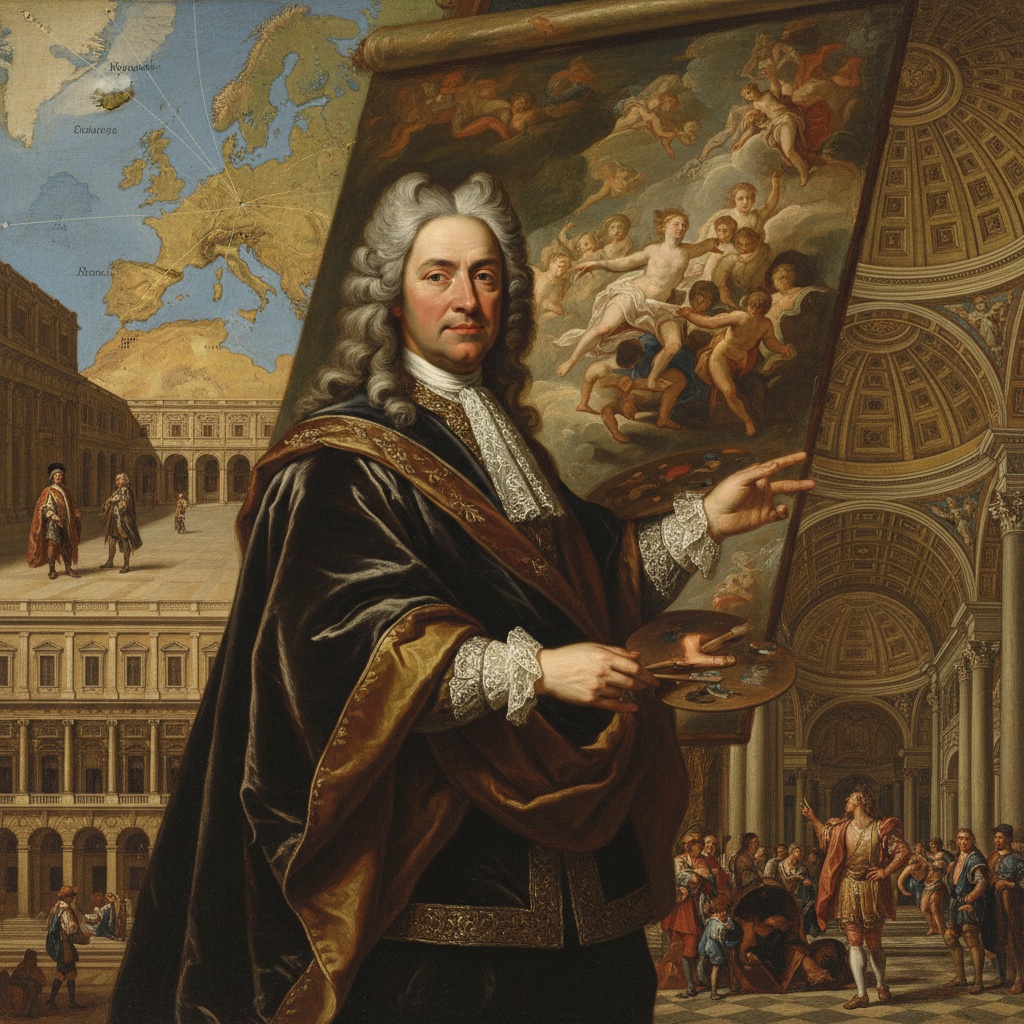
Early Life & Apprenticeship: Forging a Neapolitan Style
Luca Giordano, born in Naples in 1634, entered a world already steeped in artistic tradition, yet poised for dramatic change. His father, Antonio Giordano, was a painter himself, providing the initial foundation for Luca’s training. However, it was an apprenticeship under the formidable Jusepe de Ribera – known as Lo Spagnoletto – that truly shaped the young artist's early development. Ribera’s tenebrism, his stark contrasts of light and shadow, and intensely realistic depictions profoundly influenced Giordano’s first works. These initial paintings often featured half-length figures of philosophers, echoing Ribera’s style but already hinting at a burgeoning individuality. The influence wasn’t merely technical; it was a grounding in the dramatic power of storytelling through paint, a characteristic that would define Giordano's career. Yet, even in these early pieces, one can detect a nascent energy, a desire to move beyond the somber palette and weighty forms of his master.
The 'Fa Presto' Phenomenon: Giordano’s Prolific Output & Technique
It wasn’t long before Luca Giordano earned the nickname “Luca Fa Presto” – ‘Luca, Work Quickly.’ The moniker wasn’t born from a lack of skill, but rather an astonishing speed and efficiency. Stories abound of his ability to complete vast compositions with breathtaking rapidity, often working *en plein air* on scaffolding high above church interiors. This prodigious output stemmed not just from natural talent, but also from a remarkable versatility. Giordano possessed the rare gift of being able to convincingly imitate the styles of other artists – Venetian masters like Titian and Veronese, Roman baroque painters such as Pietro da Cortona – allowing him to adapt his approach to suit diverse commissions and client preferences. However, this adaptability never equated to superficiality; beneath the stylistic mimicry lay a distinct Giordano sensibility: a dynamic composition, vibrant color, and an unparalleled sense of movement. He wasn’t simply copying styles, he was synthesizing them into something uniquely his own.
Fresco Masterpieces: Illuminating Naples and Beyond
Giordano truly excelled in the art of fresco painting. His monumental cycles adorn churches and palaces throughout Naples, transforming spaces with their dramatic narratives and dazzling displays of color. The *Virgin of the Rosary* (1657) in the church of Santa Maria della Verità is a prime example – a swirling composition bursting with energy and light, showcasing his mastery of perspective and illusionistic space. But it was his work at Santa Maria Donna Regina that cemented his reputation as Naples’ foremost painter. Here, he created an entire decorative program, filled with allegorical figures, biblical scenes, and intricate architectural details. These frescoes weren't merely decorations; they were theological statements, designed to inspire awe and devotion. Beyond Naples, Giordano’s fresco work extended throughout Italy, leaving a lasting mark on the baroque landscape.
Roman Commissions & the Influence of Classical Art
A journey to Rome in the early 1650s proved pivotal for Giordano's artistic development. Immersing himself in the classical tradition, he studied ancient sculptures and Renaissance masterpieces, absorbing the principles of composition and form that had defined Western art for centuries. While there is no evidence of a formal apprenticeship with Pietro da Cortona, it’s clear that Giordano was deeply influenced by his work – particularly his dynamic ceiling paintings and illusionistic techniques. This Roman experience broadened Giordano's artistic vocabulary, introducing him to new possibilities in spatial representation and narrative complexity. He began incorporating more classical motifs into his compositions, adding a layer of intellectual depth to his already vibrant style. Drawings from this period reveal meticulous studies after antique figures, demonstrating his commitment to understanding the foundations of Western art.
Giordano in Spain: Royal Patronage & Artistic Exchange
In 1682, Giordano accepted an invitation to work at the Spanish court under King Charles II. This decade-long sojourn marked a significant chapter in his career, exposing him to new patrons and artistic challenges. He decorated royal palaces with elaborate frescoes and altarpieces, adapting his style to suit the tastes of the Spanish aristocracy. While some critics have suggested that his work during this period lacked the spontaneity of his Neapolitan paintings, it’s important to remember the constraints imposed by courtly patronage. Nevertheless, Giordano's presence in Spain had a profound impact on local artists, introducing them to the dynamic baroque style he had perfected in Italy. His influence can be seen in the works of Spanish painters who followed, particularly in their use of color and dramatic composition.
Legacy & Impact: The Enduring Appeal of a Baroque Visionary
Luca Giordano died in Naples in 1705, leaving behind an astonishing body of work that continues to captivate audiences today. His legacy extends beyond his sheer prolific output; it lies in his ability to synthesize diverse artistic influences into a uniquely vibrant and dynamic style. He wasn’t simply a follower of Caravaggio or Ribera, nor was he merely an imitator of Venetian masters. Giordano forged his own path, creating paintings that are both technically brilliant and emotionally resonant. His frescoes continue to illuminate churches and palaces throughout Italy and Spain, serving as testaments to his artistic genius. For those seeking to understand the exuberance and drama of the Baroque period, Luca Giordano remains a central figure – a true visionary whose work embodies the spirit of innovation and artistic mastery. Explore the world of Luca Giordano further with OriginalUniqueArt, where museum-quality reproductions bring these masterpieces into your home.