Early Life & Dutch Roots: The Foundation of Jongkind’s Artistic Vision
 Wikipedia: Johan Jongkind
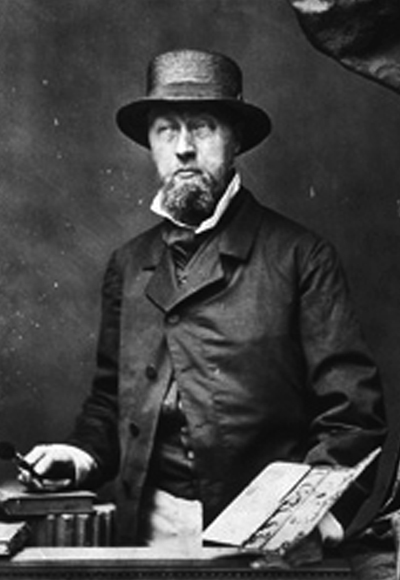
Johan Barthold Jongkind (Dutch pronunciation: [ˈjoːɦɑn ˈbɑrtɔlt ˈjɔŋkɪnt]; 3 June 1819 – 9 February 1891) was a Dutch painter and printmaker. He painted marine landscapes in a free manner and is regarded as a forerunner of impressionism. == Career ...
Johan Barthold Jongkind, born in the quiet village of Lattrop in 1819, emerged from a distinctly Dutch artistic tradition—one steeped in realism and an acute observation of the natural world. His early life, though seemingly conventional, laid the groundwork for his later innovations. The son of a customs officer, young Jongkind initially pursued a practical path, apprenticing as a solicitor’s clerk. However, the allure of art proved too strong to resist; at sixteen, he abandoned legal pursuits and began formal training at the Drawing Academy in The Hague under Andreas Schelfhout. Schelfhout, a celebrated landscape painter himself, instilled in Jongkind a meticulous approach to sketching *en plein air* – directly from nature – and an appreciation for the subtle nuances of light and atmosphere that would become hallmarks of his style. These formative years weren’t merely about technical skill; they fostered a deep connection to the Dutch countryside, its canals, windmills, and expansive skies—motifs that would reappear throughout his career, imbued with a growing sense of poetic sensibility.
Parisian Influences & A Shift in Style: Embracing Modernity
In 1846, Jongkind’s trajectory took a decisive turn when he journeyed to Paris. Invited by the renowned landscape artist Eugène Isabey, he entered a vibrant artistic milieu that irrevocably altered his perspective. The Parisian art scene was a crucible of new ideas, challenging established norms and pushing boundaries. Jongkind quickly found himself immersed in a circle of progressive painters—Daubigny, Corot, Courbet—each contributing to his evolving aesthetic. While initially adhering to the romantic sensibilities of Isabey, Jongkind began experimenting with looser brushwork and a more direct response to light and color. He frequented the studios and cafés of Montmartre, absorbing the energy of the city and translating it onto canvas. This period marked a crucial shift from the detailed precision of his Dutch training towards a more impressionistic approach, foreshadowing the movement that would soon revolutionize the art world.
Mastering Light & Atmosphere: Jongkind’s Unique Impressionistic Technique
Aerial perspective, or atmospheric perspective, is the effect the atmosphere has on the appearance of an object as viewed from a distance. As the distance between an object and a viewer increases, the contrast between the object and its background de...
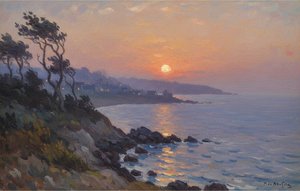
Jongkind's true genius lay in his ability to capture the ephemeral qualities of light and atmosphere. He wasn’t merely depicting scenes; he was conveying a *feeling*, an emotional resonance evoked by the interplay of sun, cloud, and water. His technique, though often described as a precursor to Impressionism, possessed a distinct character. Unlike the broken color and vibrant palettes of Monet or Renoir, Jongkind favored a more subdued tonality, employing washes of color and delicate brushstrokes to create a sense of hazy luminosity. Works like “Rue Notre Dame, Paris” exemplify this mastery—the bustling street scene dissolves into a shimmering veil of light, capturing the transient beauty of a fleeting moment. He wasn’t concerned with precise detail but rather with conveying the overall impression, the *sensation* of being present in that particular time and place. This focus on atmospheric effects, often achieved through aerial perspective – where distant objects appear paler and less defined – created a unique sense of depth and realism.
Jongkind and Monet: A Pivotal Mentorship & Lasting Legacy
 Johan Barthold Jongkind
Johan Barthold Jongkind (1819-1891): Dutch forerunner of Impressionism, celebrated for vibrant marine landscapes & Parisian scenes. Influenced Monet with his atmospheric style.
The relationship between Jongkind and Claude Monet is one of the most fascinating chapters in art history. In 1862, the young Monet encountered Jongkind in Normandy, and the encounter proved transformative. Monet himself credited Jongkind as his most important teacher, acknowledging the profound influence the Dutch painter had on his artistic development. Jongkind encouraged Monet to paint *en plein air*, to embrace spontaneity, and to focus on capturing the fleeting effects of light. He shared his techniques for rendering atmosphere and urged Monet to abandon academic conventions in favor of a more direct and personal expression. While Jongkind’s own career was often marked by financial struggles and bouts of depression—leading him to decline participation in the first Impressionist exhibition—his impact on Monet, and through him on the entire movement, is undeniable. Monet's early landscapes bear striking similarities to Jongkind’s work, demonstrating the depth of his mentorship.
Key Works & Recurring Themes: Exploring Jongkind’s Oeuvre
Throughout his career, Jongkind returned repeatedly to certain themes and motifs—coastal scenes, Parisian streets, winter landscapes. “The Seaside Cottage,” for example, embodies his tranquil depiction of rural life, characterized by loose brushwork and a delicate palette. “Skating Scene in Holland” showcases his ability to capture the energy and movement of everyday life, with figures gliding across a frozen canal beneath a vast, wintry sky. Parisian scenes, such as “Rue Notre Dame,” reveal his fascination with urban modernity and his skill at conveying the city’s vibrant atmosphere. Recurring elements in his work include low horizons, upward diagonals, and an emphasis on atmospheric effects. Despite facing periods of hardship, Jongkind consistently produced paintings that were praised for their poetic sensibility and technical brilliance. His works often evoke a sense of melancholy and nostalgia, reflecting his own personal struggles but also capturing the beauty and transience of life.
Rediscovering Jongkind: Recent Scholarship & Renewed Appreciation
For many years, Jongkind remained overshadowed by the fame of Monet and other Impressionist masters. However, recent scholarship has begun to redress this imbalance, recognizing his pivotal role in the transition from realism to Impressionism. Exhibitions dedicated to his work, such as the 2004 retrospective at the Musée d'Orsay, have brought renewed attention to his unique artistic vision. Art historians now acknowledge Jongkind not merely as a precursor but as an innovator in his own right—a painter who possessed a distinct style and a profound understanding of light and atmosphere. His influence extends beyond Monet, inspiring generations of artists with his poetic sensibility and his commitment to capturing the ephemeral beauty of the natural world. As we continue to explore his oeuvre, Jongkind’s legacy as a master of Impressionism continues to grow, solidifying his place among the great landscape painters of the 19th century.