Early Life & Artistic Foundations: Valencia’s Influence on Sorolla's Vision
 Wikipedia: Joaquín Sorolla
Joaquín Sorolla y Bastida (27 February 1863 – 10 August 1923) was a Spanish painter. Sorolla excelled in the painting of portraits, landscapes, and monumental works of social and historical themes. His most typical works are characterized by a dexter...
Joaquín Sorolla y Bastida, a name synonymous with the radiant light of Spain, was not born into a world of privilege but rather one steeped in the vibrant, everyday realities of Valencia. Born in 1863, his early life was marked by tragedy – the loss of both parents to cholera at the tender age of two. This formative experience, though sorrowful, instilled within him a profound sensitivity and an acute awareness of the fleeting nature of existence, qualities that would later permeate his art. Raised by his aunt and uncle, Sorolla’s artistic inclinations were nurtured from a young age, beginning with formal training at the Escuela de Bellas Artes de San Carlos. However, it was not merely academic instruction that shaped his vision but rather the very essence of Valencia itself – its sun-drenched beaches, bustling harbors, and the rich tapestry of local life. The city’s luminosity, reflected in the Mediterranean Sea and the faces of its people, became the foundational element of his artistic language.
His early exposure to the works of Diego Velázquez proved pivotal. Sorolla didn't simply admire Velázquez’s technical prowess; he absorbed a deep understanding of how light could be used not just to depict form but to evoke emotion and capture the very soul of a subject. This fascination would become a defining characteristic of his own style, setting him apart from many of his contemporaries. The initial years were dedicated to mastering traditional techniques, yet even then, hints of the vibrant palette and dynamic brushwork that would later define his oeuvre began to emerge.
The Mastery of Light: Sorolla’s Impressionistic Technique and En Plein Air Painting
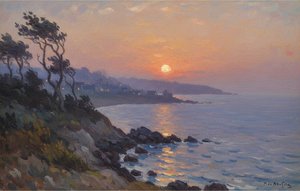
 The Small cove, Javea
Discover Joaquin Sorolla’s ‘The Small Cove, Javea.’ A vibrant 1898 oil painting capturing Spanish coastal life in a luminous Impressionistic style. Own a piece of art history!
Sorolla's true revolution lay in his unparalleled ability to capture light. While often categorized as an Impressionist, the label feels somewhat limiting when considering the unique character of his work. He embraced the principles of en plein air painting – working directly from nature – but pushed them further than many of his French counterparts. Unlike Monet’s focus on atmospheric effects and fleeting moments, Sorolla sought to render the intense, almost palpable heat and brilliance of Spanish sunlight. His canvases shimmer with a luminosity that seems to emanate from within, achieved through a masterful layering of color and an extraordinary dexterity with the brush.
He didn't blend colors on his palette but rather applied them in small, broken strokes directly onto the canvas, allowing the viewer’s eye to mix them optically. This technique created a vibrant, textured surface that captured the play of light across water, skin, and fabric with breathtaking realism. Paintings like “The Small Cove, Javea” (1898) exemplify this approach – the sea sparkles with countless reflections, the figures are bathed in golden light, and the entire scene feels alive with movement and energy. Sorolla’s dedication to capturing these fleeting moments required a remarkable speed and precision; he often completed entire paintings in a single sitting, relying on his keen observational skills and an intuitive understanding of color theory.
Social Commentary & Genre Scenes: Reflecting Spanish Life in the Late 19th Century
 Typical Sorianos
Experience rural Spain through Joaquín Sorolla's 'Typical Sorianos.' This vibrant 1912 oil painting captures the essence of community and tradition with masterful light & color.
Beyond his captivating landscapes, Sorolla’s genre scenes offer a poignant glimpse into the social realities of late 19th-century Spain. He wasn't interested in romanticizing rural life but rather in depicting it with honesty and empathy. “Typical Sorianos” (1912) is a prime example – it portrays a group of farmers engaged in their daily work, capturing not just their physical labor but also the sense of community and tradition that defined their lives. These paintings are imbued with a quiet dignity, celebrating the resilience and strength of ordinary people.
However, Sorolla didn’t shy away from addressing more challenging social issues. “Sad Inheritance” (1899) is perhaps his most powerful statement on this front – a large-scale depiction of crippled children bathing in the sea, subtly alluding to the devastating effects of congenital syphilis and possibly polio. The painting sparked controversy at the time but ultimately earned him widespread recognition for its unflinching portrayal of human suffering. It’s a testament to Sorolla's artistic courage that he used his talent not only to create beautiful images but also to raise awareness about important social concerns.
Monumental Works & International Recognition: Sorolla’s Rise to Prominence
Sorolla’s reputation extended far beyond the borders of Spain, and by the early 20th century, he had become an internationally acclaimed artist. His monumental works, often commissioned for public buildings, further solidified his status as a master painter. These large-scale canvases allowed him to explore more complex themes and narratives, showcasing his ability to create dynamic compositions and capture the grandeur of historical events.
He received numerous awards and accolades throughout his career, including a gold medal at the Chicago International Exhibition in 1893 for “Another Marguerite” and the Grand Prix at the Universal Exhibition in Paris in 1900. His paintings were exhibited in museums across Europe and America, earning him widespread critical acclaim and a devoted following. Sorolla’s success wasn't merely due to his technical skill; it was also a result of his ability to connect with audiences on an emotional level, capturing the essence of Spanish culture and conveying a sense of warmth, vitality, and optimism.
Sorolla's Legacy & Influence on Modern Art: A Lasting Impact on Painters and Beyond
 Fernando Amorsolo
Discover Fernando Amorsolo (1892-1972), the "Grand Old Man of Philippine Art." Renowned for luminous landscapes, rural scenes & portraits reflecting Filipino culture. A National Artist celebrated for his impressionistic style and mastery of light.
Though Sorolla’s style is often associated with Impressionism, his influence extends far beyond this movement. His mastery of light and color paved the way for later generations of painters, inspiring artists to explore new ways of capturing the beauty and complexity of the natural world. His emphasis on direct observation and en plein air painting resonated with artists seeking a more authentic and immediate connection to their subjects.
Artists like Fernando Amorsolo in the Philippines shared Sorolla’s fascination with light and its ability to transform ordinary scenes into works of art, demonstrating a similar dedication to capturing the vibrancy of local life. Sorolla's impact can also be seen in the work of contemporary landscape painters who continue to explore the interplay of light and shadow. His legacy is not simply confined to the realm of painting; it extends to photography as well, with his portraits influencing generations of photographers seeking to capture the essence of human emotion.
Collecting Sorolla Today: Investing in a Master of Spanish Impressionism
For art collectors, acquiring a work by Joaquín Sorolla represents not only an investment in a beautiful and historically significant piece but also a connection to a rich cultural heritage. His paintings are highly sought after for their exceptional quality, vibrant colors, and evocative subject matter. The market for Sorolla’s works has remained strong over the years, with prices steadily increasing as demand continues to grow.
Pieces like “Clotilde in Bed” offer a glimpse into his intimate domestic scenes, while larger canvases depicting beach scenes or historical events command significant attention. OriginalUniqueArt.com offers high-quality, handmade reproductions of Sorolla’s masterpieces, allowing collectors to experience the beauty and brilliance of his work firsthand. Whether you are a seasoned art collector or just beginning your journey, exploring the world of Joaquín Sorolla is sure to be a rewarding experience. His paintings are more than just images; they are windows into a bygone era, capturing the essence of Spanish life with unparalleled skill and sensitivity.