Early Life & Artistic Foundations: Geneva & Parisian Influences
Jacques-Laurent Agasse (April 24, 1767 – December 27, 1849) was an animal and landscape painter from Switzerland. Born at Geneva, Agasse studied in the public art school of that city. Before he turned twenty he went to Paris to study in veterinary sc...
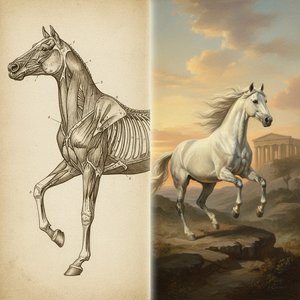
Jacques-Laurent Agasse, born in Geneva in 1767, emerged from a milieu steeped in both artistic tradition and the burgeoning intellectual currents of his time. His early training at the Calabri School of Drawing provided a foundational grounding in draftsmanship, though it was a somewhat pragmatic education focused on skills like watchmaking – a testament to the economic realities of Geneva society. However, Agasse’s ambition extended beyond mere technical proficiency; he possessed an innate fascination with the natural world and a desire to capture its essence with unparalleled accuracy. This led him to Paris, not to study history painting as was common for aspiring artists, but rather to immerse himself in veterinary school. This seemingly unconventional path proved pivotal, shaping his meticulous understanding of animal anatomy – a cornerstone of his future success. The Parisian experience wasn’t simply about textbooks and dissection; it was about observing the very structure of life, learning to perceive the musculature, bone structure, and subtle movements that would define his distinctive style.
Anatomy & Observation: The Scientific Basis of Agasse’s Realism
An animal painter is an artist who specialises in (or is known for their skill in) the portrayal of animals. The OED dates the first express use of the term "animal painter" to the mid-18th century: by English physician, naturalist and writer John Be...
Agasse's dedication to anatomical study wasn’t merely academic; it was a profound commitment to realism. He believed that true artistic representation stemmed from an intimate knowledge of the subject, and for him, that meant understanding the animal from within. This scientific approach set him apart from many of his contemporaries who relied more on convention or idealized forms. His paintings aren't simply *pictures* of animals; they are meticulously rendered studies, revealing a deep appreciation for their physical presence. The subtle play of light across muscle tone, the precise depiction of hooves and paws, the expressive quality of eyes – all speak to an artist who truly understood his subjects. This commitment extended beyond horses, encompassing dogs, leopards, and other creatures he encountered throughout his career. He wasn’t content with superficial beauty; he sought to capture the very *life* within each animal.
The Fortuitous Journey to England: Patronage and the Rise to Prominence
Agasse's trajectory took a dramatic turn through a fortunate encounter in Switzerland with George Pitt, later Lord Rivers. Impressed by Agasse’s portrait of his beloved greyhound, Lord Rivers extended an invitation that would irrevocably alter the artist’s career: a relocation to England. This wasn’t merely a change of scenery; it was entry into a society obsessed with horses and sporting animals – a perfect environment for Agasse's talents. The English aristocracy provided both patronage and subject matter, commissioning portraits of their prized racehorses, hunting dogs, and other esteemed creatures. This newfound support allowed Agasse to work on a larger scale, refine his compositions, and develop the distinctive style that would come to define him. It was in England that he truly flourished, becoming renowned for his ability to capture not just the likeness but also the spirit of these magnificent animals.
Mastering the Animal Portrait: Style, Technique, and Subject Matter
 Clouded Leopards
Magnificent 'Clouded Leopards' painting by Jacques-Laurent Agasse. Realistic animal art, detailed fur & composition. A stunning 19th-century wildlife masterpiece for art collectors.
Agasse’s animal portraits are characterized by a remarkable blend of realism and sensitivity. He eschewed dramatic narratives or elaborate backgrounds, instead focusing on the animal itself – its form, texture, and personality. His technique involved meticulous layering of oil paints, creating a rich depth of color and subtle gradations of tone. He possessed an exceptional ability to render fur with astonishing detail, capturing the individual strands and the play of light upon them. While he often depicted animals in relatively static poses, there’s always a sense of underlying energy – a suggestion of movement or alertness. His palette favored earthy tones, reflecting his naturalistic approach, but he wasn't afraid to introduce touches of vibrant color to highlight specific features. He painted not just horses and dogs, but also exotic creatures like clouded leopards, demonstrating a versatility born from careful observation and anatomical understanding. Clouded Leopards, for example, showcases his mastery of depicting complex patterns and textures.
Agasse and the Romantic Spirit: Naturalism, Emotion & the Precursors of Wildlife Art
Romanticism (also known as the Romantic movement or Romantic era) was an artistic and intellectual movement that originated in Europe towards the end of the 18th century. The purpose of the movement was to advocate for the importance of subjectivity...
Though not explicitly labeled as a “Romantic” painter during his lifetime, Agasse’s work embodies many of the movement's core tenets. His emphasis on emotion, individuality, and the beauty of nature aligns perfectly with Romantic ideals. He rejected the rigid formalism of earlier styles, instead prioritizing subjective experience and intuitive observation. A Grey Pony & A Black Charger in a Stable, for instance, evokes a sense of rustic tranquility and intimacy, capturing the quiet dignity of these working animals. His paintings aren’t simply objective representations; they are imbued with a palpable emotional resonance. Furthermore, his meticulous attention to detail and his celebration of animal life foreshadowed the emergence of modern wildlife art – a genre that prioritizes both scientific accuracy and artistic expression. A Leopard in a Landscape exemplifies this balance, showcasing the majestic beauty of the creature within its natural environment.
Legacy and Rediscovery: Agasse’s Place in Art History
Despite his considerable success during his lifetime, Jacques-Laurent Agasse fell into relative obscurity after his death in 1849. His prolific output – over five hundred known canvases – was scattered among private collections, largely forgotten by the broader art world. However, recent scholarship has begun to reassess his contribution, recognizing him as a pivotal figure in the development of animalier painting and a precursor to Romantic naturalism. His dedication to anatomical accuracy, combined with his sensitive portrayal of animal character, continues to resonate with contemporary audiences. Today, Agasse’s works are increasingly sought after by collectors and admired for their unique blend of scientific precision and artistic vision. His paintings offer a glimpse into a bygone era – a time when artists embraced both the beauty and the complexity of the natural world. OriginalUniqueArt.com is proud to offer high-quality reproductions of Agasse’s masterpieces, allowing art enthusiasts to experience the captivating realism and emotional depth of this remarkable Swiss artist.