The Arcadian Ideal: Origins & Classical Roots
The pastoral genre of literature, art, or music depicts an idealised form of the shepherd's lifestyle – herding livestock around open areas of land according to the seasons and the changing availability of water and pasture. The target audience is t...
The pastoral tradition, a celebration of rural life idealized through art and literature, resonates deeply within the Western aesthetic consciousness. Its origins lie not simply in a desire to depict countryside scenes, but in a profound yearning for a simpler existence—a Golden Age untainted by the complexities of urbanity and political strife. This longing first took firm root in ancient Greece, specifically in the region of Arcadia, a mountainous province of the Peloponnese. Though geographically real, Arcadia quickly became mythologized as a haven of shepherds, nymphs, and unspoiled nature, a place where life unfolded in harmonious rhythm with the seasons. The poet Virgil, in his Eclogues, solidified this vision in Roman literature, crafting evocative portraits of shepherd-poets who sang of love, loss, and the beauty of their surroundings. These weren’t merely observations; they were carefully constructed fantasies, offering a respite from the burgeoning empire's anxieties—a literary escape to a world where time seemed to slow and human concerns felt smaller against the vastness of nature.
The Arcadian landscape wasn’t simply beautiful; it was imbued with symbolism. The shepherd represented innocence and simplicity, while flowing water signified purity and renewal. Groves of trees offered sanctuary, and rolling hills evoked a sense of peace and tranquility. This symbolic language became foundational to the pastoral genre, influencing artists for centuries to come. It's important to remember that this idealized vision wasn’t necessarily about accurate representation; it was about creating an emotional response—a feeling of longing for a lost paradise.
From Virgil to Van de Velde: Key Moments in Pastoral Painting
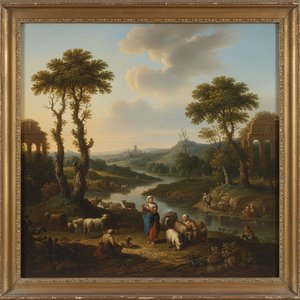
 Pastoral landscape
Explore Jan Frans van Bloemen’s "Pastoral Landscape," a Baroque masterpiece showcasing lush scenery & classical figures. Oil on canvas, rich detail, & serene beauty – a timeless work of art.
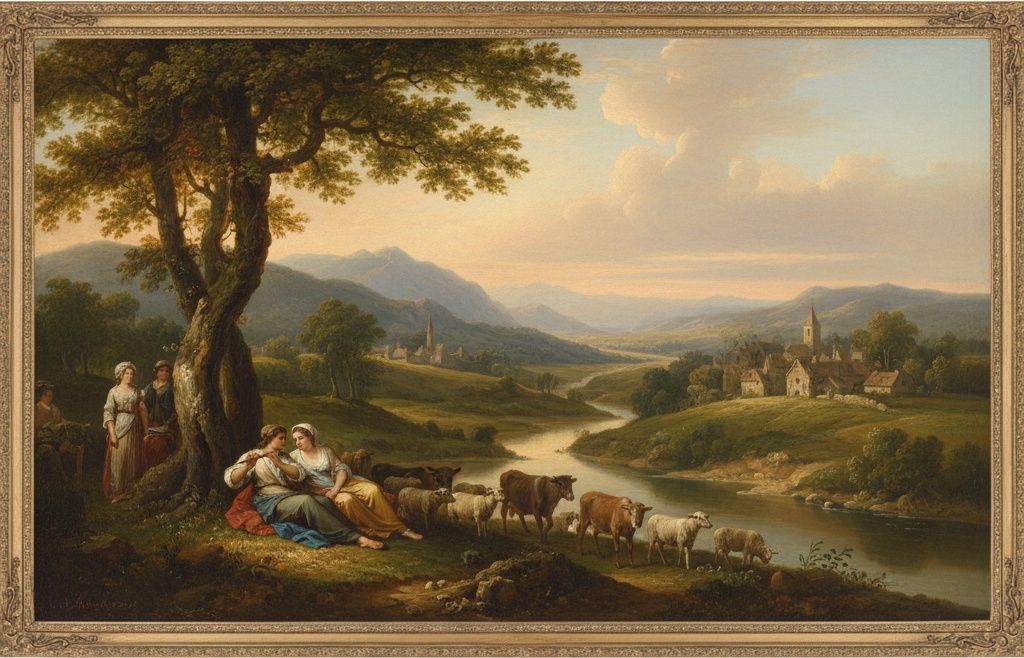
The visual translation of the pastoral ideal blossomed during the Renaissance and Baroque periods. Artists like Nicolas Poussin and Claude Lorrain, masters of classical composition, incorporated Arcadian elements into their landscapes, often featuring ruins as reminders of a glorious past and figures engaged in leisurely pursuits. These paintings weren’t just depictions of scenery; they were moralizing tales, subtly advocating for a life lived closer to nature and virtue. The 17th-century Dutch painter Esaias van de Velde, exemplified in his 1613 ‘Arcadian Landscape’, offers a particularly serene example. His work captures the quiet dignity of rural life—cattle grazing peacefully, sheep dotting the hillsides, and a solitary figure contemplating the vastness of the scene. Van de Velde’s meticulous attention to detail and subtle use of light create an atmosphere of tranquility that perfectly embodies the pastoral spirit.
Jan Frans van Bloemen, working in the Baroque era, took the genre further with lush scenery and classically inspired figures. His “Pastoral Landscape” showcases a more dynamic composition, filled with movement and vibrant color. The inclusion of architectural elements—ruins, fountains, and temples—adds a layer of sophistication to the scene, suggesting a connection between human civilization and the natural world. These artists weren’t simply copying nature; they were carefully constructing idealized visions that reflected their own cultural values.
Defining Characteristics: Themes, Motifs & Symbolism in Pastoral Art
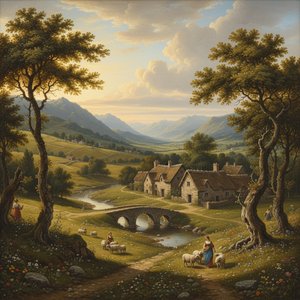 Evoking Arcadia: A Historical & Aesthetic Exploration of Rural Landscape Art
Explore the rich history of pastoral landscape art, from classical Arcadia to Impressionism & beyond. Discover key artists, movements, and how to collect serene rural scenes for your home. Expert insights at OriginalUniqueArt.
Several recurring themes define pastoral art. The aforementioned celebration of simplicity is paramount, often contrasted with the perceived decadence and corruption of urban life. Love—both romantic and platonic—is another central motif, frequently depicted through allegorical figures and poetic narratives. Death, surprisingly, also plays a role, often explored through elegies lamenting the loss of innocence or the fleeting nature of beauty. The locus amoenus – the beautiful place – is ubiquitous: a verdant meadow, a shaded grove, a tranquil stream. These settings aren’t merely backdrops; they are active participants in the narrative, shaping the emotional tone and symbolic meaning of the artwork.
Symbolism permeates every aspect of pastoral painting. Shepherds represent virtue and humility, while flocks symbolize community and innocence. Musical instruments—pipes, flutes, lyres—evoke a sense of harmony and joy. Fruit trees signify abundance and fertility, and flowing water represents purity and renewal. Even the time of day carries symbolic weight: dawn often signifies hope and new beginnings, while dusk evokes melancholy and reflection. Understanding these symbols is crucial to fully appreciating the depth and complexity of pastoral art.
The Hudson River School & the American Pastoral Landscape
 A Pastoral Landscape
Discover 'A Pastoral Landscape' by Thomas Moran! This Romantic painting captures serene American West beauty. Explore its details & learn about the artist at Flint Institute of Arts.
The pastoral tradition found fertile ground in 19th-century America, particularly within the Hudson River School movement. Artists like Thomas Moran embraced the vastness and grandeur of the American West, creating sweeping landscapes that celebrated the nation’s natural beauty. Moran's “A Pastoral Landscape” exemplifies this approach, capturing the serene majesty of the Western plains with meticulous detail and a romantic sensibility. Unlike their European predecessors who often depicted idealized scenes based on classical models, Hudson River School painters worked directly from nature, striving to capture the authentic spirit of the American wilderness.
Asher Brown Durand, a leading figure in the movement, perfected his approach to landscape painting by 1861. His “Pastoral Landscape” is a prime example of the Hudson River School aesthetic—an idealized expressive view based on close observation of the natural world. These paintings weren’t simply about depicting scenery; they were also imbued with a sense of national pride and a belief in the transformative power of nature. They offered a vision of America as a pristine Eden, untouched by the ravages of civilization.
Beyond Nostalgia: The Para-Pastoral Movement and Contemporary Interpretations
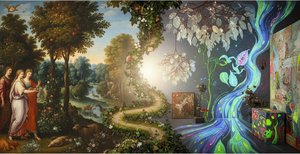
Today, the pastoral tradition is undergoing a fascinating reevaluation. A new movement, dubbed “para-pastoral,” is emerging in contemporary art, challenging the genre’s traditional associations with escapism and nostalgia. Artists are co-opting the visual tropes of romantic rural scenes—rolling hills, idyllic meadows, grazing animals—but infusing them with a sense of unease and ambiguity. This isn't about rejecting the pastoral; it’s about acknowledging its complexities and confronting the realities of climate change, political tension, and social inequality.
These artists are asking difficult questions: Who has access to land? What histories does the landscape conceal? How do rural spaces fit into the global story of capitalism? The result is a vision of the countryside that feels neither safe nor idyllic but charged with meaning. This para-pastoral movement refuses to look away from the darker aspects of rural life, offering a more nuanced and critical perspective on our relationship with nature.
Collecting Pastoral Art: Finding Serenity for Your Home
Whether you’re drawn to the classical elegance of Poussin and Lorrain or the romantic grandeur of Moran and Durand, collecting pastoral art can be a deeply rewarding experience. The genre offers a timeless appeal—a sense of peace, tranquility, and connection with nature that resonates across generations. When selecting artworks, consider your personal preferences and the overall aesthetic of your home. Do you prefer lush landscapes filled with vibrant color or more subdued scenes characterized by muted tones? Are you drawn to allegorical narratives or purely scenic depictions?
At OriginalUniqueArt.com, we offer a curated selection of handmade oil paintings and museum-quality prints featuring masterpieces from the pastoral tradition. From Esaias van de Velde’s serene Dutch scenes to Thomas Moran’s majestic American landscapes, you're sure to find an artwork that brings serenity and beauty to your space. Explore our collection today and discover the enduring appeal of the pastoral ideal.