
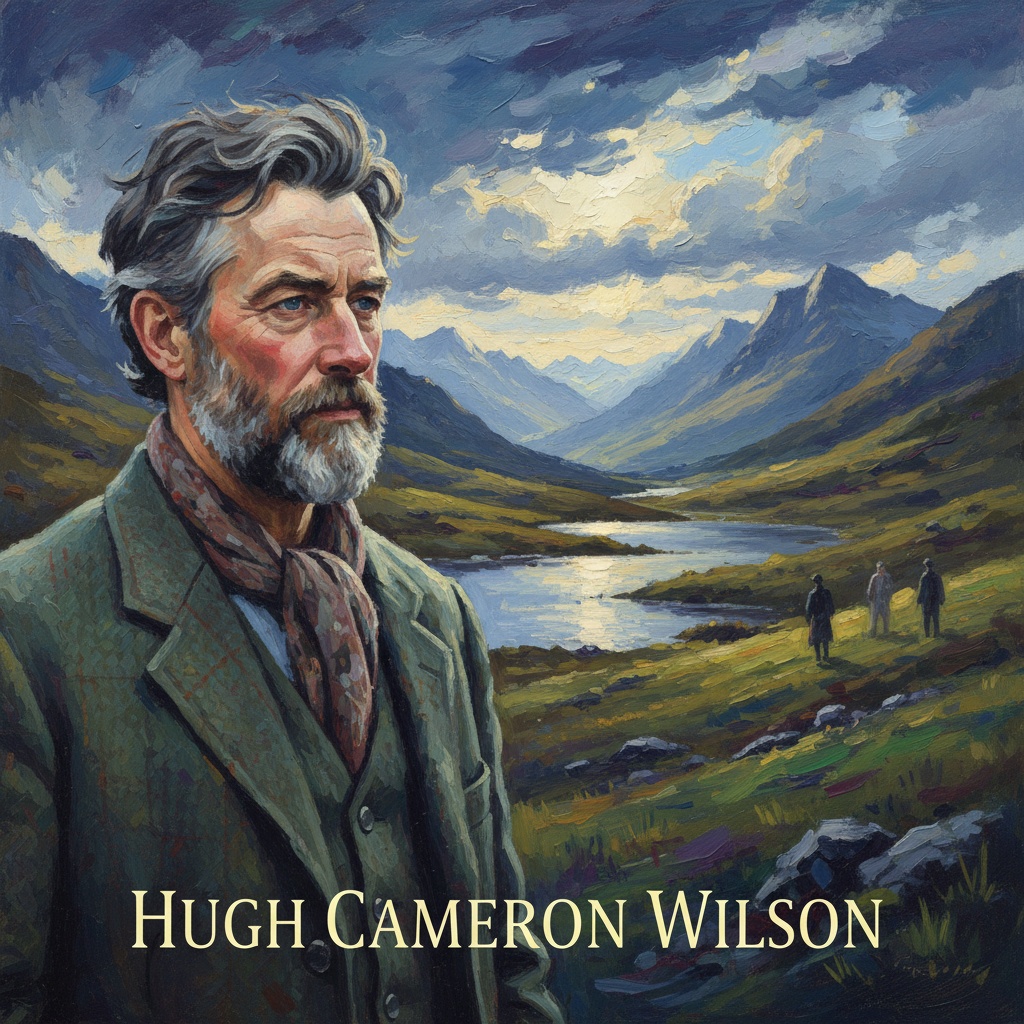
Early Life & Artistic Foundations: A Scottish Heritage
 hugh cameron wilson
Discover the evocative art of Hugh Cameron Wilson (1885-1952), a OriginalUniqueArt artist known for his portraits & landscapes, capturing British life and history. Explore his unique style!
Hugh Cameron Wilson, born in 1868, was inextricably linked to the landscapes he so beautifully rendered. His artistic journey wasn’t one of radical departure from tradition, but rather a deeply considered and sensitive engagement with his surroundings – the rolling hills, the coastal vistas, and the quiet rhythms of rural Scotland. While biographical details remain somewhat sparse, it's clear that Wilson’s formative years instilled in him a profound appreciation for the natural world, an aesthetic sensibility rooted in the very soil of Fife, where he spent much of his life. This wasn’t merely observation; it was an immersion, a feeling absorbed and later translated onto canvas with remarkable fidelity. He didn't seek to reinvent the landscape but to capture its essence, its fleeting moods, and the lives interwoven within it. His early training likely involved traditional methods, focusing on accurate representation, which would become the bedrock of his distinctive style.
The Influence of Romanticism on Wilson’s Rural Scenes
 The Gamekeeper
Discover 'The Gamekeeper' by Hugh Cameron Wilson (1868). A serene 19th-century landscape painting showcasing rural life & atmospheric realism. Explore its romantic style and captivating depiction of nature.
To understand Wilson's work fully, one must acknowledge the pervasive influence of the Romantic movement. Though he painted in a period transitioning towards modernism, the echoes of artists like Constable and Turner resonate strongly within his compositions. Like his Romantic predecessors, Wilson wasn’t simply documenting topography; he was conveying emotion through landscape. His scenes are imbued with a sense of tranquility, often tinged with a melancholic beauty that speaks to the transience of time and the enduring power of nature. The Gamekeeper, for example, isn't just a depiction of a rural figure in his environment; it’s an evocation of a way of life, a quiet dignity amidst the vastness of the Scottish countryside. This focus on atmosphere and emotional resonance distinguishes Wilson from purely realist painters, elevating his work to something more profound – a poetic interpretation of the world around him. The Romantic ideal of finding spiritual connection in nature is palpable throughout his oeuvre.
Mastering Atmospheric Perspective: Light, Colour, and Detail in His Landscapes
 The Reaper
Hugh Cameron Wilson’s "The Reaper" (1868) is a stunning Romantic oil painting capturing rural labor & nature's beauty. Detailed wheat, soft light, & atmospheric perspective – a timeless piece.
Wilson’s technical skill lies in his masterful handling of light and atmosphere. He wasn't interested in stark contrasts or dramatic effects; instead, he employed a subtle palette and delicate brushwork to create a sense of depth and realism. Aerial perspective, the technique of rendering distance through diminishing contrast and colour saturation, is particularly evident in his paintings. Observe The Reaper; notice how the wheat field recedes into the background, becoming softer and more muted with each layer. This isn’t merely a visual trick; it's a way of conveying the vastness of space and the subtle nuances of light filtering through the atmosphere. His use of colour is equally refined – soft greens, ochres, and browns dominate his palette, creating a harmonious and naturalistic effect. The detail in his work is remarkable, particularly in the rendering of foliage and textures, yet it never overwhelms the overall composition; rather, it enhances the sense of realism and immersion.
Wilson's Place Within the Scottish Colourist Tradition
The Scottish Colourists were a group of four painters, three from Edinburgh, whose Post-Impressionist work, though not universally recognised initially, came to have a formative influence on contemporary Scottish art and culture. The four artists, Fr...
While often discussed alongside the more celebrated Scottish Colourists – Cadell, Fergusson, Hunter, and Peploe – Wilson occupies a slightly different position within the movement. The Scottish Colourists were known for their bold experimentation with colour and form, influenced by Post-Impressionism and Fauvism. Wilson, while appreciating these developments, remained more grounded in traditional techniques and subject matter. He shared their interest in capturing the beauty of light and atmosphere but approached it through a lens of realism rather than abstraction. He wasn’t as focused on pushing boundaries or challenging conventions; instead, he sought to refine existing traditions and create paintings that were both beautiful and emotionally resonant. His work can be seen as a bridge between the academic painting of the 19th century and the more radical experiments of the early 20th century.
Key Works & Recurring Themes: 'The Gamekeeper,' 'The Reaper,' and Beyond
The Hairst Rig in the East Neuk, Fife, painted in 1863, exemplifies Wilson’s ability to capture the essence of rural Scottish life. The painting depicts a harvested field, bathed in soft light, with figures going about their daily tasks. Recurring themes throughout his work include the dignity of labour, the beauty of the natural world, and the quiet rhythms of rural existence. The Gamekeeper, painted in 1868, showcases his skill in portraiture and landscape painting, blending the two seamlessly to create a compelling narrative. The Reaper, also from 1868, is a stunning example of his mastery of atmospheric perspective and delicate brushwork. These paintings aren’t simply depictions of scenes; they are windows into a bygone era, offering glimpses of a way of life that was rapidly changing. His consistent focus on these themes suggests a deep personal connection to the Scottish countryside and a desire to preserve its beauty for posterity.
A Lasting Legacy: Wilson’s Contribution to British Landscape Painting
Hugh Cameron Wilson may not be as widely recognized as some of his contemporaries, but his contribution to British landscape painting is significant. His paintings offer a unique perspective on rural Scotland, capturing the essence of its beauty and tranquility with remarkable skill and sensitivity. He demonstrated a profound understanding of light, atmosphere, and colour, creating works that are both visually stunning and emotionally resonant. His legacy lies in his ability to connect viewers to the natural world, reminding us of the enduring power of landscape and the importance of preserving our cultural heritage. Discover the timeless beauty of Hugh Cameron Wilson’s art with OriginalUniqueArt.com, where high-quality reproductions bring his masterpieces into your home.



