Early Life & Artistic Foundations: A European’s American Vision
Henry François Farny (15 July 1847, Ribeauvillé – 23 December 1916) was an American painter and illustrator. His work was centered on the life of Native Americans in the 19th-century United States. == Biography == Farny's family left France in 1853...
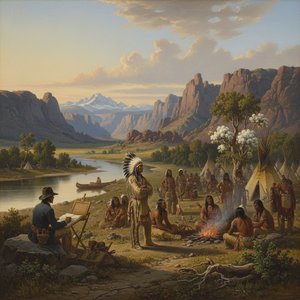
Henry François Farny, though indelibly linked with the spirit of the American West, was not born into it. His origins lie across the Atlantic, in Ribeauvillé, France, a region steeped in artistic tradition. The family’s emigration to the United States in 1853, settling near Warren, Pennsylvania, proved pivotal. This relocation wasn't merely geographical; it was a cultural immersion that would profoundly shape Farny’s artistic trajectory. The proximity to Seneca reservations ignited a lifelong fascination with Native American culture – a connection fostered not through academic study initially, but through direct observation and burgeoning respect for the lore of the woods shared by the Seneca people. Young Henry wasn't simply *seeing* these individuals; he was absorbing their way of life, an experience that would later permeate his canvases. His early inclination towards art manifested in sketches adorning the walls of his family’s home, rudimentary yet revealing a nascent talent and a clear subject matter: animals, birds, and, most significantly, the Indigenous figures who captivated his imagination.
This formative period wasn't solely about observation; it was about building a visual vocabulary. The move to Cincinnati further solidified his artistic ambitions. While initially engaged in commercial illustration – creating views of the city for publications like Harper’s Weekly – Farny sought formal training, embarking on studies in Düsseldorf alongside fellow American artists Frank Duveneck and John Twachtman. However, even within the established European art academies, Cincinnati's preference for realism resonated deeply with his developing style. He returned to a city that offered limited immediate opportunities but provided fertile ground for cultivating his unique vision.
The ‘Vanishing Race’ Aesthetic: Farny's Depiction of Native American Culture
 henry françois farny
Discover Henry François Farny's evocative paintings of Native American life & the 19th-century West. Explore his 'vanishing race' style, realism, and historical significance.
Farny emerged during a period marked by both romantic idealization and tragic realities concerning Native Americans. The concept of the “vanishing race” – the belief that Indigenous cultures were inevitably fading in the face of westward expansion – heavily influenced artistic representations of the time. While many artists focused on dramatic scenes of conflict, Farny carved out a distinct niche. He wasn’t interested in portraying battles or conquest; instead, he sought to capture the dignity and everyday life of Native American communities. This approach, while seemingly sympathetic, is now viewed with nuanced understanding. His work doesn't shy away from depicting a specific moment in time – one irrevocably altered by colonization – but it often presents an idealized vision, free from the harsh realities of forced relocation and cultural suppression.
This isn’t to diminish the artistic merit or emotional resonance of his paintings. Farny’s focus on peaceful scenes—hunting parties returning with their bounty, families engaged in traditional rituals—was a deliberate choice. He aimed to preserve a way of life he perceived as disappearing, creating elegiac images that resonated with a public grappling with the consequences of Manifest Destiny. His meticulous attention to detail – clothing, artifacts, and customs – stemmed from his extensive field studies, lending an air of authenticity to his work.
Documenting the West: Travel, Sketches, and Authentic Detail
The turning point in Farny’s career came with his first journey up the Missouri River in 1881. This wasn't a fleeting visit; it was a dedicated expedition fueled by a desire for firsthand knowledge. He meticulously sketched landscapes, observed tribal customs, and collected artifacts – amassing a wealth of material that would serve as the foundation for countless paintings. He understood that simply *representing* Native American life wasn’t enough; he needed to understand it from within.
Subsequent trips West further enriched his understanding. His Cincinnati studio transformed into a repository of Western ephemera – clothing, tools, weapons, and detailed notes. This commitment to accuracy set him apart from many contemporaries who relied on secondhand accounts or romanticized stereotypes. Farny wasn’t merely painting *about* the West; he was recreating it within the confines of his studio, striving for a level of authenticity that resonated with viewers.
Key Works & Romantic Realism: Exploring 'Through the Pass' and 'Intruder on the Plains'
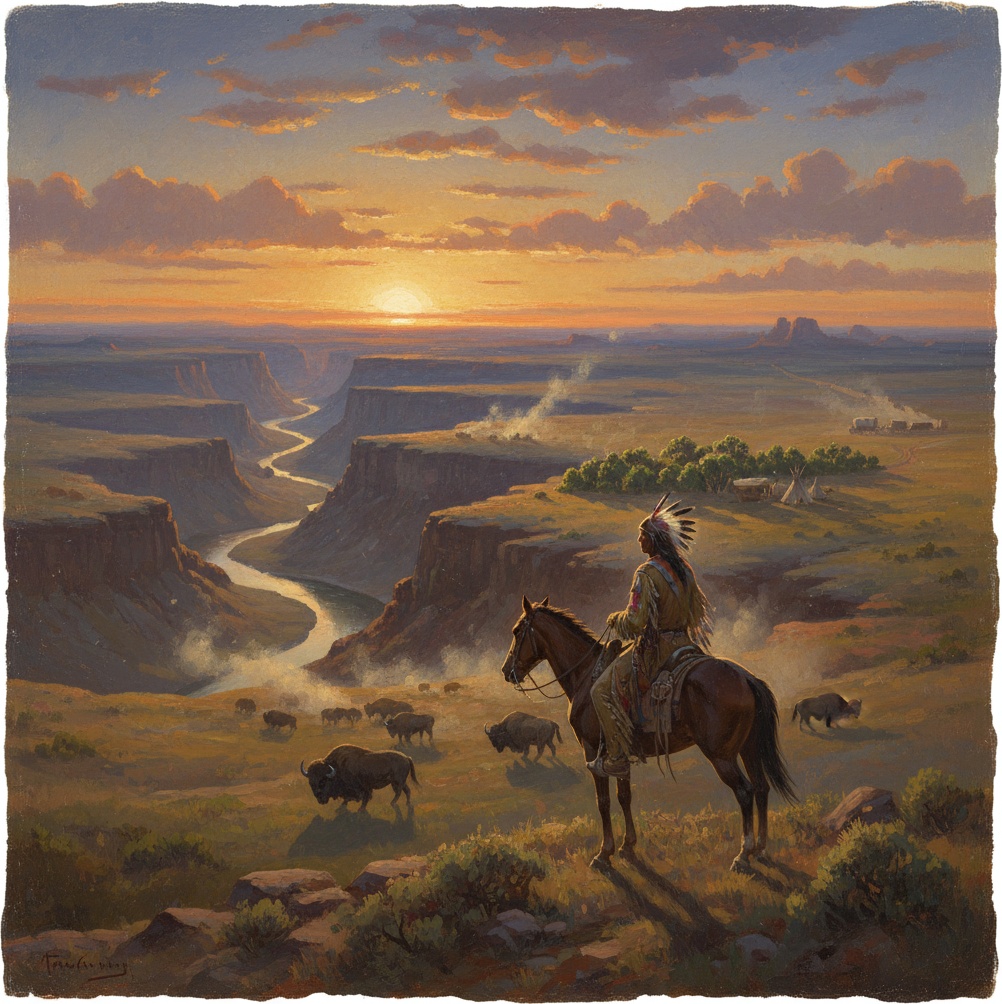
 Intruder on the Plains
Henry Farny’s ‘Intruder on the Plains’ captures a melancholic Western scene – exploration, solitude & dramatic skies. Oil painting, romantic realism, 19th-century style.
Consider 'Through the Pass' (1903), a stunning watercolor that exemplifies Farny’s mastery of romantic realism. The composition is deceptively simple – a line of Native American figures traversing a rugged mountain pass. Yet, within this simplicity lies a wealth of detail: the textures of their clothing, the subtle play of light and shadow on the landscape, and the palpable sense of movement. The painting isn’t about grand spectacle; it's about capturing a fleeting moment in time, a quiet dignity amidst a harsh environment.
'Intruder on the Plains' (1903), an oil painting, offers a different perspective – a melancholic scene of solitude and exploration. A lone rider surveys a vast landscape, dwarfed by dramatic skies. The title itself hints at the encroaching presence of civilization, subtly acknowledging the disruption of Indigenous life. The use of color is particularly striking—muted tones that evoke a sense of isolation and contemplation. Both paintings demonstrate Farny’s ability to blend meticulous observation with an emotional depth that transcends mere representation.
Farny’s Legacy: Preserving a Moment in Time & Lasting Influence
Theodore Roosevelt famously acknowledged Farny's contribution, stating he was “preserving for future generations phases of American history that are rapidly passing away.” This sentiment encapsulates the enduring power of his work. While contemporary scholarship rightly critiques the romanticized aspects of his depictions, there’s no denying the impact he had on shaping public perception of Native American culture.
Farny's paintings weren’t simply historical documents; they were acts of preservation—attempts to capture a way of life before it vanished. His influence extended beyond the art world, inspiring generations of artists and writers fascinated by the American West. Today, his works continue to captivate audiences with their beauty, detail, and poignant reflection on a pivotal moment in American history. At OriginalUniqueArt, we are proud to offer high-quality reproductions of Farny’s masterpieces, allowing you to experience the evocative power of his vision firsthand. Explore our collection and discover the enduring legacy of this remarkable artist.