Early Influences & Artistic Foundations: Shaping O'Keeffe’s Vision
 Wikipedia: Georgia O'Keeffe
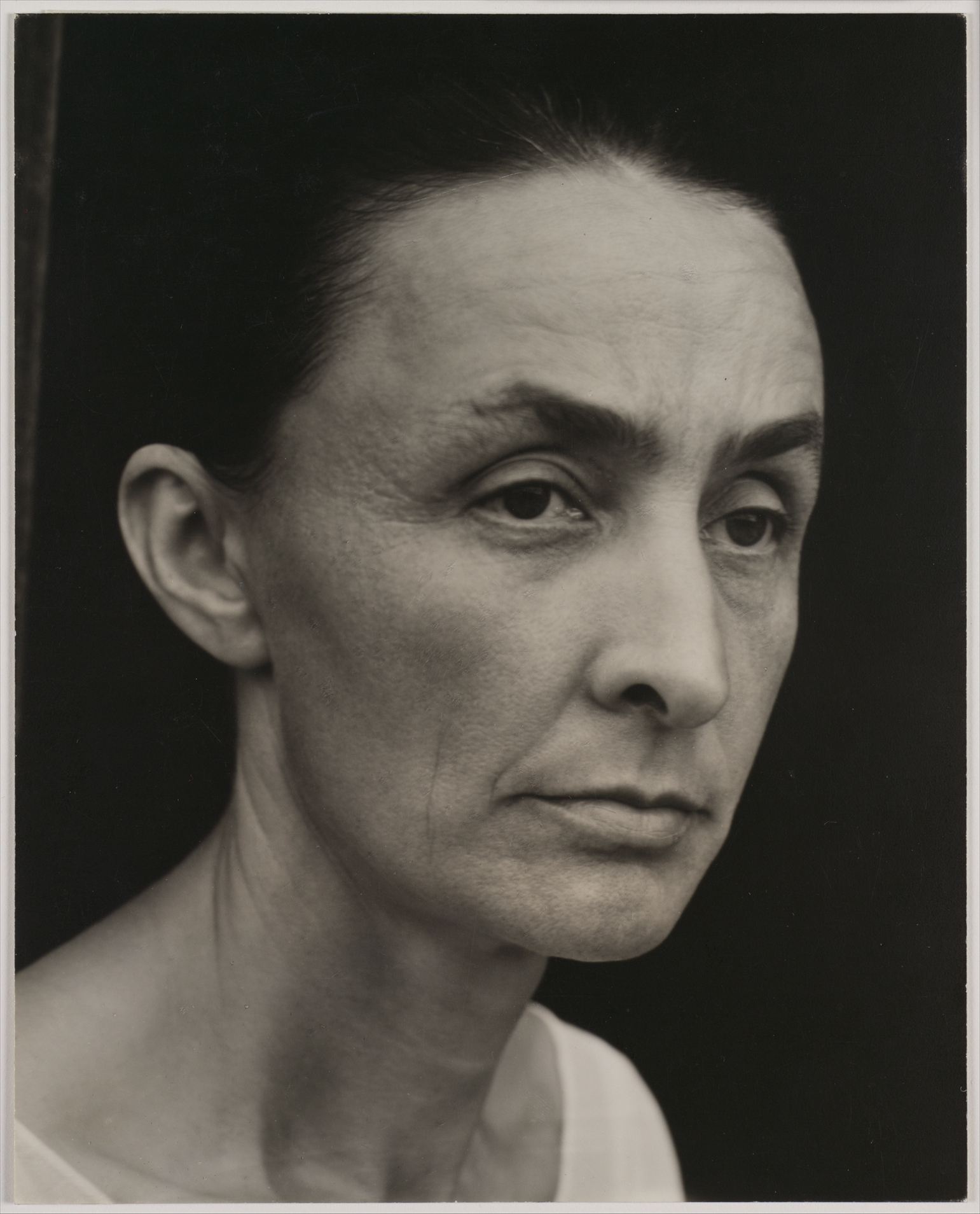
Georgia Totto O'Keeffe (November 15, 1887 – March 6, 1986) was an American modernist painter and draftswoman whose career spanned seven decades and whose work remained largely independent of major art movements. Called the "Mother of American modern...
Georgia Totto O’Keeffe, a name synonymous with American Modernism, didn’t emerge from a vacuum. Her artistic journey began not in the bustling art capitals of the world, but on a farm near Sun Prairie, Wisconsin. This early immersion in the natural world—the vastness of the plains, the subtle shifts in light and color—would become a foundational element of her aesthetic. While formally trained at the School of the Art Institute of Chicago and later at the Art Students League in New York, it was her encounter with Arthur Wesley Dow that proved truly transformative. Dow’s emphasis on simplifying forms and capturing the *essence* of a subject, rather than meticulous replication, liberated O'Keeffe from conventional academic constraints. He encouraged students to find their own visual language, a principle she embraced wholeheartedly, experimenting with abstract charcoal drawings that prioritized feeling over precise representation. These early works, often overlooked in favor of her later floral and landscape paintings, reveal the nascent seeds of her unique vision—a desire to distill experience into its purest form.
The Power of Abstraction: Flowers as Vessels of Emotion and Form
 Oriental Poppies
Explore Georgia O’Keeffe’s ‘Oriental Poppies’! A vibrant oil painting showcasing monumental floral abstraction & rich color. Admire its sensual style & historical significance.
O’Keeffe’s breakthrough came with her series of intensely focused flower paintings in the 1920s. These were not botanical illustrations; they were monumental, almost aggressively intimate depictions that challenged traditional notions of femininity and representation. Paintings like Oriental Poppies, with their vibrant colors and dramatically enlarged petals, demanded attention—they weren’t simply *of* flowers, but rather embodied the very sensation of being enveloped by them. The sensual curves and layered forms sparked immediate controversy, often interpreted through a Freudian lens as veiled symbols of female sexuality. O'Keeffe vehemently rejected these interpretations, insisting that she painted flowers because she loved them, drawn to their inherent beauty and structural complexity. However, it’s undeniable that her work resonated with a growing feminist consciousness, offering a powerful visual language for exploring the female experience in a male-dominated art world. Pansy, for example, showcases a meticulous technique alongside a striking vertical composition, highlighting both realism and symbolic depth. The close cropping and intense focus invite viewers into an almost microscopic examination of nature’s delicate details.
Alfred Stieglitz & the Construction of an Icon: Collaboration, Controversy, and Recognition
 Georgia O'Keeffe
Explore the iconic world of Georgia O'Keeffe! Known for her mesmerizing flower paintings and New Mexico landscapes, she redefined American modernism with bold abstraction & a unique vision.
The relationship between Georgia O'Keeffe and Alfred Stieglitz was pivotal to her career. Stieglitz, a renowned photographer and art dealer, discovered O’Keeffe’s early drawings in 1916 and immediately recognized her talent. He championed her work, providing her with crucial exhibition opportunities at his gallery, 291, and actively promoting her as a leading figure in American Modernism. Their personal relationship, which blossomed into marriage in 1924, was complex and often fraught with tension. Stieglitz’s own artistic pursuits—particularly his photography of O'Keeffe herself—contributed to the construction of her public image. While he undoubtedly played a significant role in elevating her status, it also led to accusations that he exploited her work for his own purposes. The photographs themselves, often focusing on intimate details of her body, fueled the aforementioned sexualized interpretations of her paintings. Despite these controversies, Stieglitz’s unwavering support was instrumental in establishing O'Keeffe as a major force in the art world.
New Mexico & the Landscapes of Reinvention: A Deep Connection to Place
 Red Canna
Explore Georgia O’Keeffe’s ‘Red Canna,’ a vibrant abstract expressionist masterpiece featuring bold red blooms & human-like forms. Discover its textured oil painting style and symbolic depth.
The summer of 1929 marked a turning point in O’Keeffe’s life and work. Her first visit to New Mexico ignited a lifelong passion for the stark beauty of the desert landscape. The vastness, the intense light, and the unique geological formations resonated deeply with her artistic sensibilities. Unlike the lush greenery of Wisconsin or the urban energy of New York, New Mexico offered a sense of solitude and spiritual connection that profoundly influenced her creative output. She began to depict the mesas, canyons, and adobe architecture with a newfound intensity, capturing not just the visual appearance of the landscape but also its emotional weight. Red Canna, painted during this period, exemplifies her shift towards bolder abstraction and textured oil painting styles. The vibrant red blooms take on almost human-like forms, reflecting her growing connection to the land and its indigenous cultures. Eventually settling permanently in New Mexico in 1949, she found a home that not only inspired her art but also became an integral part of her identity.
Symbolism Beyond Representation: Decoding O'Keeffe’s Visual Language
While O’Keeffe resisted explicit symbolic interpretations of her work, it’s impossible to ignore the recurring motifs and underlying themes that permeate her paintings. The flowers, beyond their aesthetic appeal, can be seen as symbols of female power, fertility, and resilience. The animal skulls, often found bleached white in the desert landscape, represent mortality and the cyclical nature of life. Her depictions of adobe architecture evoke a sense of history, tradition, and connection to place. Light of Iris, for example, showcases her constant preoccupation with capturing the essence of natural forms over two decades. More broadly, O’Keeffe's work can be understood as an exploration of the relationship between the self and the environment—a search for meaning and beauty in a rapidly changing world. She wasn’t simply painting what she saw; she was creating “an equivalent for what I felt about what I was looking at,” distilling her experiences into a unique visual language that continues to captivate audiences today.
O'Keeffe’s Legacy: Mother of American Modernism and Enduring Influence
Georgia O’Keeffe is rightfully celebrated as the “Mother of American Modernism.” Her groundbreaking work challenged conventional artistic norms, paving the way for future generations of artists. Her influence extends beyond painting, inspiring designers, writers, and filmmakers with her bold aesthetic and independent spirit. The Georgia O'Keeffe Museum in Santa Fe stands as a testament to her enduring legacy, offering visitors an intimate glimpse into her life and creative process. Her commitment to capturing the essence of the American landscape—from the plains of Wisconsin to the deserts of New Mexico—continues to resonate with audiences worldwide. O’Keeffe's paintings are not merely beautiful objects; they are powerful expressions of individuality, resilience, and a deep connection to the natural world. At OriginalUniqueArt.com, we offer high-quality reproductions of O’Keeffe’s iconic works, allowing you to experience her vision firsthand and bring a touch of American Modernism into your own home.