Early Life and Artistic Foundations: From Thames Tunnel to Royal Academy
 Wikipedia: Frederick Goodall
Frederick Goodall (17 September 1822 – 29 July 1904) was a British artist. == Life == Frederick Goodall was born in London in 1822, the second son of steel line engraver Edward Goodall (1795–1870). He received his education at the Wellington Road...
Frederick Goodall’s artistic journey began not amidst idyllic rural landscapes, but within the burgeoning industrial heart of London. Born in 1822, he was the second son of Edward Goodall, a respected steel line engraver, and this familial connection undoubtedly shaped his early appreciation for meticulous detail and technical precision. While many young artists of the era gravitated towards grand historical narratives, Frederick’s initial commissions offered a distinctly modern subject: Isambard Kingdom Brunel’s revolutionary Thames Tunnel. At just sixteen years old, he produced six watercolour paintings documenting the construction of this engineering marvel – a testament to his burgeoning talent and an early indication of his ability to capture both architectural complexity and atmospheric light. These works, exhibited at the Royal Academy in 1838, weren't merely technical exercises; they were glimpses into the changing face of Victorian England, a world rapidly transforming before his eyes. The subsequent award of a Society of Arts silver medal for his first oil painting further solidified his promise, marking him as an artist to watch.
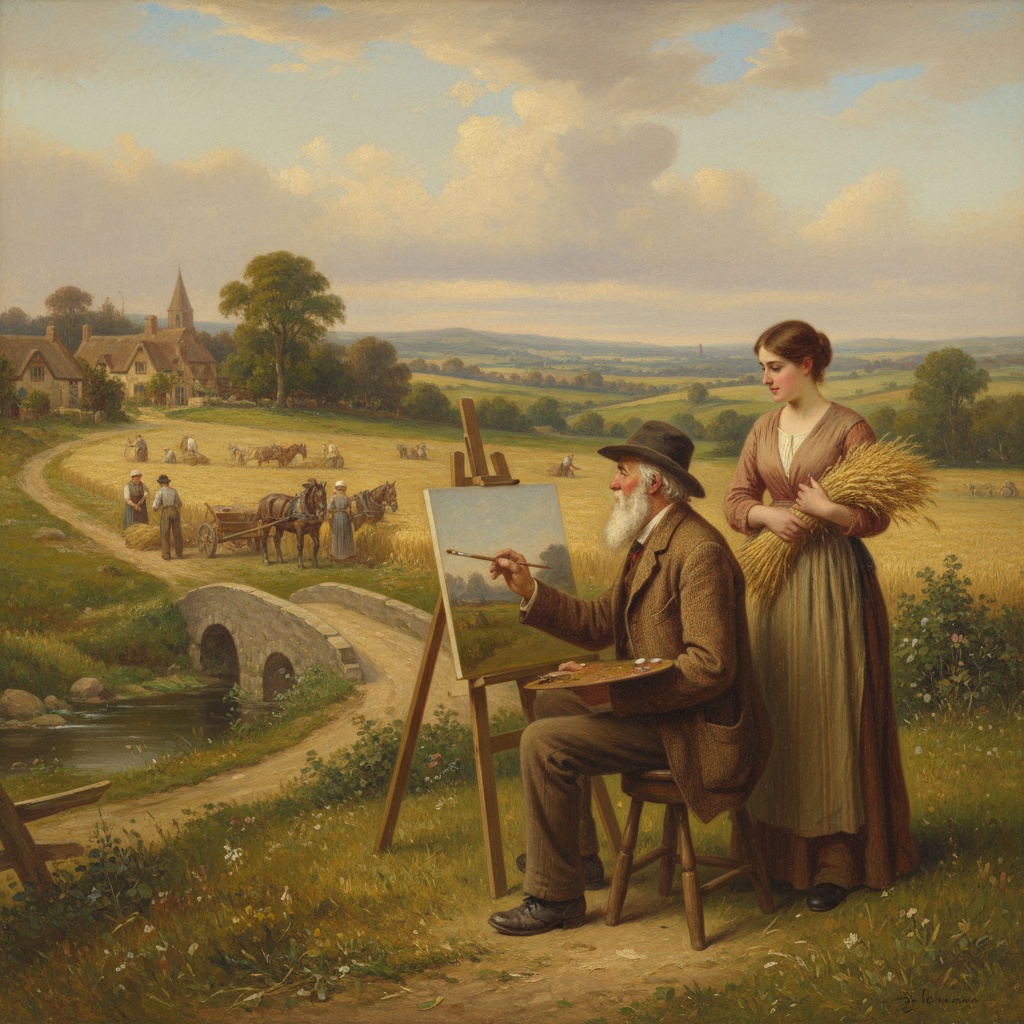
Goodall’s early training at Wellington Road Academy provided a solid foundation in traditional techniques, but it was his dedication to observation and his innate sensitivity to light that truly set him apart. He quickly established himself within the artistic circles of London, exhibiting regularly at the Royal Academy throughout the 1840s. These initial successes were built upon genre scenes and pastoral landscapes – works that resonated with a growing middle-class audience eager for depictions of everyday life and picturesque scenery. However, even in these early paintings, one can detect a yearning for something more, a desire to move beyond the familiar confines of the English countryside.
The Allure of Genre Painting: Capturing Victorian Domesticity
Genre painting (or petit genre) is the painting of genre art, which depicts aspects of everyday life by portraying ordinary people engaged in common activities. One common definition of a genre scene is that it shows figures to whom no identity can b...
To fully appreciate Goodall’s later work, it's essential to understand the context of genre painting within the Victorian art world. Following in the footsteps of artists like David Wilkie, Goodall initially excelled at depicting scenes of domestic life – charming vignettes that celebrated family values, rural simplicity, and moral virtue. This wasn’t simply a matter of aesthetic preference; genre painting was deeply intertwined with the social and political currents of the time. The rise of the middle class created a new market for art that reflected their own lives and aspirations, moving away from the aristocratic patronage of grand historical narratives. Goodall's early paintings catered to this demand, offering idealized portrayals of rural life in Normandy, Brittany, Ireland, and Italy.
However, genre painting was more than just a reflection of reality; it often served as a vehicle for subtle moral commentary. Artists carefully constructed scenes that conveyed specific messages about social behavior, religious piety, or the virtues of hard work. Goodall’s early works, while seemingly straightforward in their depiction of everyday life, were imbued with this same sense of underlying meaning. He possessed a keen eye for detail and an ability to capture the nuances of human emotion, elevating his genre scenes beyond mere sentimentality. This mastery of observation would prove crucial as he embarked on a journey that would take him far beyond the familiar landscapes of England.
Journeys to Egypt: A Transformative Influence on Goodall’s Style
 Frederick Goodall
Discover Frederick Goodall (1822-1904), a celebrated Victorian artist known for his detailed genre paintings, particularly those inspired by Egyptian life and pastoral scenes. Explore his works & legacy on OriginalUniqueArt.
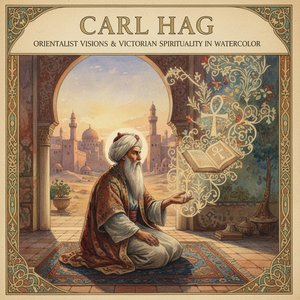
By the mid-1850s, despite his established reputation and critical acclaim, Goodall felt artistically constrained. The domestic scenes he had so successfully rendered began to feel limiting, lacking the grandeur and exoticism that captivated a Victorian public increasingly fascinated by distant lands. It was this yearning for new inspiration that led him to embark on his first journey to Egypt in 1858. Accompanied by fellow watercolorist Carl Haag, Goodall arrived in Cairo armed with letters of introduction and a clear objective: to gather authentic material for biblical subjects. However, the experience proved far more transformative than he could have anticipated.
Egypt wasn’t merely a backdrop for religious narratives; it was a vibrant, living culture that challenged his preconceived notions and ignited his imagination. He immersed himself in the local life, sketching Bedouin tribesmen, documenting bustling marketplaces, and capturing the majestic beauty of the Nile Valley. This firsthand experience fundamentally altered his artistic approach. The light, colors, and textures of Egypt were unlike anything he had encountered before, prompting him to experiment with new techniques and a bolder palette. He shared accommodation with Carl Haag, sketching together in the streets and around the Pyramids, fostering a collaborative spirit that enriched both artists’ work.
Biblical Narratives and Eastern Scenes: Thematic Exploration in Goodall's Oeuvre
Goodall’s subsequent paintings reflected this profound shift in perspective. While he continued to explore biblical themes – *The Finding of Moses* being a prime example – his interpretations were infused with the authenticity and vibrancy of his Egyptian experiences. He moved away from idealized portrayals, instead focusing on depicting scenes with meticulous detail and a sense of immediacy. The Bedouin tribesmen he encountered became recurring figures in his work, lending an air of realism and exoticism to his biblical narratives.
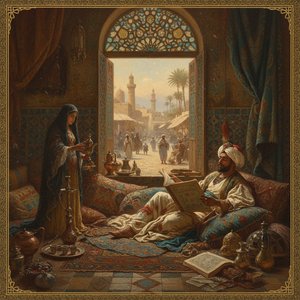
Beyond the religious subjects, Goodall developed a distinct fascination with everyday life in Egypt. He painted scenes of bustling markets, nomadic encampments, and tranquil pools along the Nile – capturing the essence of a culture that was both ancient and vibrantly alive. His commitment to accuracy led him to bring back sheep and goats from Egypt, allowing him to study their anatomy and behavior firsthand. Over 46 years, he exhibited an astonishing 170 paintings inspired by his travels at the Royal Academy, demonstrating the enduring impact of Egypt on his artistic vision. These works weren’t simply depictions of a distant land; they were carefully constructed narratives that offered Victorian audiences a glimpse into a world both familiar and exotic.
Goodall’s Legacy and the Orientalist Movement: Context and Enduring Appeal
Frederick Goodall’s success was undeniable. He earned a fortune from his paintings, built a magnificent home – Grims Dyke in Harrow Weald – and entertained prominent guests like the Prince of Wales. However, his later years were marked by financial difficulties, culminating in bankruptcy upon his death in 1904. Despite this unfortunate end, his legacy as a leading figure in the Orientalist movement remains secure.
The Victorian era witnessed a surge of interest in the “Orient” – encompassing North Africa, the Middle East, and Asia – fueled by imperial expansion, biblical archaeology, and a romantic fascination with distant cultures. Artists like Goodall played a crucial role in shaping this perception, offering Western audiences glimpses into these exotic lands through their paintings. While the Orientalist movement has been subject to scrutiny in recent years for its often-romanticized and sometimes stereotypical depictions of Eastern cultures, Goodall’s work stands out for its meticulous detail, sensitivity to light, and genuine attempt to capture the essence of Egyptian life. His paintings continue to captivate audiences today, offering a window into a bygone era and a testament to the enduring power of artistic observation.
At OriginalUniqueArt, we celebrate the legacy of artists like Frederick Goodall by offering high-quality reproductions of his most iconic works. Explore our collection and bring the beauty and vibrancy of Victorian Egypt into your home. Discover the captivating world of Goodall’s art – a world where history, culture, and artistic skill converge to create timeless masterpieces.