The Essence of Ukiyo-e: Understanding the 'Floating World' Philosophy
To understand the soul of Japanese art, one must first grasp the profound concept of Ukiyo, a term that translates to the "Floating World." Originally rooted in Buddhist teachings to describe the transient, sorrowful nature of human existence, this concept underwent a radical and beautiful transformation during Japan's Edo period. As urban culture flourished, the focus shifted from the ephemeral sadness of life toward a celebration of its fleeting pleasures. This was no longer a world to be mourned, but a world to be experienced—a vibrant, sensory landscape of theater, fashion, tea houses, and seasonal beauty.
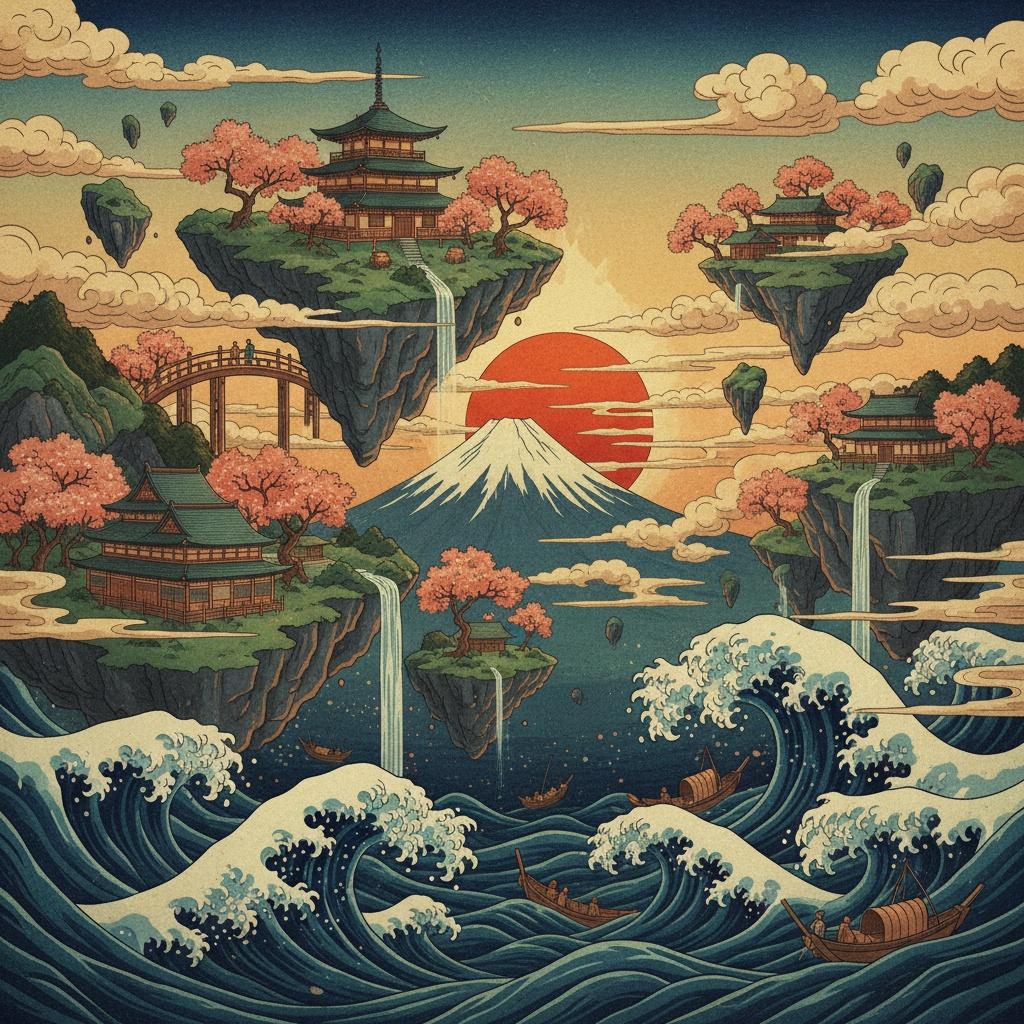
The art form known as Ukiyo-e became the visual heartbeat of this movement. It captured the ephemeral moments that define our lives: the gentle curve of a courtesan's neck, the dramatic pose of a Kabuki actor, or the sudden chill of a winter landscape. By focusing on the "floating" nature of reality, these artists invited viewers to find transcendence within the temporary. There is a deep, meditative quality in acknowledging that beauty is precious precisely because it does not last, an idea that continues to resonate with art enthusiasts and collectors across the globe today.
Masters of the Woodblock: The Artistic Legacy of Suzuki Harunobu and Hokusai
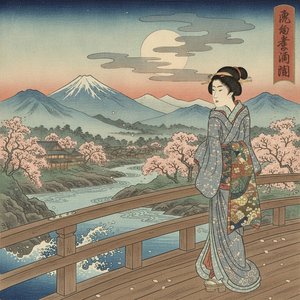
The history of Ukiyo-e is a tapestry woven by legendary hands, each bringing a unique dimension to the medium. Among the most revolutionary was Suzuki Harunobu, a pioneer whose innovation changed the trajectory of Japanese printmaking forever. Before his era, prints were often limited in color, but Harunobu perfected the nishiki-e, or "brocade prints," which utilized multiple woodblocks to create full-color, lyrical compositions. His works, such as the serene Sotoba, possess a delicate, dreamlike quality, often featuring elegant figures enveloped in soft light and poetic landscapes that feel almost otherworldly.
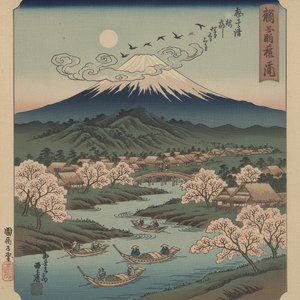
While Harunobu mastered the intimate and the romantic, Katsushika Hokusai expanded the horizons of the Floating World to include the majesty of the natural realm. Hokusai’s genius lay in his ability to find the divine within the landscape. In masterpieces like Fuji With A Cathartic Cuckoo, he demonstrated an unparalleled command over composition and scale, making Mount Fuji not just a mountain, but a spiritual icon. This lineage of mastery continued through figures like Utagawa Hiroshige, whose poetic landscapes and atmospheric depictions of rain and snow captured the very breath of the Japanese countryside, leaving an indelible mark on the history of global printmaking.
Technique and Texture: The Intricate Craft of Japanese Woodblock Printing
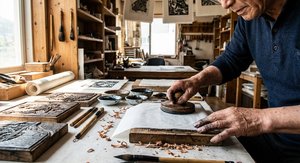
The creation of a Ukiyo-e print was never the work of a single individual, but rather a sophisticated collaboration between an artist, a carver, and a printer. This process required immense technical discipline and a shared vision. It began with the artist’s brushwork on paper, which was then meticulously transferred to a block of cherry wood. The carver would then use specialized tools to hollow out the negative space, leaving behind raised lines of incredible precision. Every fine detail—the strand of a hair or the delicate pattern of a kimono—depended entirely on the steady hand of the craftsman.
The printing stage was where color and depth truly emerged. Using water-based pigments and a hand-held tool called a baren, the printer would apply layers of color to the carved blocks. This method allowed for subtle gradations, known as bokashi, which could simulate the fading light of dusk or the mist rising from a river. The texture of the paper, often handmade from mulberry fibers, absorbed these pigments in a way that created a soft, matte finish, giving the prints a tactile, organic quality. This rhythmic layering of color and pressure ensured that each print was not merely a reproduction, but a physical manifestation of layered artistry.
From Edo to Impressionism: The Global Impact of Japonisme
When Japan opened its borders to the West in the mid-1m9th century, Ukiyo-e prints began to flood into Europe, sparking an artistic revolution known as Japonisme. For artists like Vincent van Gogh, Claude Monet, and Edgar Degas, these prints offered a radical departure from the rigid academic traditions of Western art. The bold outlines, flattened perspectives, and unconventional cropping found in Ukiyo-e provided a new vocabulary for expressing modern life. They learned to see the world through a different lens—one where negative space was as important as the subject, and where color could be used expressively rather than just descriptively.
The influence of masters like Hiroshige can be seen in the way Impressionist painters captured light and atmosphere. The "floating" perspective encouraged Western artists to abandon the traditional vanishing point in favor of more dynamic, immersive compositions. This cross-cultural dialogue transformed the trajectory of modern art, bridging the gap between Eastern philosophy and Western technique. Today, we recognize that the legacy of Ukiyo-e is not confined to Japan; it is a fundamental pillar of the global artistic heritage, having reshaped how we perceive space, color, and movement in all forms of visual media.
Curating the Floating World: Bringing Ukiyo-e Elegance into Modern Interiors
Integrating the aesthetic of the Floating World into a contemporary home is an exercise in balance and reverence. Because Ukiyo-e prints often feature strong compositions and evocative themes, they serve as profound focal points in any interior design scheme. For the classic art enthusiast, displaying a high-quality reproduction—whether a textured oil painting or a museum-grade Giclée print—can introduce a sense of historical depth and tranquility to a modern space. The delicate palettes of Harunobu or the dramatic landscapes of Hokusai can harmonize beautifully with both minimalist and maximalist decor.
When curating such a collection, consider the interplay of light and texture. Much like the original woodblock prints, modern reproductions benefit from being presented in ways that highlight their craftsmanship. Framing a print with traditional wood or even an expansive multi-panel layout can turn a single image into an architectural statement. By surrounding these "floating" scenes with thoughtful textures—such as heavy cotton canvases or matte-finished papers—you invite the spirit of the Edo period into your daily life, creating a sanctuary where the beauty of the ephemeral is forever preserved.
At OriginalUniqueArt.com, we are dedicated to preserving this legacy of human creativity. From hand-painted oil reproductions that capture every tactile brushstroke to exquisite Giclée prints designed for longevity, our mission is to make the world's most captivating art accessible to collectors worldwide. Whether you seek to honor the masters of Ukiyo-e or reimagine your own memories through the lens of historical styles, we provide the expertise and craftsmanship to bring your artistic vision to life.