Early Life & Artistic Training: Foundations of a Welsh Vision
Evan John Walters (27 November 1892 – 14 March 1951) was a Welsh artist. == Biography == Walters was born in the Welcome Inn, between Llangyfelach and Mynydd-bach, in south Wales, to nonconformist and Welsh-speaking parents, Thomas Walters (1861-19...
Evan John Walters, born in the evocative setting of the Welcome Inn between Llangyfelach and Mynydd-bach in South Wales in 1892, emerged from a landscape steeped in both rural tranquility and burgeoning industrialism. This duality – the pastoral beauty juxtaposed with the grit and energy of coal mining – would become a defining characteristic of his artistic vision. His parents, deeply rooted in Welsh nonconformist traditions, instilled a strong sense of cultural identity that permeated his work. Walters’ initial training as a painter and decorator in Morriston provided a practical foundation, but it was his subsequent formal education at the Swansea School of Art, followed by studies at the Regent Street Polytechnic in London and finally the prestigious Royal Academy Schools, that truly ignited his artistic potential. These institutions exposed him to a wider range of techniques and influences, shaping his early style and preparing him for a career that would ultimately transcend conventional boundaries.
The Industrial Landscape & Social Commentary: A Unique Perspective
A landscape is the visible features of an area of land, its landforms, and how they integrate with natural or human-made features, often considered in terms of their aesthetic appeal. A landscape includes the physical elements of geophysically define...
Walters’ art distinguished itself through its unflinching portrayal of Welsh industrial life. Unlike many artists who romanticized the countryside, Walters turned his gaze towards the collieries and working-class communities surrounding them. He didn't merely depict the physical reality of mines and factories; he sought to capture the *human* cost of progress, the dignity and hardship etched onto the faces of miners and their families. This commitment to social commentary was remarkably bold for its time, setting him apart from his contemporaries. His early works focused on these communities, a turning point marked by an exhibition at the Glynn Vivian Art Gallery in Swansea in 1920. These paintings weren’t simply observations; they were empathetic explorations of a world often overlooked and undervalued.
Impressionistic Influences & Evolving Style: Brushwork, Light, and Form
Impressionism was a 19th-century art movement characterized by visible brush strokes, open composition, emphasis on accurate depiction of light in its changing qualities (often accentuating the effects of the passage of time), ordinary subject matter...
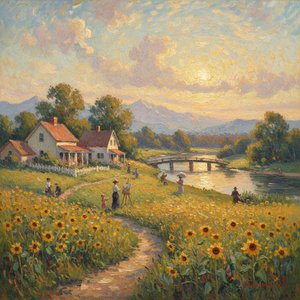
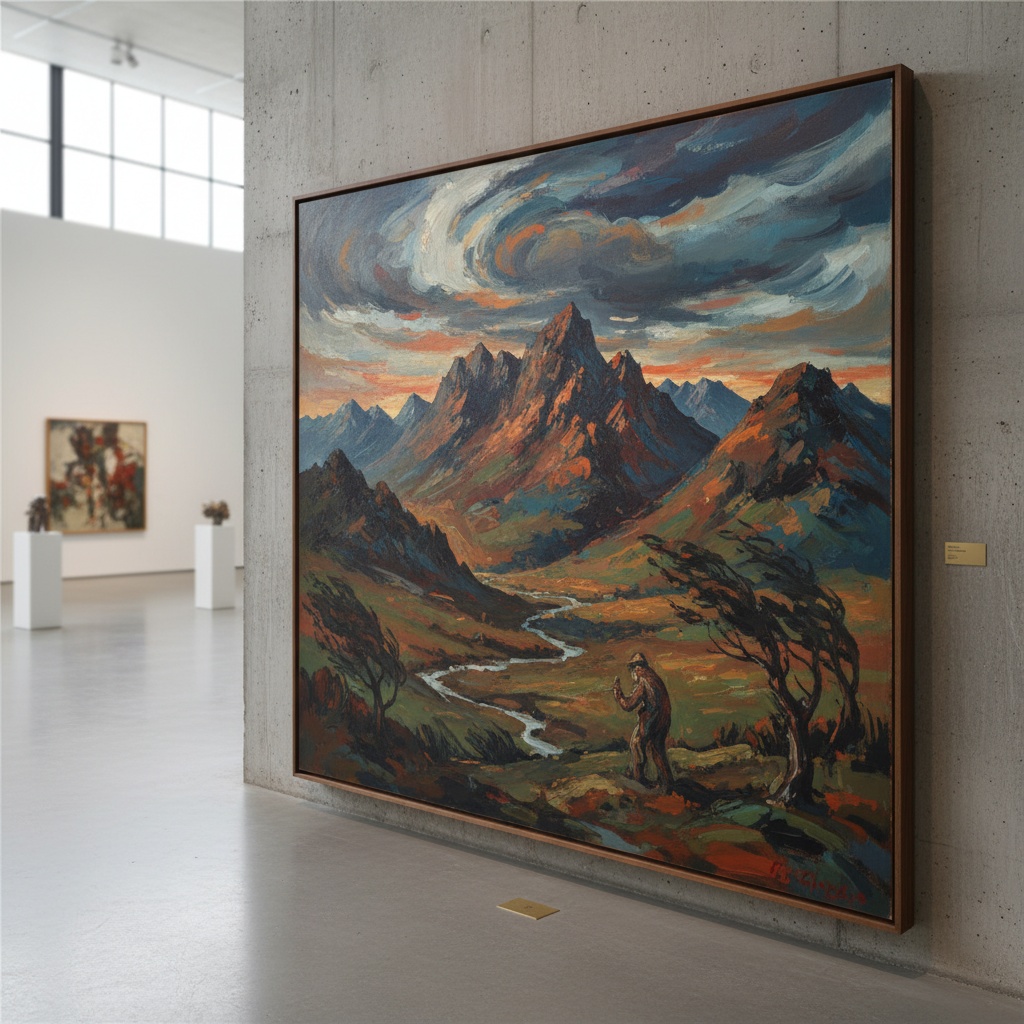
While deeply rooted in realism, Walters' style evolved with clear Impressionistic undertones. He embraced visible brushstrokes, prioritizing the accurate depiction of light and its shifting qualities – a technique reminiscent of Claude Monet and his contemporaries. However, Walters didn’t simply replicate the French Impressionists; he adapted their principles to suit his subject matter and personal aesthetic. His use of color was often muted yet powerfully expressive, conveying both the harshness and subtle beauty of the Welsh landscape. The emphasis wasn't on idyllic scenes but rather on capturing a sense of atmosphere and emotional resonance within the industrial environment. This is particularly evident in works like “Rural District” (1929), where abstracted landscapes are rendered with dynamic brushwork, creating a textured and tranquil scene that belies the underlying social realities.
Winifred Coombe Tennant’s Patronage & the National Eisteddfod: Recognition and Controversy
The trajectory of Walters' career took a significant turn with the patronage of Winifred Coombe Tennant, a prominent Welsh art collector. Tennant recognized Walters’ exceptional talent and became his most important supporter, commissioning numerous portraits and championing his work within influential circles. This support provided him with financial stability and artistic freedom. His growing fame culminated in joint wins at the 1926 National Eisteddfod of Wales in Swansea – a prestigious recognition that solidified his position as a leading Welsh artist. However, this success was not without controversy; the poster he designed for the Eisteddfod was deemed to contain a “sexual innuendo” and pulped, highlighting the often-sensitive nature of his social commentary and challenging societal norms.
The Pursuit of 'Double Vision' & Late Career Experimentation: A Bold, Unconventional Path
By the mid-1930s, Walters embarked on a fascinating – and ultimately frustrating – exploration of “double vision,” or physiological diplopia. Driven by a theoretical interest in perception, he attempted to translate this phenomenon into his paintings, creating works that aimed to capture multiple perspectives simultaneously. This obsession consumed him, leading to an exhibition in 1936 at the Coolings Gallery in London which proved largely unsuccessful. Despite writing extensively on his theory – “The Third Dimension” – Walters struggled to gain acceptance for these unconventional pieces. While this period represents a departure from his earlier, more accessible work, it demonstrates his unwavering commitment to artistic innovation and intellectual exploration.
Walters’ Legacy & Contemporary Relevance: Assessing His Impact on 20th-Century Art
Evan Walters remains a significant figure in Welsh art history, celebrated for his powerful depictions of industrial life and his unique blend of realism and Impressionistic techniques. His work offers a compelling glimpse into the social and cultural landscape of early 20th-century Wales, challenging viewers to confront uncomfortable truths about progress and its consequences. While his later experimentation with “double vision” may have been met with limited success during his lifetime, it underscores his willingness to push boundaries and explore new artistic frontiers. Today, Walters’ paintings are increasingly recognized for their emotional depth, technical skill, and enduring relevance – a testament to the power of art to capture not just what is seen, but *how* it is felt. For collectors seeking works that combine historical significance with compelling artistry, Evan Walters offers a truly unique and rewarding investment.