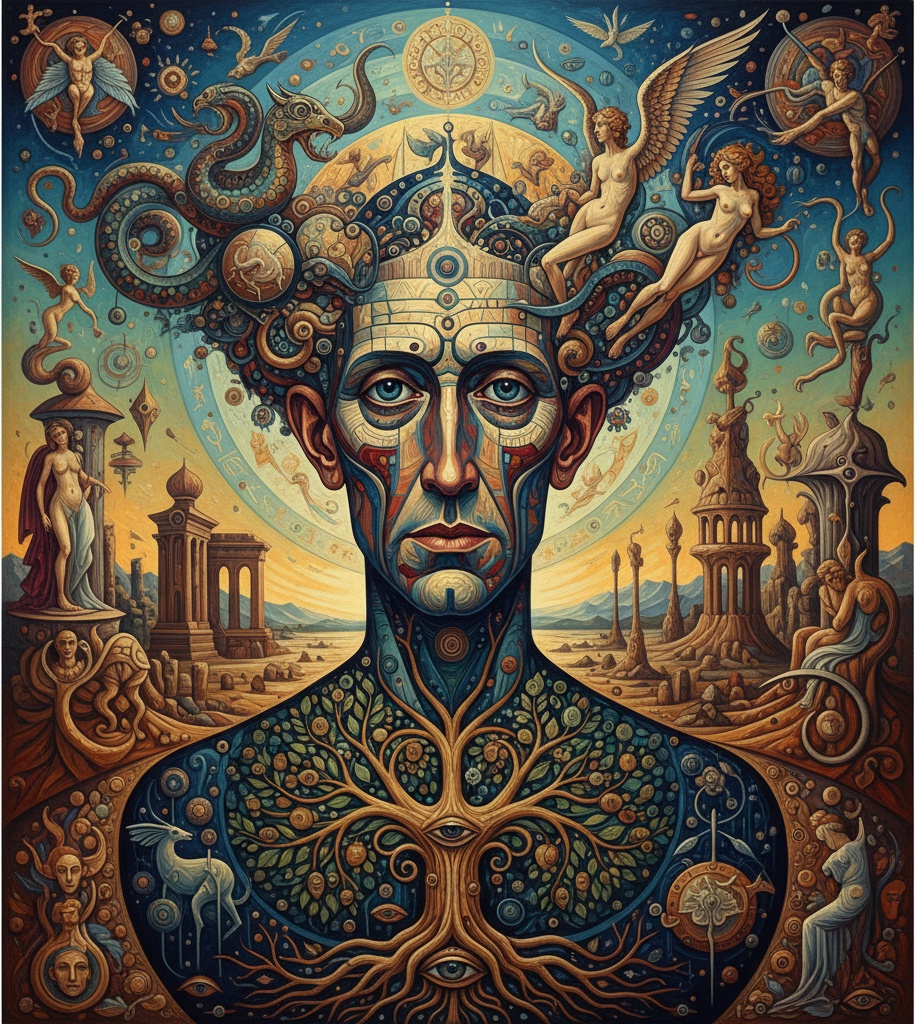


The Genesis of a Movement: Vienna After the War & The Birth of Fantastic Realism
The Vienna School of Fantastic Realism (German: Wiener Schule des Phantastischen Realismus) is a group of artists founded in Vienna in 1946. The group's name was coined in the 1950s by Johann Muskik, and the first exhibition was in 1959 at the Vienna...
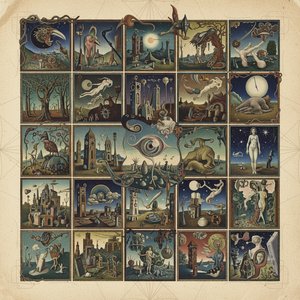
The post-war landscape of Vienna was one steeped in profound psychological and physical ruin. A city once synonymous with imperial grandeur lay fractured, its cultural heart seemingly silenced by years of conflict and occupation. Yet, from this very desolation arose a remarkable artistic current: the Vienna School of Fantastic Realism. It wasn’t merely a stylistic choice but a visceral response to trauma—a yearning for meaning in a world stripped bare. A generation of artists, disillusioned with abstraction's perceived detachment, sought solace and expression in a return to representational skill, albeit imbued with a decidedly surreal and often unsettling vision. This was not a nostalgic revival; rather, it was a radical reimagining of artistic possibility, born from the ashes of a shattered Europe. The initial impulse wasn’t a conscious declaration of a new school but a shared exploration amongst students at the Academy of Fine Arts Vienna, seeking to reconcile classical techniques with the burgeoning interest in psychoanalysis and esoteric thought.
Ernst Fuchs’s Artistic Evolution: From Early Influences to ‘Mischtechnik’ Mastery
 untitled (3980)
Admire 'Untitled (3980)' by Ernst Fuchs – a vibrant surrealist painting featuring a captivating woman in red. Hand-painted reproduction of this Austrian masterpiece.
At the epicenter of this movement stood Ernst Fuchs (1930-2015), a figure whose artistic journey embodies the very spirit of Fantastic Realism. His early education, initially focused on sculpture, quickly gravitated towards painting under the tutelage of Professor Robin C. Anderson and, crucially, Albert Paris von Gütersloh. It was Gütersloh who instilled in Fuchs a reverence for the Old Masters—a dedication to technical precision that would become a hallmark of his work. Fuchs delved into Max Doerner’s seminal text, “The Materials of the Artist,” unlocking the secrets of historical painting methods. This led him to develop and refine the ‘mischtechnik,’ a laborious process involving layering egg tempera and oil glazes. The result is an astonishing luminosity and detail—paintings that possess an almost otherworldly depth and texture. His early works, though still developing his signature style, already hinted at the complex symbolism and allegorical narratives that would define his mature oeuvre. He wasn’t simply painting *what* he saw but *how* it felt – a translation of inner landscapes onto canvas.
Iconography and Symbolism in Fuchs’s Oeuvre: Exploring Religious, Mythological, and Psychological Themes
 Wikipedia: Ernst Fuchs (artist)
Ernst Fuchs (13 February 1930 – 9 November 2015) was an Austrian painter, draftsman, printmaker, sculptor, architect, stage designer, composer, poet, and one of the founders of the Vienna School of Fantastic Realism. In 1972, he acquired the derelict...
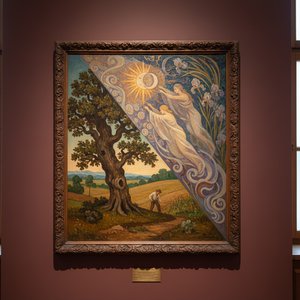
To understand Fuchs is to delve into a rich tapestry of iconography. His paintings are rarely straightforward depictions; they are layered with religious allusions, mythological references, and deeply personal psychological explorations. Biblical scenes, often rendered with startling intensity, are juxtaposed with grotesque figures and dreamlike landscapes. The influence of psychoanalysis—particularly the work of Freud and Jung—is palpable in his exploration of archetypes, the subconscious, and the darker aspects of human nature. ‘SODOM’, for example, is a haunting masterpiece that evokes loss, memory, and the fragility of civilization through its crumbling architecture and symbolic imagery. Recurring motifs – serpents, eyes, and distorted figures – serve as visual anchors to these complex narratives. Fuchs wasn't merely illustrating stories; he was attempting to create a visual language capable of expressing the ineffable—the anxieties, desires, and spiritual longings that lie beneath the surface of consciousness. His use of color is equally significant, employing vibrant hues to heighten emotional impact and create an atmosphere of both beauty and unease.
The Vienna School Beyond Fuchs: Key Figures & Shared Aesthetic Principles
While Ernst Fuchs served as a pivotal catalyst, the Vienna School was not solely defined by his vision. Artists like Arik Brauer, Rudolf Hausner, Wolfgang Hutter, and Anton Lehmden each brought their unique sensibilities to the movement, forging a collective aesthetic characterized by meticulous technique, surreal imagery, and a shared interest in exploring the metaphysical realm. Rudolf Hausner, often referred to as the “psychic realist,” delved into the complexities of the human psyche with his allegorical series, notably ‘Adam.’ Arik Brauer’s work is distinguished by its vibrant colors and incorporation of fairy tales and Jewish mysticism. Wolfgang Hutter created magical gardens populated by fantastical creatures, while Anton Lehmden explored the dramatic forces of nature with swirling compositions. Despite their individual styles, these artists were united by a commitment to craftsmanship and a rejection of purely abstract expressionism. They sought to create art that was both intellectually stimulating and emotionally resonant—a bridge between tradition and modernity.
Fuchs's Architectural Visions & The Ernst Fuchs Museum: A Total Work of Art
Fuchs’s artistic ambition extended beyond the canvas, encompassing architecture, stage design, and even poetry. In 1972, he acquired the derelict Otto Wagner Villa in Hütteldorf, transforming it into a breathtaking testament to his vision. The Ernst Fuchs Museum, inaugurated in 1988, is not merely a repository of his paintings but a ‘total work of art’—a harmonious integration of architecture, sculpture, and painting. The villa itself became a canvas, adorned with mosaics, frescoes, and sculptural elements that reflect the artist's complex iconography. This act of creation wasn’t simply about preserving his legacy; it was about creating an immersive environment—a space where visitors could fully experience his artistic universe. The museum stands as a powerful symbol of Fuchs’s belief in the interconnectedness of art forms and the transformative power of creative expression.
The Lasting Influence of Fantastic Realism on Contemporary Visionary Art
The Vienna School of Fantastic Realism, though relatively short-lived as a formal movement, exerted a profound influence on subsequent generations of artists. Its emphasis on technical skill, symbolic depth, and the exploration of inner worlds paved the way for the emergence of visionary art—a genre that continues to thrive today. Artists inspired by Fuchs’s work often embrace similar themes of spirituality, mythology, and the subconscious, employing meticulous techniques to create immersive and emotionally resonant paintings. The movement's rejection of purely abstract expressionism also resonated with artists seeking a return to representational skill and narrative storytelling. WahooArt.com proudly offers reproductions of Ernst Fuchs’s masterpieces, allowing collectors to experience the captivating beauty and intellectual depth of this extraordinary artist. Through these meticulously crafted oil paintings, the legacy of Fantastic Realism continues to inspire and challenge viewers, reminding us of the enduring power of art to explore the mysteries of the human condition.