Defining Folk Art: Beyond Practicality and into Cultural Expression
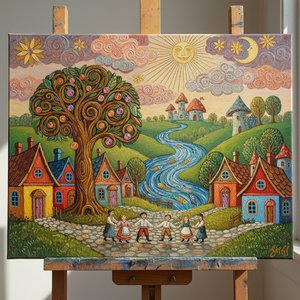
The term “folk art” often conjures images of charmingly rustic scenes, brightly colored quilts, and whimsical carvings. But to define it simply as ‘art made by the people’ feels profoundly inadequate. Folk art is far more than a category of aesthetically pleasing crafts; it's a powerful embodiment of cultural identity, a tangible record of beliefs, traditions, and daily life passed down through generations. While utility often plays a role – a beautifully carved tool, an intricately decorated storage jar – the essence of folk art lies in its expressive power, its ability to communicate stories, values, and a unique worldview. It’s born not from formal artistic training but from a deeply ingrained popular tradition, a collective aesthetic honed over time within specific communities. This isn't merely about *what* is made, but *how* and *why*, revealing a fascinating interplay between function, form, and the human need to create.
The European Roots of Folk Art: From Religious Tradition to Artistic Recognition
Tracing the origins of folk art leads us back to Europe, where its development was inextricably linked with religious devotion and rural life. Before widespread literacy and access to formal artistic education, visual storytelling flourished through woodcuts, devotional paintings, and handcrafted objects used in ceremonies and daily worship. These weren’t considered ‘high art’ in the Renaissance sense; they were accessible expressions of faith created *by* and *for* the community. As societies evolved, this tradition extended beyond religious themes to encompass scenes of everyday life, portraits, and decorative motifs reflecting local customs and folklore. The 18th and 19th centuries saw a growing appreciation for these previously overlooked forms, particularly in regions like Scandinavia, Eastern Europe, and the Alpine countries. Collectors began recognizing the inherent artistic merit – the vibrant colors, bold compositions, and unique perspectives – that distinguished folk art from academic painting. This recognition wasn’t immediate or universal; it was often intertwined with romantic notions of a simpler past and an idealized rural existence.
Naive Art vs. Folk Art: Untangling the Distinctions and Overlaps
 Wikipedia: Naïve art
Naïve art is usually defined as visual art that is created by a person who lacks the formal education and training that a professional artist undergoes (in anatomy, art history, technique, perspective, ways of seeing). When this aesthetic is emulate...
The relationship between folk art and naive art is complex, frequently leading to confusion. While both often share stylistic similarities – simplified forms, a lack of traditional perspective, vibrant color palettes – they are fundamentally distinct. Folk art emerges from a specific cultural context and tradition; it’s embedded within a community's shared history and practices. Naive art, on the other hand, typically arises from an individual artist working outside that established framework. A naive painter may be self-taught and lack formal training, but they aren’t necessarily connected to a long-standing popular aesthetic. Henri Rousseau, perhaps the most famous example of a naive artist, was aware of fine art conventions even as he deliberately rejected them in favor of his own unique vision. The key difference lies in origin: folk art is collective, while naive art is individual. There’s often overlap – an artist within a folk tradition might exhibit particularly striking individuality, blurring the lines – but understanding this distinction is crucial for appreciating the nuances of each form.
Global Expressions of Folk Art: Diverse Traditions and Common Threads
From the intricately carved masks of Papua New Guinea to the vibrant textiles of Guatemala, folk art manifests itself in countless forms across the globe. In Brazil, artists like Djanira da Motta e Silva captured the rhythms of rural life with a distinctive blend of color and form, depicting religious festivals, coffee harvests, and scenes of community gatherings. In Mississippi, Theora Alton Hamblett created evocative “memory paintings” reflecting her personal experiences and the landscapes of the South. Moroccan painter Fatima Hassan el Farouj’s raw depictions of women and traditions showcase a powerful instinctive creativity. Despite these diverse expressions, certain common threads emerge: a strong connection to nature, a celebration of community life, and a willingness to embrace bold colors and simplified forms. These aren't merely aesthetic choices; they reflect the values and beliefs of the cultures from which they originate. The materials used – locally sourced wood, natural dyes, readily available fabrics – also contribute to the unique character of each tradition.
Notable Figures in Folk Art History: Celebrating Individual Visions
While folk art is often a collective endeavor, certain artists stand out for their exceptional skill and distinctive vision. Georgy Zelenko’s haunting portrait ‘Volodya Grigoriev’ exemplifies the unsettling charm of Russian folk art, with its stylized figure and vibrant colors. Paul Klee, though trained as an academic artist, drew heavily on primitive-inspired design in works like 'Lemon Harvest,' showcasing a playful abstraction that resonates with folk traditions. Grandma Moses, an American icon, began painting late in life, capturing idyllic scenes of rural life with remarkable detail and warmth. These artists – and countless others – demonstrate the power of individual creativity within a broader cultural context. Their work isn’t simply about replicating existing forms; it's about reinterpreting them, adding personal expression, and preserving traditions for future generations.
The Enduring Appeal of Folk Art: A Legacy for Generations
In an increasingly homogenized world, folk art offers a powerful connection to the past, a tangible link to cultural heritage. Its authenticity, its expressive power, and its celebration of human creativity continue to resonate with audiences today. The appeal lies not just in the aesthetic qualities – the vibrant colors, bold compositions, and unique perspectives – but also in the stories they tell, the values they embody, and the sense of community they evoke. OriginalUniqueArt is dedicated to preserving this legacy by offering high-quality reproductions of folk art masterpieces, allowing you to bring these captivating works into your own home. Whether you’re a seasoned collector or simply beginning to explore the world of art, we invite you to discover the enduring beauty and profound meaning of folk art. Explore our collection today and find a piece that speaks to your soul – a testament to the power of tradition, creativity, and the human spirit.