
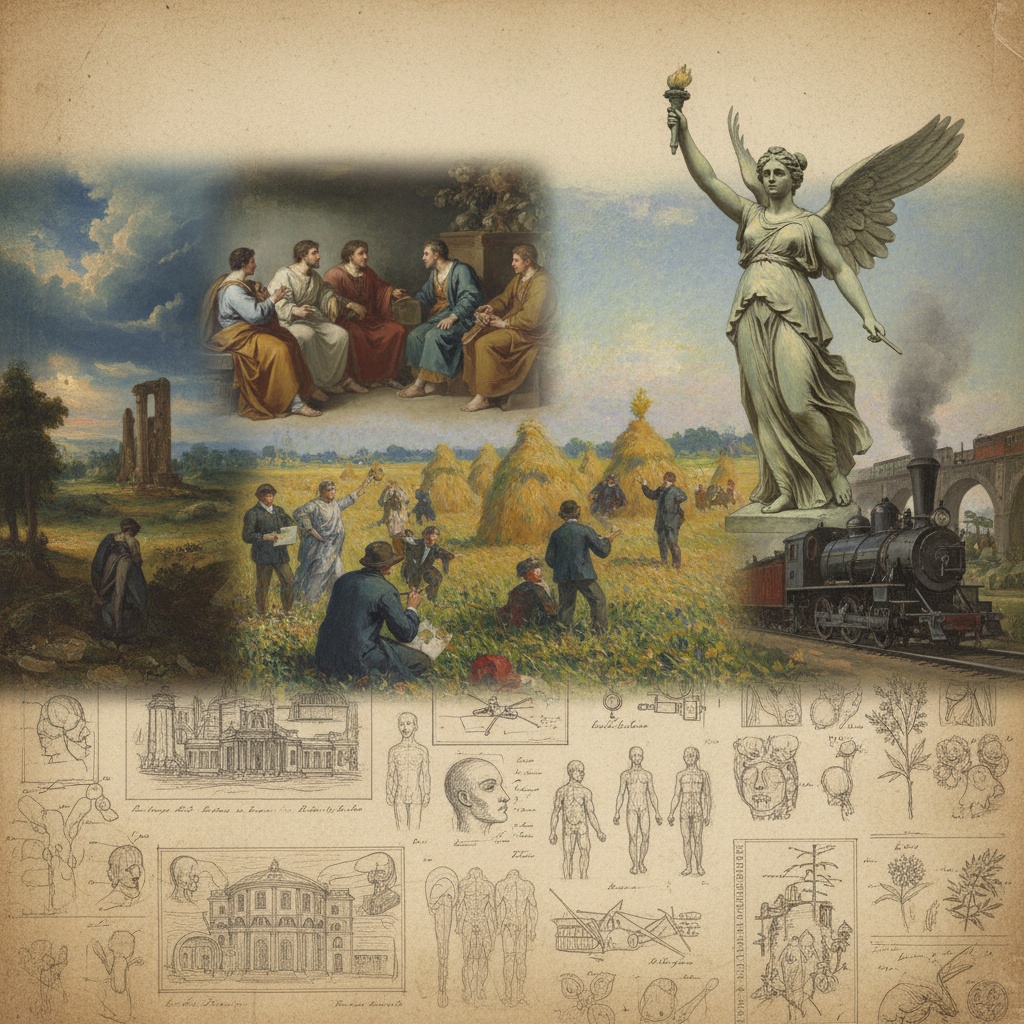
The Rise of Romanticism: Emotion Over Reason
The late 18th century witnessed a seismic shift in artistic sensibilities, a turning away from the cool rationality of the Enlightenment and towards the passionate embrace of feeling. This was Romanticism, not merely a stylistic change but a fundamental re-evaluation of what constituted beauty, truth, and the very purpose of art. For over a century, artists across Europe grappled with this new ethos, rejecting the strictures of Neoclassicism – its emphasis on order, symmetry, and classical subject matter – in favor of individualism, imagination, and an almost reverent connection to nature. It wasn’t simply about depicting pretty landscapes; it was about conveying the *experience* of being within them, the sublime awe and sometimes terrifying power they evoked. Writers like Wordsworth and poets such as Byron laid the groundwork, but painters soon followed, seeking to translate these emotional currents onto canvas.
The seeds of Romanticism were sown in a growing dissatisfaction with the Age of Reason’s perceived limitations. The Industrial Revolution, while bringing technological advancements, also created alienation and social upheaval. Artists responded by looking inward, exploring the depths of human emotion – joy, sorrow, longing, despair – and outward, to realms beyond the tangible world. This fascination extended to folklore, mythology, and the medieval past, periods often viewed as more authentic and spiritually resonant than their own increasingly mechanized present. The artist’s role transformed; they were no longer simply skilled craftsmen but visionary interpreters of the human condition.
Consider the work of Caspar David Friedrich, whose iconic “Wanderer above the Sea of Fog” encapsulates this spirit perfectly. The lone figure, silhouetted against a vast and misty landscape, isn’t merely observing nature; he is *experiencing* it, lost in contemplation of its immensity and his own place within it. This emphasis on subjective experience became a hallmark of the movement.
Realism's Rejection of Idealism: A Focus on Everyday Life
Realism, Realistic, or Realists may refer to: == In the arts == Realism (arts), the general attempt to depict subjects truthfully in different forms of the arts Arts movements related to realism include: == In philosophy == Philosophical realism ...
As Romanticism’s fervor began to wane mid-century, another powerful current emerged: Realism. While often presented as a direct opposition to Romanticism, it was more accurately a response to its perceived excesses and a growing awareness of the social realities ignored by both Neoclassicism and earlier Romantic ideals. Realist artists sought to depict life *as it was*, without embellishment or idealization. This meant turning their attention to the lives of ordinary people – laborers, peasants, the urban poor – subjects previously considered unworthy of artistic representation.
Gustave Courbet became a leading figure in this movement, famously declaring his intention to “record the customs, ideas, and appearances of my time.” His paintings, such as “The Stone Breakers” (sadly destroyed during WWII), were deliberately unglamorous, portraying the harsh realities of manual labor with unflinching honesty. This commitment to truthfulness often provoked controversy; Courbet’s work was seen as vulgar and politically subversive by many.
Jean-François Millet further exemplified this focus on rural life in paintings like “The Gleaners.” He didn't romanticize the peasantry, but rather depicted their dignity and hardship with a quiet empathy. These weren’t idealized depictions of pastoral bliss; they were portraits of backbreaking work and economic struggle. The Realists aimed to hold a mirror up to society, forcing viewers to confront uncomfortable truths about poverty, inequality, and the human cost of progress.
Key Artists & Masterpieces of the 19th Century
The 19th century was remarkably fertile ground for artistic innovation. Beyond Courbet and Millet, Eugène Delacroix stands as a pivotal figure bridging Romanticism and Realism. His “Liberty Leading the People,” commemorating the July Revolution in France, is a powerful example of Romantic passion infused with political commentary. The allegorical figure of Liberty, brandishing the French flag, embodies both idealism and revolutionary fervor.
Francisco Goya, though technically bridging the 18th and 19th centuries, profoundly influenced subsequent generations. His “Third of May 1808,” depicting the execution of Spanish rebels by Napoleon’s troops, is a harrowing indictment of war and brutality. Goya's unflinching depiction of violence and suffering foreshadowed the darker themes explored by Realist artists.
Self-Portrait with a Black Dog, by Courbet, offers an intimate glimpse into the artist’s psyche, revealing a contemplative figure grappling with his own artistic identity. “The Source of the Lison,” also by Courbet, showcases his mastery of landscape painting and his ability to capture the beauty of the natural world while remaining grounded in realism. These works demonstrate the breadth of talent within this dynamic period.
Salon Culture and Artistic Acceptance: Navigating the Art World
The Salon, or sometimes Paris Salon (French: Salon de Paris [salɔ̃ d(ə) paʁi]), beginning in 1667, was the official art exhibition of the Académie des Beaux-Arts in Paris. Between 1748 and 1890 it was arguably the greatest annual or biennial art even...
The Paris Salon, established in 1667, held immense power over artistic success throughout much of the 19th century. This official art exhibition, organized by the Académie des Beaux-Arts, determined which artists gained recognition and patronage. For Romantic and Realist painters, gaining acceptance into the Salon was often a struggle.
The Académie favored traditional styles and subject matter, making it difficult for artists challenging these norms to exhibit their work. Rejection from the Salon could effectively derail an artist’s career. Courbet, in particular, repeatedly clashed with the establishment, pushing boundaries and provoking controversy with his unflinching depictions of contemporary life. His refusal to conform led to public debates and accusations of vulgarity.
The rise of independent exhibitions – such as the Salon des Refusés in 1863, showcasing works rejected by the official Salon – provided alternative venues for artists like Courbet and his contemporaries. These exhibitions allowed them to reach a wider audience and challenge the Académie’s authority, ultimately paving the way for greater artistic freedom.
Techniques and Materials: The Painter’s Craft in a Changing Era
While Romanticism and Realism differed significantly in their subject matter and philosophical underpinnings, they shared certain technical characteristics. Both movements emphasized the importance of direct observation and expressive brushwork. Artists moved away from the smooth, polished surfaces favored by Neoclassical painters, embracing more visible textures and a looser application of paint.
Oil painting remained the dominant medium throughout the 19th century, allowing artists to achieve rich colors and subtle gradations of tone. The development of new pigments expanded their palettes, enabling them to capture the nuances of light and atmosphere with greater accuracy. The use of *plein air* painting – working outdoors directly from nature – became increasingly popular, particularly among landscape painters.
Courbet’s technique, characterized by thick impasto and a deliberate rejection of academic polish, was revolutionary for its time. He often used palette knives to apply paint directly to the canvas, creating a rough, textured surface that emphasized the materiality of the medium. This approach reflected his commitment to truthfulness and his desire to break with traditional conventions.
The Enduring Legacy: How 19th-Century Art Shaped Modern Movements
The impact of Romanticism and Realism extends far beyond the 19th century, profoundly shaping the development of modern art. The emphasis on individual expression, subjective experience, and social commentary laid the groundwork for subsequent movements such as Impressionism, Post-Impressionism, and Expressionism.
The Realists’ commitment to depicting everyday life paved the way for artists to explore a wider range of subjects, challenging traditional hierarchies and expanding the definition of what constituted “art.” Their focus on social issues also inspired generations of artists to use their work as a tool for political activism. The rejection of academic conventions fostered a spirit of experimentation and innovation that continues to drive artistic progress today.
At OriginalUniqueArt.com, we celebrate the enduring legacy of these remarkable artists by offering high-quality reproductions of their masterpieces. Whether you’re drawn to the emotional intensity of Romanticism or the unflinching honesty of Realism, our collection allows you to bring the beauty and power of 19th-century art into your own home. Explore our selection today and discover a world of artistic inspiration.



