The Genesis of Art History: From Ancient Observation to Renaissance Documentation
Art history is an academic discipline devoted to the study of artistic production and visual culture throughout human history. Art historians use a historical method or a philosophy, such as historical materialism or critical theory, to analyze artwo...
The impulse to record, to interpret, and ultimately, to *understand* the visual world is as old as humanity itself. While we often associate art history with formal scholarship – the meticulous cataloging of styles, periods, and artists – its roots lie in a far more primal urge: the desire to make sense of existence through image-making. Early traditions weren’t concerned with ‘art’ as a separate category; rather, they were interwoven with religious ritual, political power, and the very fabric of daily life. Consider the cave paintings of Lascaux or Altamira – these aren't simply depictions of animals; they are potent expressions of belief, hunting strategies, perhaps even early forms of storytelling. In ancient Greece, writers like Pliny the Elder attempted to codify artistic achievement, establishing a canon and laying the groundwork for later aesthetic theory. However, it wasn’t until the Renaissance that art history truly began to coalesce as a distinct discipline. The rediscovery of classical texts, coupled with a burgeoning humanist philosophy, sparked an intense fascination with the past – not merely as a source of inspiration, but as a model for emulation and improvement. Artists like Leon Battista Alberti didn't just *create* art; they theorized about it, establishing principles of perspective, proportion, and composition that would dominate Western painting for centuries.
Humanism & the Rediscovery of Classical Antiquity in Renaissance Art
 The Enduring Legacy of Renaissance Art: Innovation, Humanism & Mastery
Explore the enduring legacy of Renaissance art! Discover its historical context, humanist ideals, iconic masterpieces, and lasting influence on Western art with .
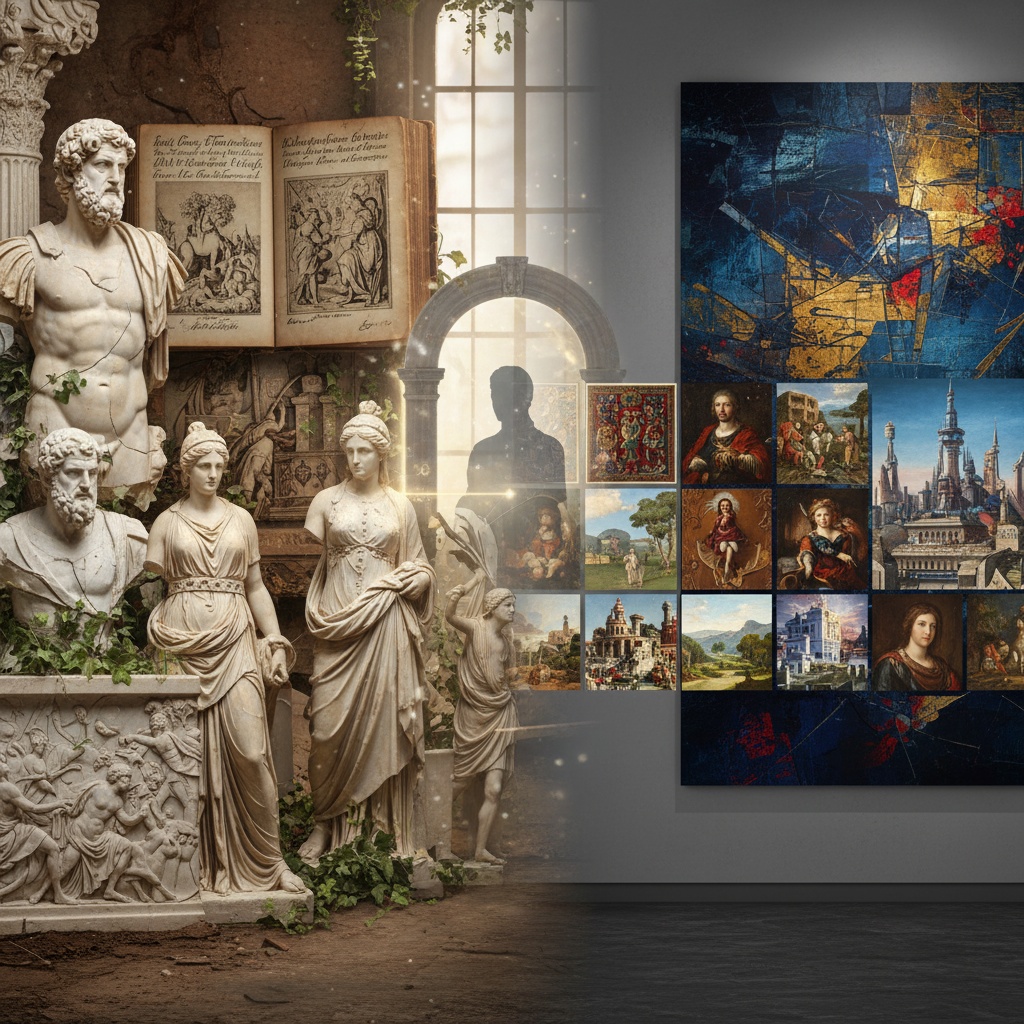
The Renaissance wasn’t simply a revival of classical forms; it was a fundamental shift in worldview. Humanism placed humankind at the center of inquiry, emphasizing reason, individual potential, and earthly experience. This newfound focus profoundly impacted artistic production. Artists moved away from the stylized representations of the medieval period, seeking instead to depict the world with greater realism and anatomical accuracy. The study of classical sculpture – particularly Roman statues unearthed during this era – became paramount. Figures were no longer merely symbolic; they possessed weight, volume, and a sense of psychological depth. This pursuit of naturalism wasn’t simply about technical skill; it was driven by a desire to understand the human condition. Consider the works of Masaccio, whose frescoes in Florence demonstrate a revolutionary understanding of perspective and chiaroscuro – techniques that create an illusion of three-dimensionality and imbue his figures with unprecedented emotional resonance. The patronage system also played a crucial role. Wealthy families like the Medici commissioned artworks not just as displays of power, but as expressions of their humanist ideals, celebrating classical learning and civic virtue.
Narrative Power: Exploring Historical Themes in Painting and Sculpture
Throughout art history, artists have consistently turned to historical narratives as a source of inspiration and meaning. From the biblical scenes depicted in medieval cathedrals to the mythological subjects favored by Renaissance masters, these stories served not only to entertain but also to convey moral lessons, political ideologies, and cultural values. The Renaissance witnessed a particularly intense interest in classical mythology – figures like Venus, Apollo, and Hercules became allegorical representations of human virtues and vices. However, artists weren’t simply replicating ancient tales; they were reinterpreting them through the lens of their own time. For example, Botticelli's 'Birth of Venus' isn’t a straightforward depiction of the classical myth; it’s infused with Neoplatonic philosophy, celebrating beauty as a pathway to spiritual enlightenment. Furthermore, historical events themselves became increasingly popular subjects for artistic representation. Paintings commemorating battles, coronations, and diplomatic negotiations served as powerful tools of propaganda and national identity.
Pre-Raphaelite Visions of the Past: Millais' 'The Ransom' as a Case Study
 The Ransom
Discover 'The Ransom' by Sir John Everett Millais, a Pre-Raphaelite masterpiece! Explore this 1855 oil painting’s historical detail & romantic style. Art history & timeless beauty.
Fast forward to the 19th century, and we encounter the Pre-Raphaelites – a group of British artists who rebelled against the academic conventions of their time. Rejecting what they perceived as the artificiality of modern art, they sought inspiration in the works of early Renaissance masters – particularly those *before* Raphael, whom they saw as having lost touch with nature and genuine emotion. Sir John Everett Millais’ 'The Ransom' (1855) exemplifies this aesthetic. The painting depicts a poignant scene from Tennyson’s poem ‘Lancelot and Elaine’, showcasing meticulous detail, vibrant colors, and a profound sense of psychological realism. Millais’ commitment to historical accuracy is evident in the painstakingly rendered costumes, landscape, and architectural elements. However, 'The Ransom' isn’t simply a faithful illustration; it’s imbued with a romantic sensibility and a deep concern for social justice – themes that resonated deeply with Victorian audiences. The painting’s narrative power lies not just in its depiction of a dramatic event but also in its exploration of complex emotions like love, loss, and sacrifice.
Diogenes and the Philosophical Undercurrents of Artistic Representation
 Diogenes
Explore Jean-Léon Gérôme’s ‘Diogenes’! A stunning academic oil painting depicting the philosopher's poverty & resilience. Discover its historical significance and artistic mastery at the Walters Art Museum.
Jean-Léon Gérôme's 'Diogenes' offers a fascinating glimpse into the intersection of philosophy and artistic representation. The painting depicts the Cynic philosopher living in poverty and self-imposed exile, rejecting societal norms and embracing a life of simplicity. Diogenes’ story – his famous encounter with Alexander the Great, his use of a lantern to search for an honest man – became a symbol of intellectual independence and moral integrity. Gérôme's depiction isn’t merely a historical portrait; it’s a meditation on the nature of virtue and the limitations of human ambition. The artist masterfully captures Diogenes’ resilience and unwavering commitment to his principles, despite his impoverished circumstances. The painting also raises questions about the role of art itself – is it possible to represent truth authentically? Can an artwork truly capture the essence of a philosophical idea? Gérôme's 'Diogenes' invites us to contemplate these complex issues.
Art as a Mirror to Society: Reflecting Political & Cultural Shifts Through Time
Ultimately, art history isn’t simply about studying beautiful objects; it’s about understanding the societies that created them. Throughout time, artworks have served as powerful reflections of political ideologies, cultural values, and social anxieties. From the propaganda paintings of ancient Rome to the revolutionary imagery of the French Revolution, art has consistently been used to shape public opinion and challenge established norms. The study of artistic styles, techniques, and iconography provides invaluable insights into the beliefs, aspirations, and fears of past civilizations. Johannes Vermeer’s ‘The Art of Painting’, for example, isn't just a depiction of an artist at work; it’s a complex allegory about the nature of representation and the role of art in society. By examining artworks within their historical context, we can gain a deeper understanding of the human experience – not just as it was lived in the past, but as it continues to shape our present. At OriginalUniqueArt.com, we believe that art has the power to transcend time and connect us with the rich tapestry of human history.