
The Shadow of War: Expressionism's Raw Response to Global Conflict
During World War II, the relations between art and war can be articulated around two main issues. First, art (and, more generally, culture) found itself at the centre of an ideological war. Second, during World War II, many artists found themselves i...
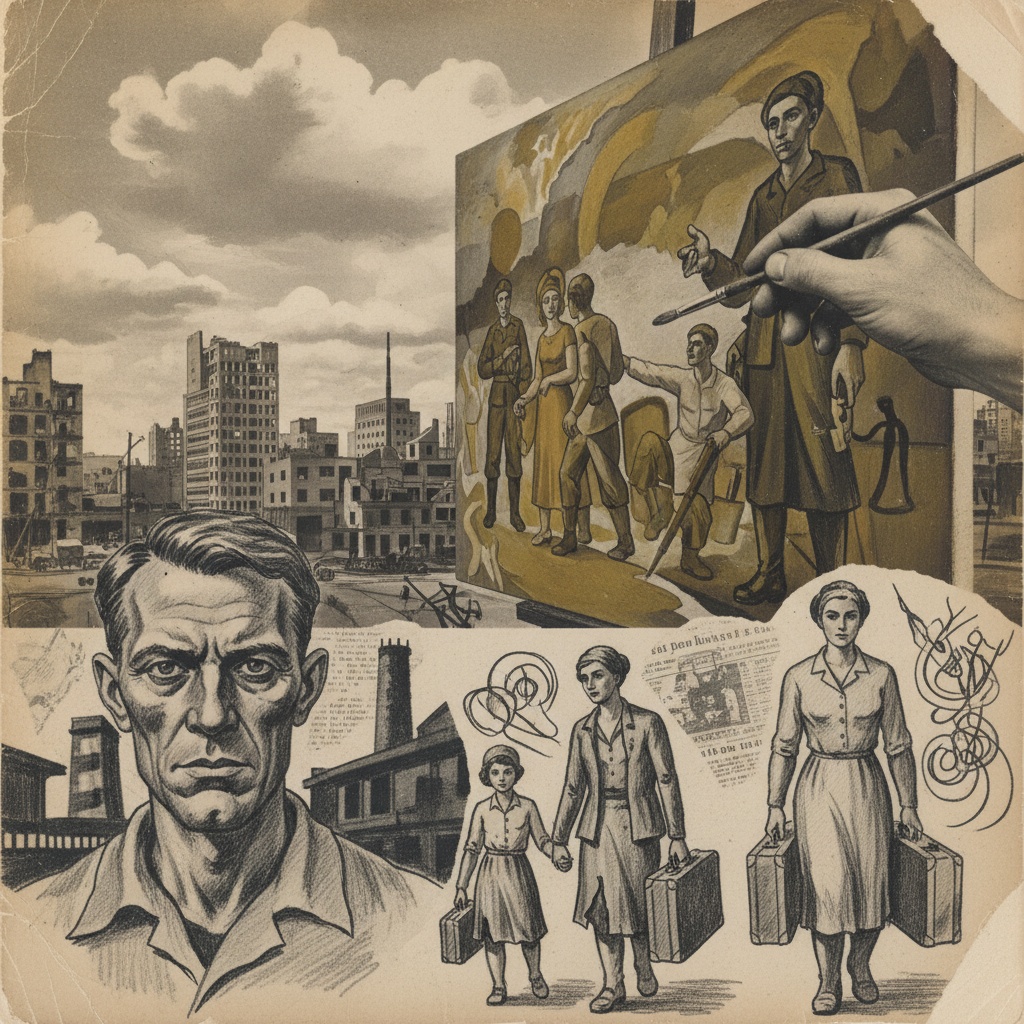
The decade of the 1940s was, undeniably, a period etched with trauma and upheaval. The echoes of war reverberated through every facet of life, profoundly impacting the artistic landscape. While earlier depictions of conflict often glorified military prowess or focused on heroic narratives, the 1940s witnessed a stark shift towards an unflinching portrayal of suffering, anxiety, and existential dread. This emotional intensity found its most potent voice in Expressionism – though not as a singular style, but as a pervasive sensibility that permeated diverse artistic practices. Artists no longer sought to merely *represent* war; they aimed to convey the very *feeling* of it: the fragmentation of society, the loss of innocence, and the psychological toll of relentless violence.
Mario Sironi’s haunting 1918 painting, “The End of a Pirate of the Twentieth Century,” serves as a particularly poignant example. Though predating the full scope of the decade in question, it foreshadows the anxieties that would come to define it. The work isn't a literal depiction of naval combat; instead, it presents a crucifixion scene set amidst the industrial wreckage of war. This jarring juxtaposition—the sacred symbol of sacrifice rendered within a landscape of destruction—speaks volumes about the perceived loss of faith and moral order. Sironi’s use of somber colors and distorted forms amplifies this sense of unease, creating an image that is both deeply unsettling and profoundly moving. It's a visual embodiment of spiritual crisis born from collective trauma.
The Expressionist impulse wasn’t confined to Italy. Across Europe, artists grappled with similar themes, often employing bold brushstrokes, jarring color palettes, and distorted figures to convey the emotional weight of their experiences. This rejection of traditional representational techniques was not merely stylistic; it was a deliberate attempt to break free from established norms and express the inexpressible horrors of the modern world.
From Paris to New York: The Shifting Center of Artistic Innovation
 Our Villa
Franz Marc’s ‘Our Villa’ (1914) – a raw Expressionist masterpiece! Explore this textured oil painting featuring handwritten text & dark tones. A unique, symbolic work by a key German artist.
The Second World War irrevocably altered the geography of the art world. For centuries, Paris had been the undisputed center of artistic innovation, a magnet for artists from across the globe. However, the war and its aftermath forced many creatives to seek refuge elsewhere, with New York City rapidly emerging as a new hub. This transatlantic shift wasn’t simply a matter of relocation; it represented a fundamental change in artistic sensibilities.
The influx of European Surrealists into New York played a crucial role in shaping the development of Abstract Expressionism. While Surrealism itself was waning, its emphasis on the unconscious mind and automatic techniques profoundly influenced American artists seeking new ways to express themselves. Artists began experimenting with non-representational forms, prioritizing emotional impact over literal depiction. This move away from figuration wasn’t a rejection of reality, but rather an attempt to access deeper truths—truths that lay beyond the realm of conscious thought.
The war also fostered a sense of American exceptionalism and a desire for artistic independence. Artists felt liberated from the constraints of European tradition, free to forge their own path and develop a uniquely American aesthetic. This newfound confidence fueled experimentation and innovation, paving the way for the emergence of groundbreaking new styles.
Beyond Abstraction: Exploring the Figurative Art of Resistance and Remembrance
While Abstract Expressionism often dominates discussions of 1940s art, it’s crucial to remember that figurative painting didn't disappear. In fact, many artists continued to employ representational techniques, using their work as a form of resistance against oppression or as a means of documenting the horrors they witnessed. These works, though less celebrated than their abstract counterparts, offer invaluable insights into the lived experiences of the decade.
Artists like André Fougeron captured the everyday realities of life under occupation, focusing on the impact of war on civilians. His paintings often depict scenes of quiet desperation and resilience, offering a powerful counterpoint to more grandiose depictions of conflict. These works remind us that war isn’t simply fought on battlefields; it's experienced in the streets, homes, and hearts of ordinary people.
Furthermore, many artists used figurative painting as a means of remembrance, creating portraits or scenes that honored those who had been lost. These works served as powerful acts of defiance against forgetting, ensuring that the sacrifices made during the war would not be in vain.
Post-War Realities: The Rise of Abstract Expressionism and its Emotional Landscape
The immediate post-war period witnessed the full flowering of Abstract Expressionism. Artists like Jackson Pollock, Mark Rothko, and Clyfford Still developed distinct styles characterized by large canvases, bold brushstrokes, and a focus on emotional intensity. Their work wasn’t about depicting specific events or objects; it was about conveying universal themes of anxiety, alienation, and the search for meaning in a fractured world.
“Our Villa” (1914) by Franz Marc, though created before the decade itself, exemplifies the raw emotionality that would come to define Abstract Expressionism. The textured oil painting, featuring handwritten text and dark tones, is a unique and symbolic work reflecting the artist’s inner turmoil. This foreshadowed the movement's exploration of subjective experience and its rejection of traditional aesthetic conventions.
The scale of these paintings was particularly significant. By creating works that enveloped the viewer, artists sought to immerse them in their emotional world. The sheer physicality of the canvases—often monumental in size—reinforced the sense of overwhelming emotion and existential weight. This wasn’t art meant to be passively observed; it was intended to be experienced.
Italian Arte Informale: A Unique Voice Amidst Reconstruction
While New York often takes center stage in discussions of post-war art, Italy also witnessed a vibrant artistic response to the devastation of war. Arte Informale, an Italian movement characterized by gestural abstraction and a focus on materiality, emerged as a unique voice amidst reconstruction. Artists like Mattia Bruno Moreni rejected traditional forms, prioritizing spontaneity and emotional expression.
Moreni, a key figure in Italy’s Arte Informale movement, created bold paintings and sculptures that evoked emotion through texture, color, and form. His work often reflects the artist's own internal struggles and his response to the political and social climate of post-war Italy. The Gruppo degli Otto, of which Moreni was a member, sought to break free from established norms and forge a new artistic identity.
Unlike the more cerebral approach of some American Abstract Expressionists, Italian Arte Informale often embraced a visceral, almost primal energy. Artists used their hands directly on the canvas, creating works that were deeply personal and emotionally charged. This emphasis on materiality reflected a desire to reconnect with the physical world after years of destruction and upheaval.
Collecting 1940s Art: Identifying Key Movements and Artists for Investment
 Bridging Centuries: Artistic Evolution from Baroque to Modernism for the Discerning Collector
Explore the evolution of art from Baroque to Modernism with . Expert insights for discerning collectors seeking investment-worthy masterpieces & custom reproductions.
For discerning collectors, the art of the 1940s presents a compelling opportunity. While prices for established masters like Pollock and Rothko can be substantial, there are still numerous undervalued artists whose work deserves attention. When considering investments, it’s crucial to understand the key movements and identify artists who represent significant contributions to the artistic landscape.
Expressionism, in its various forms, remains a highly sought-after genre. Works by Mario Sironi, though less common than those of his German counterparts, offer excellent value for collectors seeking emotionally resonant pieces with historical significance. Similarly, Italian Arte Informale artists like Mattia Bruno Moreni are gaining recognition and appreciation.
Beyond established names, it’s important to explore lesser-known artists who captured the spirit of the decade. Researching regional variations within movements and identifying works that reflect unique perspectives can yield rewarding discoveries. At OriginalUniqueArt, we offer a curated selection of 1940s art, alongside expert consultation services to help you build a collection that reflects your personal taste and investment goals. We also provide custom reproduction options, allowing you to bring the masterpieces of this era into your own home.



