The Fin de Siècle Atmosphere: A World on the Brink
"Fin de siècle" (French: [fɛ̃ də sjɛkl] ) is a French term meaning 'end of century', a phrase which typically encompasses both the meaning of the similar English idiom turn of the century and also makes reference to the closing of one era and onset o...
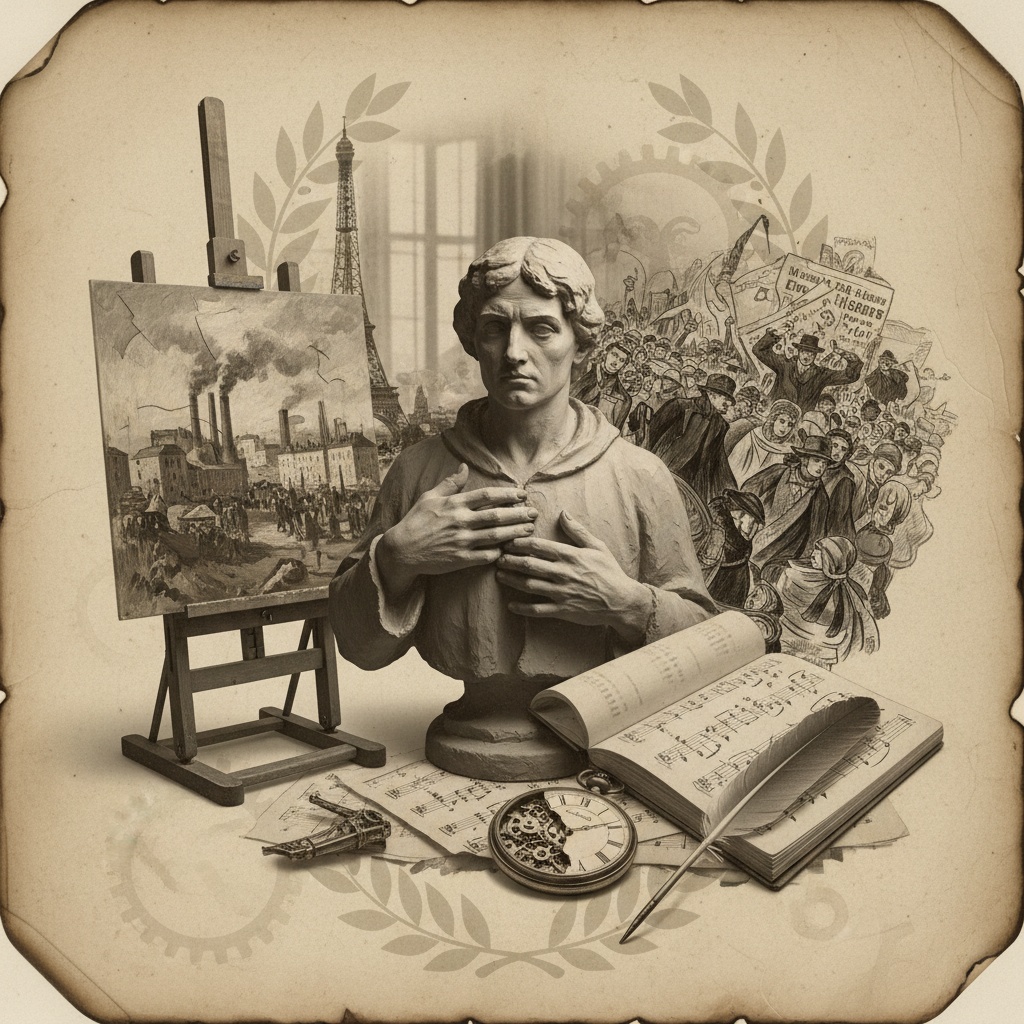
The closing decades of the nineteenth century, a period known as the Fin de siècle – literally, “end of the century” – were marked by a peculiar blend of optimism and anxiety. Rapid industrialization, scientific advancements, and burgeoning social change collided with a sense of moral decay and uncertainty about the future. This atmosphere profoundly impacted the artistic landscape, giving rise to movements that rejected traditional academic styles in favor of more subjective and emotionally resonant expressions. It was a time when established norms were questioned, and artists turned inward, exploring the complexities of the human psyche and the shadowy corners of modern life. The glittering façade of Parisian society masked a deeper unease, a premonition of the upheavals that would define the twentieth century. This cultural shift created fertile ground for new artistic approaches, paving the way for Post-Impressionism and Symbolism.
From Impressionism's Light to Post-Impressionist Form
Post-Impressionism (also spelled Postimpressionism) was a predominantly French art movement which developed roughly between 1886 and 1905, from the last Impressionist exhibition to the birth of Fauvism. Post-Impressionism emerged as a reaction agains...
The Impressionists had revolutionized painting by capturing fleeting moments of light and color, prioritizing sensory experience over precise representation. However, as the 1880s progressed, some artists began to feel that this emphasis on opticality lacked substance. They sought to imbue their work with greater structure, form, and emotional depth. Paul Cézanne, often hailed as the “father of Post-Impressionism,” famously declared his intention to make art “something solid and durable, like the art of museums.” He meticulously analyzed the underlying geometric forms of nature – cylinders, spheres, and cones – striving for a more enduring representation than fleeting impressions. Simultaneously, Georges Seurat developed Pointillism, a technique employing tiny dots of pure color that blended optically when viewed from a distance. This scientific approach aimed to create luminosity through rigorous application of color theory. These artists weren’t simply abandoning Impressionism; they were building upon it, seeking to address its perceived limitations and elevate painting beyond mere visual description.
Symbolism’s Embrace of the Inner Life and Myth
Symbolism or symbolist may refer to: Symbol, any object or sign that represents an idea == Arts == Artistic symbol, an element of a literary, visual, or other work of art that represents an idea Color symbolism, the use of colors within various cu...
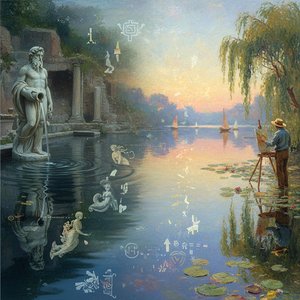
While Post-Impressionists focused on formal structure, another group of artists – the Symbolists – delved into the realm of dreams, emotions, and the irrational. Rejecting Realism's objective depiction of the world, they sought to express subjective experiences through evocative imagery and symbolic language. Inspired by poets like Baudelaire and Mallarmé, Symbolist painters explored themes of love, death, spirituality, and the subconscious. They often drew upon mythology, folklore, and religious iconography, creating enigmatic compositions that resisted straightforward interpretation. Color became a powerful tool for conveying mood and emotion, rather than accurately representing reality. The goal wasn’t to depict what they *saw*, but what they *felt* – a shift towards interiority that profoundly influenced the development of modern art.
Parisian Nightlife as a Canvas for Modern Anxiety: Toulouse-Lautrec
Henri de Toulouse-Lautrec, a master of capturing Parisian nightlife, provides a compelling example of how these artistic currents intersected. His paintings and posters depict the vibrant – and often seedy – world of Montmartre’s cabarets, dance halls, and brothels. Unlike the idyllic scenes favored by many Impressionists, Toulouse-Lautrec's work confronts the darker side of modernity: alienation, loneliness, and social marginalization. His dynamic compositions, bold colors, and unconventional perspectives reflect the energy and decadence of Parisian society. “At the Moulin Rouge”, for instance, captures a bustling scene filled with captivating figures, yet there’s an underlying sense of melancholy and detachment. He wasn't merely documenting nightlife; he was exploring its psychological impact, revealing the anxieties lurking beneath the surface of Belle Époque glamour.
Grief, Isolation, and Expression: Munch and the Darker Palette
Edvard Munch, a Norwegian painter deeply influenced by Symbolism, took this exploration of emotional intensity to even greater depths. His iconic work, “The Funeral”, is a poignant depiction of grief and loss, rendered in a dark, unsettling palette. The painting’s distorted forms and somber colors convey a profound sense of isolation and despair. Munch wasn't interested in objective representation; he sought to express the raw emotional experience of mourning. His work foreshadowed the rise of Expressionism, with its emphasis on subjective feeling and psychological turmoil. Munch’s paintings are not simply about death; they are about the existential anguish that accompanies it – a universal human experience rendered with unflinching honesty.
Viktor Borisov-Musatov: A Russian Echo of Symbolist Dreams
Across Europe, in Russia, Viktor Borisov-Musatov emerged as a leading figure in Symbolist painting. His dreamy landscapes and evocative portraits reflect a unique blend of Post-Impressionist techniques and decorative style. Musatov’s paintings often depict idyllic scenes populated by melancholic figures lost in contemplation. He created a world steeped in nostalgia and longing, evoking a sense of ethereal beauty and quiet sadness. His use of soft colors, hazy atmospheres, and symbolic motifs creates an atmosphere of mystery and introspection. While influenced by Western European artists, Musatov developed his own distinctive voice, capturing the unique spirit of Russian Symbolism and offering a poignant reflection on the complexities of human emotion.