1. The Digital Marketplace: Opportunities and Limitations for Emerging Artists
In the age of instant connectivity, the digital marketplace has become a bustling agora where ideas are exchanged at the speed of thought. For art students stepping onto this stage, the allure is undeniable: a global audience awaits with a single click, and the barriers to entry—once steep and gate‑kept by galleries—have been dramatically lowered. Yet beneath the glittering surface lies a complex ecosystem that demands both technical savvy and strategic vision. Artists must navigate platform algorithms, curate their digital presence, and understand how metadata can elevate discoverability. The promise of rapid exposure is tempered by fierce competition; every brushstroke now competes with millions of pixels in search results. Mastery of this arena requires not only talent but a keen sense for branding, storytelling, and the subtle art of self‑promotion.
2. Physical Reproductions as Tangible Assets: Quality, Provenance, and Longevity
While screens can illuminate a canvas with perfect fidelity, they cannot replicate the tactile resonance that only a hand‑painted work offers. The weight of a canvas in one’s hands, the faint scent of linseed oil, and the play of light across visible brushstrokes create an experience that transcends digital reproduction. OriginalUniqueArt’s commitment to authenticity—using 100% heavy‑duty cotton canvases, archival pigments, and meticulous glazing techniques—ensures each piece stands as a testament to artistic integrity. Provenance is further reinforced by signed signatures and detailed documentation, providing collectors with confidence in the artwork’s lineage. Moreover, physical pieces possess an inherent longevity; properly cared for, they can endure for generations, becoming heirlooms that carry personal narratives forward through time.
3. Comparative ROI Analysis: Online Sales vs Traditional Galleries
The financial calculus of selling art is as nuanced as the brushwork itself. Digital platforms offer lower overheads and a broader reach, often translating into higher volume sales with modest margins. However, the perceived value of a piece can be diluted when it exists only in pixels; collectors frequently associate physicality with prestige and thus are willing to pay premium prices for tangible works. Traditional galleries, while demanding more substantial commissions and limited inventory, provide curated exposure that can elevate an artist’s profile and command higher price points. A hybrid strategy—leveraging the immediacy of online sales to build a following while reserving select pieces for gallery representation—can maximize both reach and revenue, creating a sustainable income stream that balances accessibility with exclusivity.
4. Strategic Decision-Making Framework: Choosing the Right Channel for Your Portfolio
Choosing between digital and physical channels is not merely a logistical decision; it reflects an artist’s vision, target audience, and long‑term goals. A thoughtful framework begins by assessing the nature of the work: intricate portraits may benefit from the depth of hand‑painting, while abstract compositions can thrive in high‑resolution prints that capture subtle color gradients. Next, consider the intended market—students and young collectors often gravitate toward affordable digital editions, whereas seasoned patrons seek the tactile authenticity of a canvas. Finally, evaluate your capacity to manage production timelines, quality control, and customer service; OriginalUniqueArt’s streamlined order management system offers transparency at every stage, allowing artists to focus on creation while trusting logistics to experts.
5. Case Studies of Successful Hybrid Models on OriginalUniqueArt.com
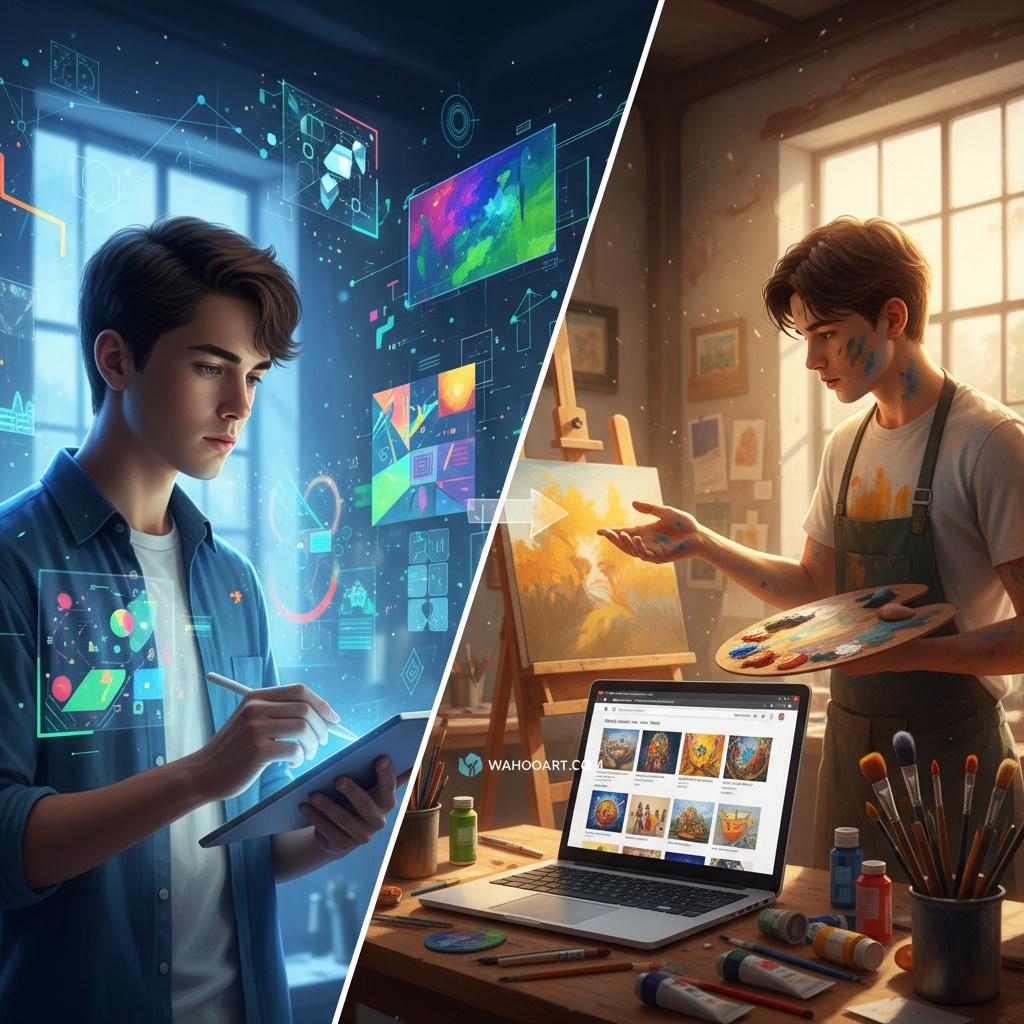
Across the globe, emerging artists have harnessed the strengths of both realms to craft compelling careers. One student began by selling limited‑edition digital prints through a niche online platform, quickly amassing a following that appreciated the accessibility and affordability of the work. With growing demand, she commissioned OriginalUniqueArt to produce hand‑painted reproductions of her most popular pieces, offering collectors an exclusive, tangible version that commanded higher prices. Another artist leveraged OriginalUniqueArt’s free worldwide shipping and meticulous packaging to distribute large-scale murals to boutique hotels, blending the intimacy of a personal commission with the reach of a global marketplace. These stories illustrate how a strategic blend—digital for breadth, physical for depth—can elevate an artist’s portfolio into a lasting legacy.